
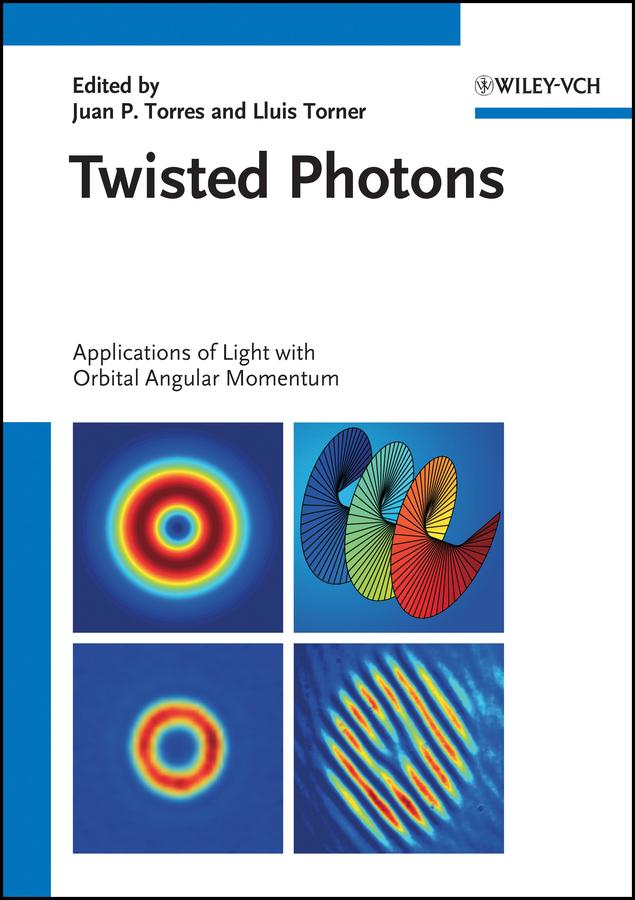
This book deals with applications in several areas of science and technology that make use of light which carries orbital angular momentum. In most practical scenarios, the angular momentum can be decomposed into two independent contributions: the spin angular momentum and the orbital angular momentum. The orbital contribution affords a fundamentally new degree of freedom, with fascinating and wide-spread applications. Unlike spin angular momentum, which is associated with the polarization of light, the orbital angular momentum arises as a consequence of the spatial distribution of the intensity and phase of an optical field, even down to the single photon limit. Researchers have begun to appreciate its implications for our understanding of the ways in which light and matter can interact, and its practical potential in different areas of science and technology.
Betaal eenvoudig met kaart, Klarna, Apple Pay of Google Pay. Niet tevreden? Je hebt altijd 14 dagen bedenktijd. Lees meer in onze voorwaarden. Heb je vragen, mail ons dan via hello@memmo.org.
Memmo maakt studeren makkelijker – waar je ook bent ter wereld. Wij brengen je cursusboeken en slimme studietools samen op één plek: samenvattingen, quizzen, podcasts en flashcards. En Ted, je studievriend die antwoord geeft op alles wat je je afvraagt. Meer dan 50.000 studenten studeren hier al – gebouwd om je sneller te laten leren en minder stress te geven.