
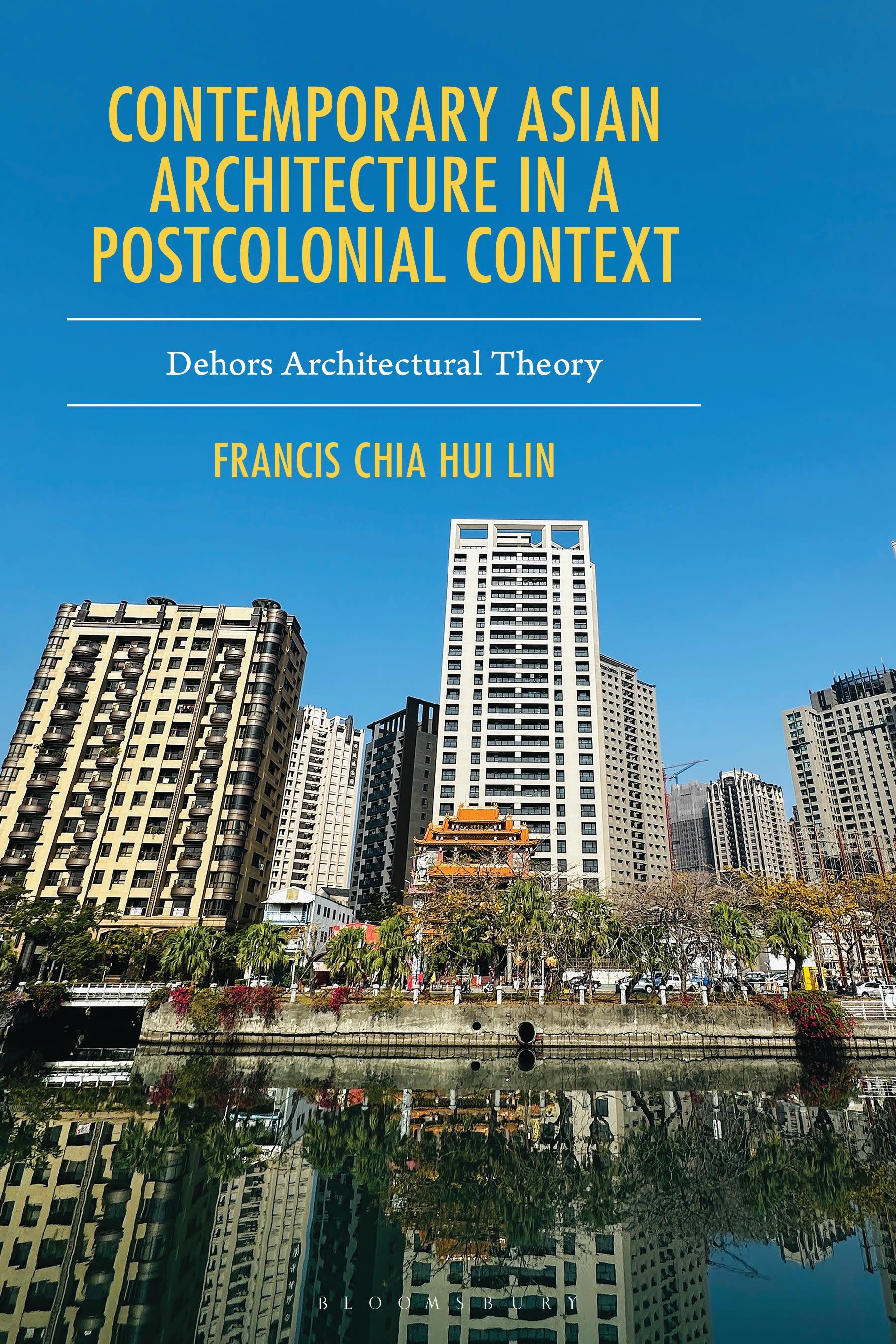
Offering a broader understanding of contemporary architecture and urbanism in Asia, Francis Chia Hui Lin raises questions from 'non-conventional' ('non-Western') perspectives that can adapt and enrich conventional understanding in an Asian context.
With a strategic focus on urban maritime Asia, this book highlights key postcolonial concepts, locales, and the agency of the postcolonial condition of Asian architecture in a global context. Addressing the conventional ideologies by which architecture is assessed, the author outlines an epistemic bridge that situates the colonial character of Asian architecture within a global historical and theoretical context.
Contemporary Asian architectural histories are marked not only by the influence of the Western architectural canon but also by a sense of temporality that reflects an ongoing process of subjectivation. Providing insight into these histories, the author proposes a methodology that extends the notion of the postcolonial comportment beyond its conventional historical context and into the spatial register of theorisation. By interviewing critical postcolonial theory with empirical analysis of contemporary Asian architecture and urbanisation, this book offers a critical lens for understanding Asia not simply as a site of architectural production, but as a theoretical interlocutor in the global rethinking of space, time and power.
With a strategic focus on urban maritime Asia, this book highlights key postcolonial concepts, locales, and the agency of the postcolonial condition of Asian architecture in a global context. Addressing the conventional ideologies by which architecture is assessed, the author outlines an epistemic bridge that situates the colonial character of Asian architecture within a global historical and theoretical context.
Contemporary Asian architectural histories are marked not only by the influence of the Western architectural canon but also by a sense of temporality that reflects an ongoing process of subjectivation. Providing insight into these histories, the author proposes a methodology that extends the notion of the postcolonial comportment beyond its conventional historical context and into the spatial register of theorisation. By interviewing critical postcolonial theory with empirical analysis of contemporary Asian architecture and urbanisation, this book offers a critical lens for understanding Asia not simply as a site of architectural production, but as a theoretical interlocutor in the global rethinking of space, time and power.
Pagina's: 288
Categorie: Arkitektur & Stadsplanering
e-ISBN: 9781978768512
Verzendgewicht: 1.2 kg
Verzending binnen: 1-2 dagen
Betaal eenvoudig met kaart, Klarna, Apple Pay of Google Pay. Niet tevreden? Je hebt altijd 14 dagen bedenktijd. Lees meer in onze voorwaarden. Heb je vragen, mail ons dan via hello@memmo.org.
Memmo maakt studeren makkelijker – waar je ook bent ter wereld. Wij brengen je cursusboeken en slimme studietools samen op één plek: samenvattingen, quizzen, podcasts en flashcards. En Ted, je studievriend die antwoord geeft op alles wat je je afvraagt. Meer dan 50.000 studenten studeren hier al – gebouwd om je sneller te laten leren en minder stress te geven.