
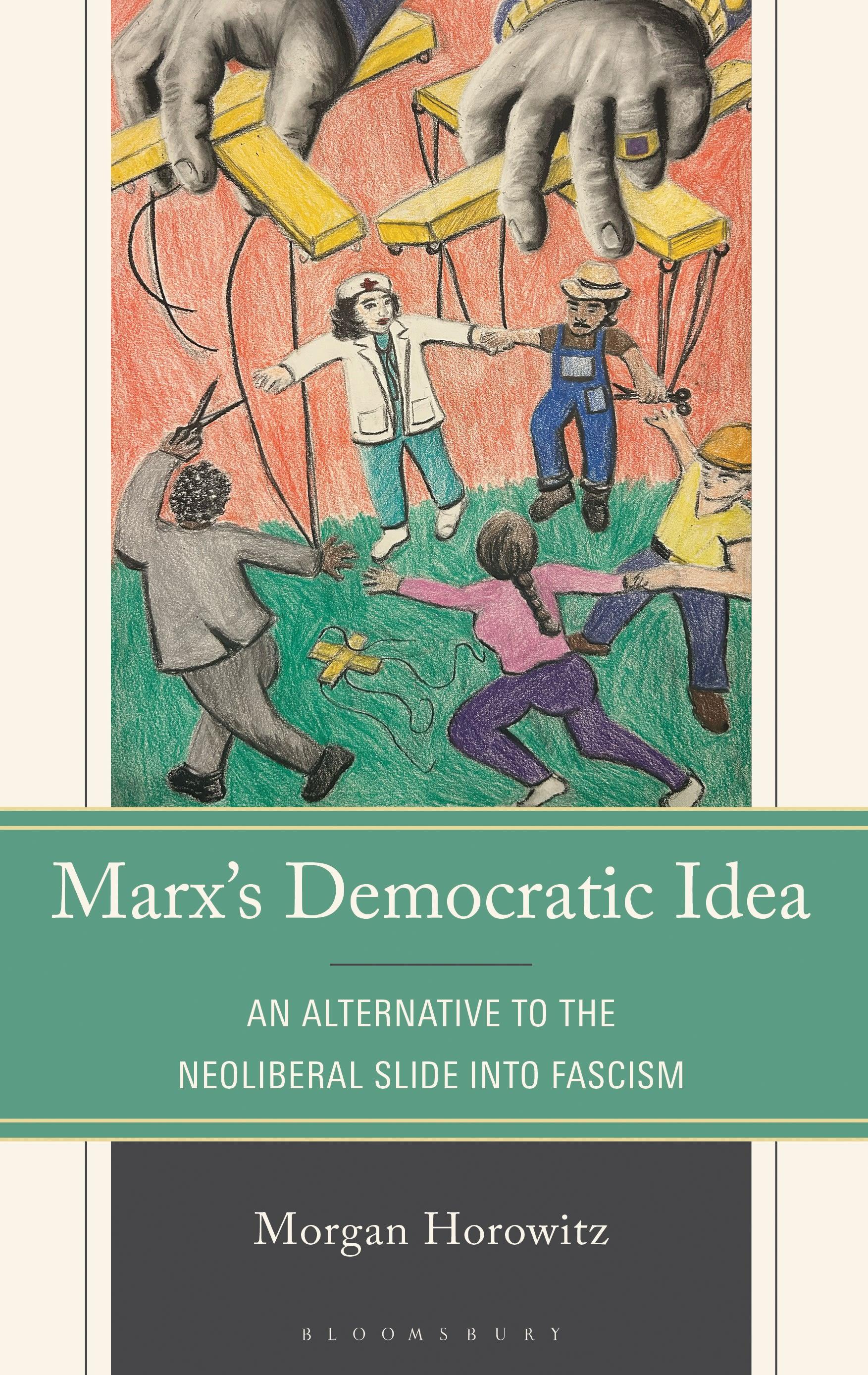
Emphasizing Marx's commitment to the “democratic idea” from the time of his early work through his later writings, including his reflections on the Paris Commune, this book connects Marx's democratic, political critique and his economic theory.
Morgan Horowitz argues that the communist project should be viewed as inseparable from a concern about both just social relations and the maintaining and empowering of democratic, political procedures. Marx's early works show that his critique of the state and capitalist, private property relations led to a demand to develop communal, discursively empowered agency over economic relations. Critically deploying the work of John Rawls and Jürgen Habermas, Horowitz develops a normative theory that clarifies structural requirements of economic equality and articulates “socialist right and rights,” which would be better placed to realize the normative ideals of liberty and equality that have traditionally been espoused by liberal theorists. Horowitz evaluates Marx's theoretic developments to constructively connect to liberal, normative projects dedicated to democratic publics guiding and maintaining welfare-based societies. The book then applies the framework to the contemporary context of spiraling inequalities and inequity, fears of autocracy and oligarchic power, and the persistence of political figures such as Bernie Sanders, with the resurgence of public support for democratic socialist alternatives.
Morgan Horowitz argues that the communist project should be viewed as inseparable from a concern about both just social relations and the maintaining and empowering of democratic, political procedures. Marx's early works show that his critique of the state and capitalist, private property relations led to a demand to develop communal, discursively empowered agency over economic relations. Critically deploying the work of John Rawls and Jürgen Habermas, Horowitz develops a normative theory that clarifies structural requirements of economic equality and articulates “socialist right and rights,” which would be better placed to realize the normative ideals of liberty and equality that have traditionally been espoused by liberal theorists. Horowitz evaluates Marx's theoretic developments to constructively connect to liberal, normative projects dedicated to democratic publics guiding and maintaining welfare-based societies. The book then applies the framework to the contemporary context of spiraling inequalities and inequity, fears of autocracy and oligarchic power, and the persistence of political figures such as Bernie Sanders, with the resurgence of public support for democratic socialist alternatives.
Betaal eenvoudig met kaart, Klarna, Apple Pay of Google Pay. Niet tevreden? Je hebt altijd 14 dagen bedenktijd. Lees meer in onze voorwaarden. Heb je vragen, mail ons dan via hello@memmo.org.
Memmo maakt studeren makkelijker – waar je ook bent ter wereld. Wij brengen je cursusboeken en slimme studietools samen op één plek: samenvattingen, quizzen, podcasts en flashcards. En Ted, je studievriend die antwoord geeft op alles wat je je afvraagt. Meer dan 50.000 studenten studeren hier al – gebouwd om je sneller te laten leren en minder stress te geven.