
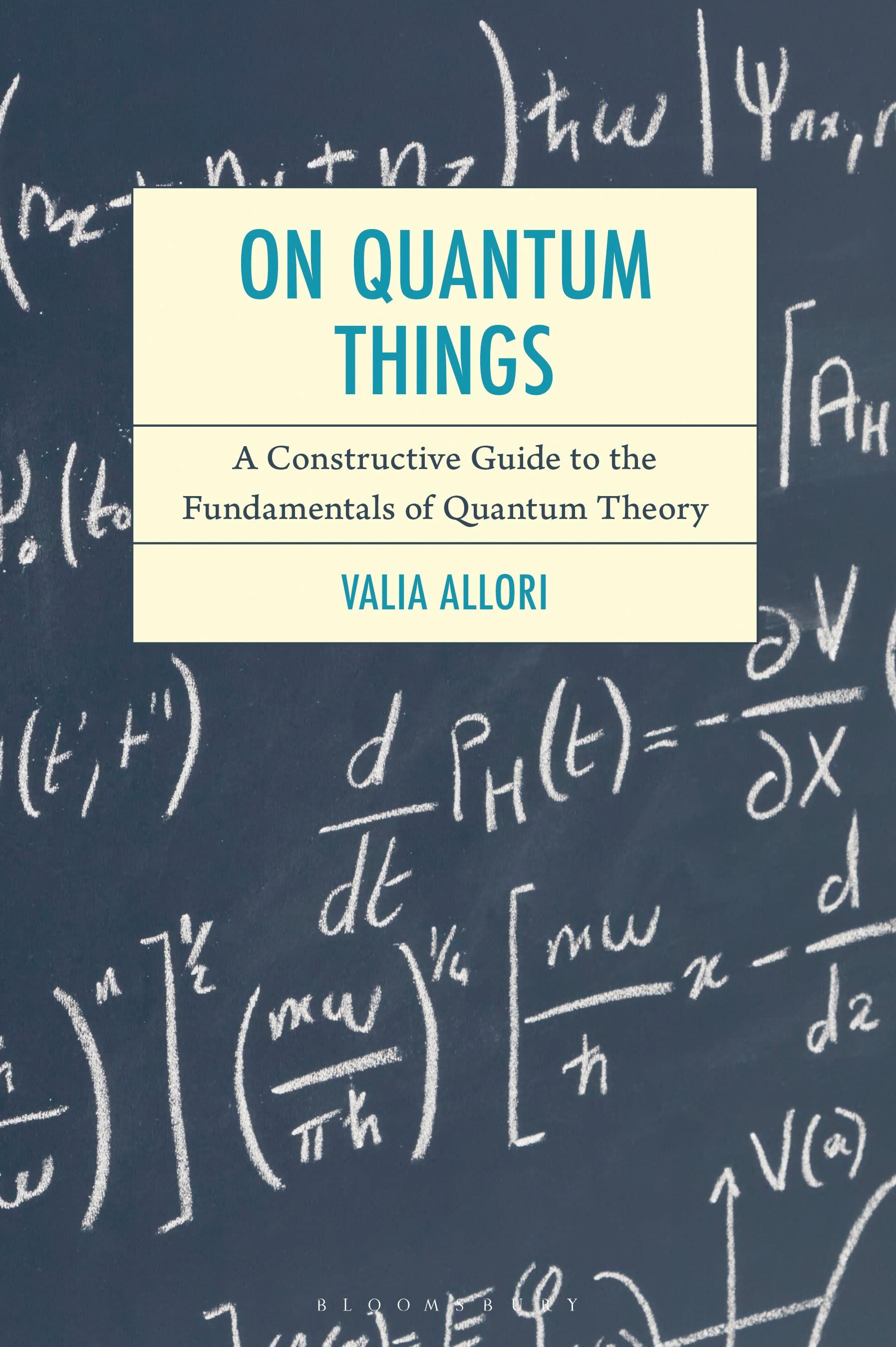
A realist, particle-based view of quantum theory-where the wavefunction no longer plays a central role-offers a clear, commonsense alternative to dominant metaphysical views.
This book explores the metaphysics of quantum theory through a lens of scientific realism-the belief that successful scientific theories describe reality. It critically evaluates various interpretations, including structural realism, wave function realism, and the many-worlds view, highlighting their limitations. Valia Allori proposes a “spatiotemporal foundational ontology” approach, grounded in particles as fundamental entities evolving in three-dimensional space and time, following uniform, symmetric laws. This view is exemplified by Bohmian mechanics (pilot-wave theory), offering a constructive, commonsensical explanation of quantum phenomena. The wave function, in this framework, is not a physical object but plays a functional, law-like role in explaining interactions. Further, the book advances a radical thesis: fundamental particles lack intrinsic properties like mass or charge and are instead “bare” objects distinguished only by the laws governing them. This thesis allows a middle path between traditional object-based metaphysics and eliminative structuralism. Ultimately, the author argues that had physics developed more rationally, instead of following a historical path shaped by contingent choices, the pilot-wave theory might have been the dominant interpretation, minimizing the proliferation of speculative alternatives.
This book explores the metaphysics of quantum theory through a lens of scientific realism-the belief that successful scientific theories describe reality. It critically evaluates various interpretations, including structural realism, wave function realism, and the many-worlds view, highlighting their limitations. Valia Allori proposes a “spatiotemporal foundational ontology” approach, grounded in particles as fundamental entities evolving in three-dimensional space and time, following uniform, symmetric laws. This view is exemplified by Bohmian mechanics (pilot-wave theory), offering a constructive, commonsensical explanation of quantum phenomena. The wave function, in this framework, is not a physical object but plays a functional, law-like role in explaining interactions. Further, the book advances a radical thesis: fundamental particles lack intrinsic properties like mass or charge and are instead “bare” objects distinguished only by the laws governing them. This thesis allows a middle path between traditional object-based metaphysics and eliminative structuralism. Ultimately, the author argues that had physics developed more rationally, instead of following a historical path shaped by contingent choices, the pilot-wave theory might have been the dominant interpretation, minimizing the proliferation of speculative alternatives.
Betaal eenvoudig met kaart, Klarna, Apple Pay of Google Pay. Niet tevreden? Je hebt altijd 14 dagen bedenktijd. Lees meer in onze voorwaarden. Heb je vragen, mail ons dan via hello@memmo.org.
Memmo maakt studeren makkelijker – waar je ook bent ter wereld. Wij brengen je cursusboeken en slimme studietools samen op één plek: samenvattingen, quizzen, podcasts en flashcards. En Ted, je studievriend die antwoord geeft op alles wat je je afvraagt. Meer dan 50.000 studenten studeren hier al – gebouwd om je sneller te laten leren en minder stress te geven.