
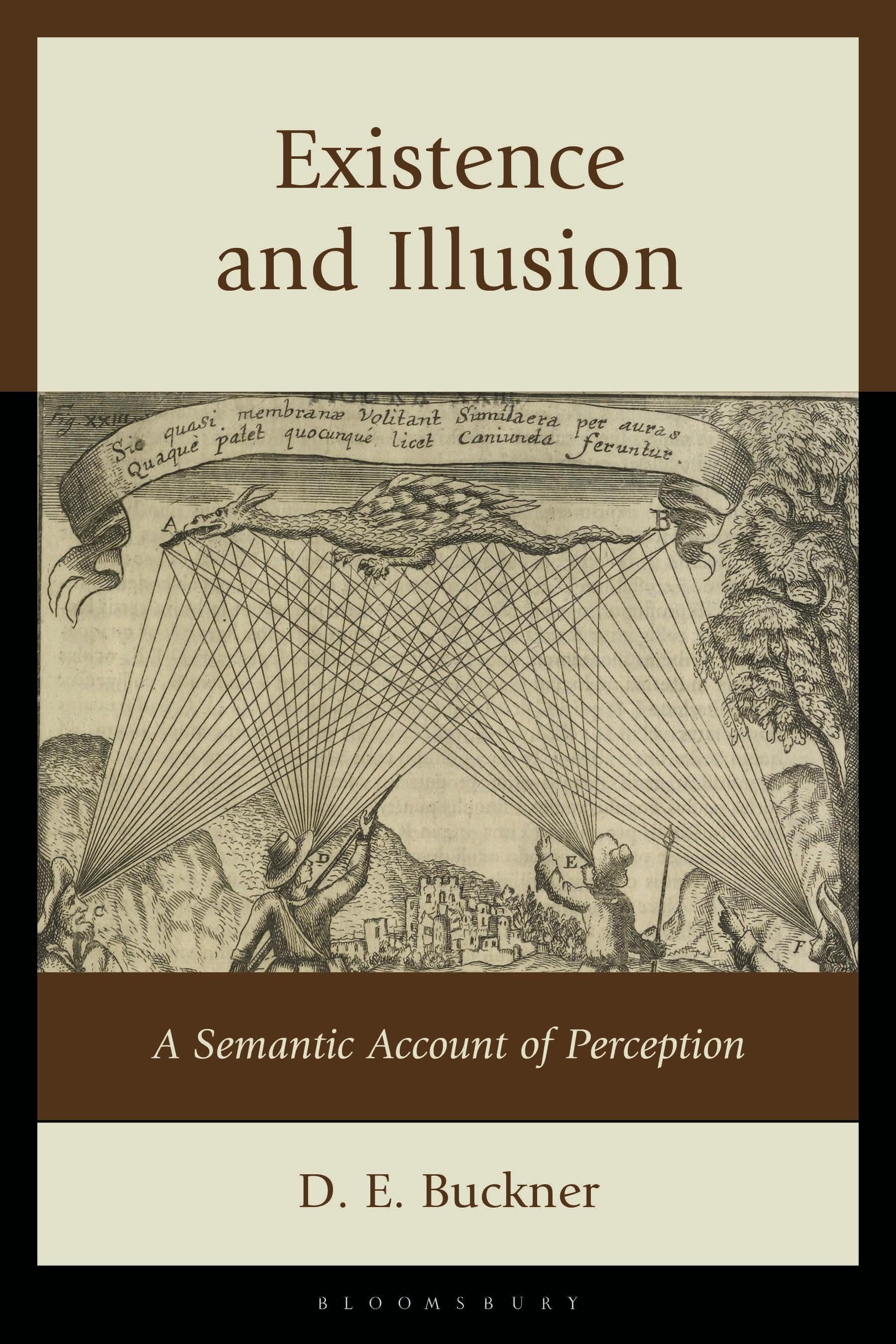
Illusion is a longstanding problem in the philosophy of perception: how can it perceptibly appear that something is the case, though nothing corresponds in reality?
A strong intuition – the Common Kind Assumption that the same account must apply to veridical perception as to illusion – seems to commit us to “weird” mental items like sense data, but an equally strong intuition is that weird items have no place in a parsimonious account of reality.
D.E. Buckner takes a novel approach to this problem, arguing that perceptual states are propositional. Just as the same proposition can be true or false, so the same perceptual state can be veridical or not. Sight tells us that the stick in water is bent, even when our understanding says it is not. This semantic account of perception satisfies the Common Kind Assumption without committing us to weird items.
The book is a fresh approach to the classic problem of illusion, informed by the core topics of philosophical logic: identity, existence, reference and predication. It brings together a number of disparate traditions, including twentieth-century sense datum theory and the subsequent reaction to it; Chastain's anaphoric theory of reference; the Aristotelian notion of a substance (the this of demonstrative reference) and its accidents.
A strong intuition – the Common Kind Assumption that the same account must apply to veridical perception as to illusion – seems to commit us to “weird” mental items like sense data, but an equally strong intuition is that weird items have no place in a parsimonious account of reality.
D.E. Buckner takes a novel approach to this problem, arguing that perceptual states are propositional. Just as the same proposition can be true or false, so the same perceptual state can be veridical or not. Sight tells us that the stick in water is bent, even when our understanding says it is not. This semantic account of perception satisfies the Common Kind Assumption without committing us to weird items.
The book is a fresh approach to the classic problem of illusion, informed by the core topics of philosophical logic: identity, existence, reference and predication. It brings together a number of disparate traditions, including twentieth-century sense datum theory and the subsequent reaction to it; Chastain's anaphoric theory of reference; the Aristotelian notion of a substance (the this of demonstrative reference) and its accidents.
Pagina's: 248
Categorie: Filosofi
e-ISBN: 9781978760271
Verzendgewicht: 1.2 kg
Verzending binnen: 1-2 dagen
Betaal eenvoudig met kaart, Klarna, Apple Pay of Google Pay. Niet tevreden? Je hebt altijd 14 dagen bedenktijd. Lees meer in onze voorwaarden. Heb je vragen, mail ons dan via hello@memmo.org.
Memmo maakt studeren makkelijker – waar je ook bent ter wereld. Wij brengen je cursusboeken en slimme studietools samen op één plek: samenvattingen, quizzen, podcasts en flashcards. En Ted, je studievriend die antwoord geeft op alles wat je je afvraagt. Meer dan 50.000 studenten studeren hier al – gebouwd om je sneller te laten leren en minder stress te geven.