
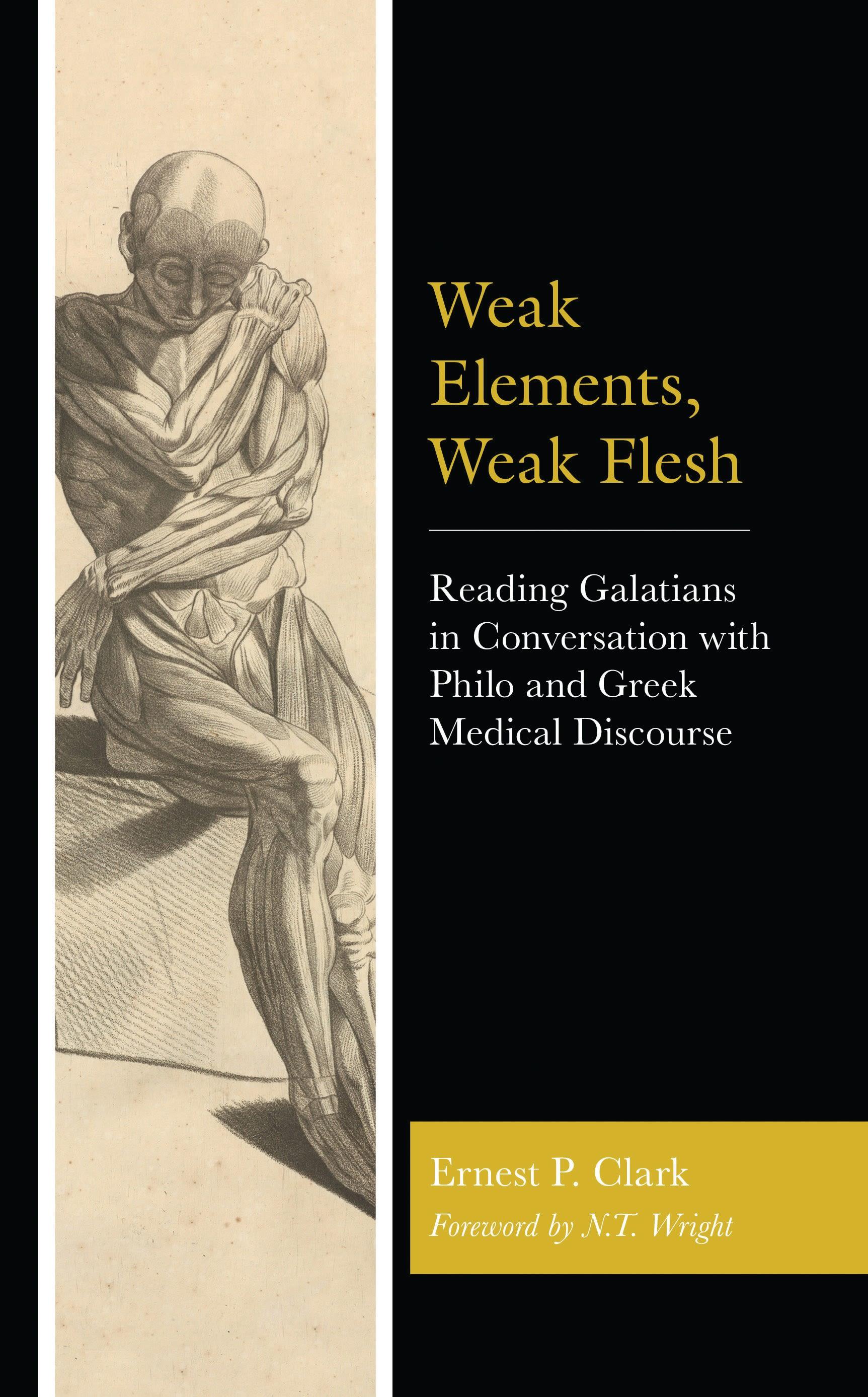
In Weak Elements, Weak Flesh, Ernest Clark reinvigorates an ancient interpretation overlooked since the fourth century. Clark argues that when Paul writes “we too were enslaved under the elements of the world,” he means that the elements that compose the cosmos also compose and compromise the flesh, allowing sin to enslave human persons through their bodies (Gal 4.3). This book demonstrates that early Jews introduced the phrase στοιχε?α το? κ?σμου to refer to the material elements: earth, water, air, and fire. Greek medicine understood these elements to mediate the bodily stimuli and desires which enslave the soul. In his philosophy according to the cosmic elements, Philo promotes the law of Moses as the effective way to be “redeemed from slavery” to the flesh and to attain righteousness. Paul’s epistle to the Galatians opposes this sort of “redemptive nomism.” Paul accepts that weak elements compose the weak flesh and that they mediate sinful stimuli and desires that lead to the actions of the flesh. However, he denies that the law can make people alive or righteous. Instead, Paul prescribes crucifixion with Christ and new life with the Spirit as the cure for sin’s infection of the flesh made of weak elements.
Pagina's: 300
Categorie: Religion & Teologi
e-ISBN: 9781978713963
Verzendgewicht: 1.2 kg
Verzending binnen: 1-2 dagen
Betaal eenvoudig met kaart, Klarna, Apple Pay of Google Pay. Niet tevreden? Je hebt altijd 14 dagen bedenktijd. Lees meer in onze voorwaarden. Heb je vragen, mail ons dan via hello@memmo.org.
Memmo maakt studeren makkelijker – waar je ook bent ter wereld. Wij brengen je cursusboeken en slimme studietools samen op één plek: samenvattingen, quizzen, podcasts en flashcards. En Ted, je studievriend die antwoord geeft op alles wat je je afvraagt. Meer dan 50.000 studenten studeren hier al – gebouwd om je sneller te laten leren en minder stress te geven.