
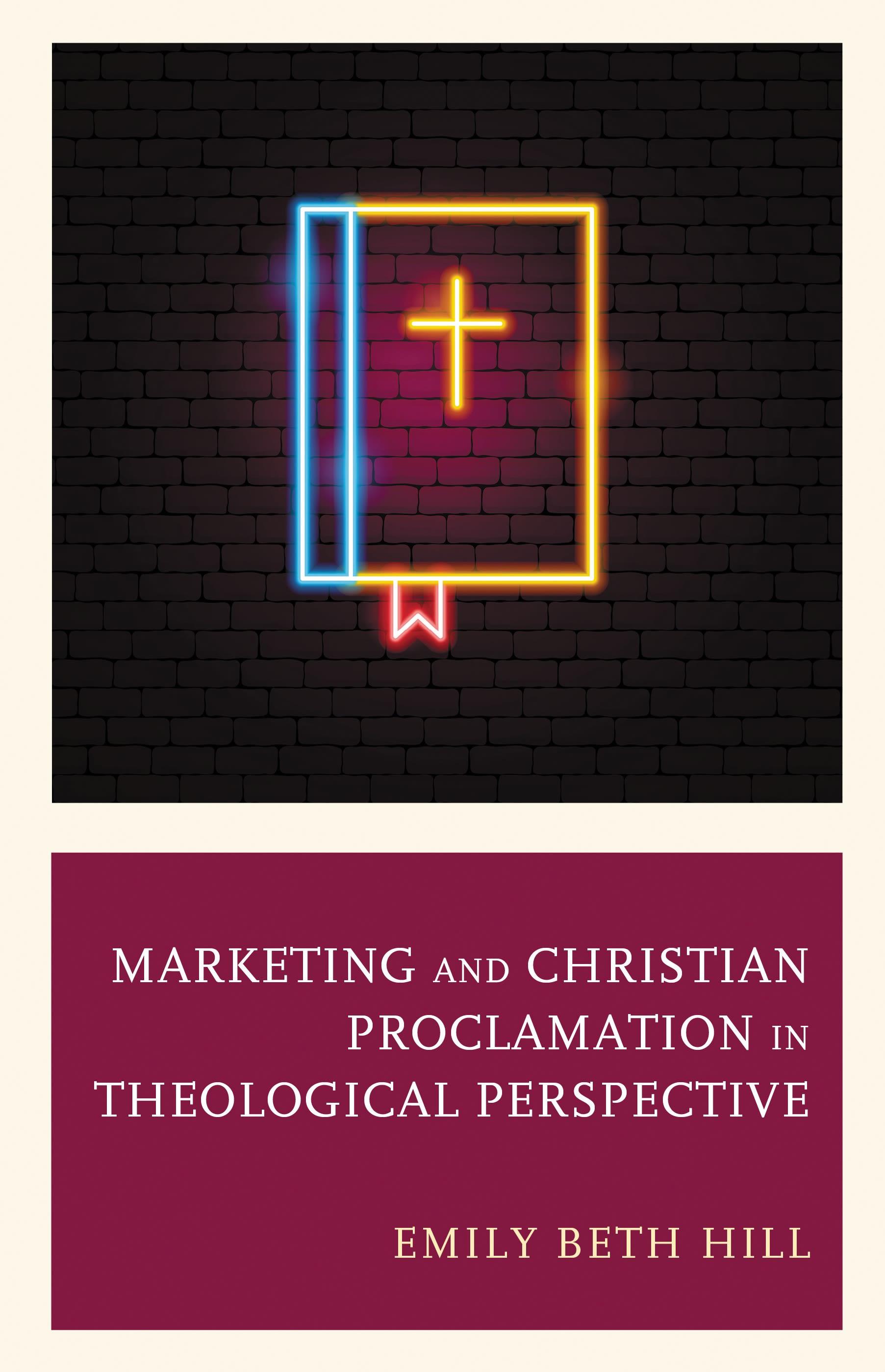
In today’s market-driven world, the contemporary church faces pressing questions as it continues to be formed by the powerful forces of neoliberal capitalism. This book builds on theological examinations of capitalism and consumerism to develop a theology of marketing that addresses two key questions. First, even though church marketing seems to help churches grow amidst a climate of declining church affiliation, should the church use it? Second, considering the church’s indistinguishability from culture in relation to consumption, how should Christians relate to material goods?
To address these questions, Emily Beth Hill develops a framework that draws on the concrete practices of marketing (such as focus groups, big data, branding, and advertising) and the trajectory of their use over time, along with Martin Luther’s theology of the Word. Combining Martin Luther’s pro me (“for me”) theology with marketing concepts, Hill shows that while marketing and the gospel have formal pro me similarities, materially they are quite different: marketing operates as a word of law distinct from the effective, liberating word of the gospel proclaimed for us, and thus the two produce different human identities. While existing examinations of capitalism primarily rely on theologies and discourses of desire, Hill reveals that a theology of the Word illuminates a fruitful new area for reflection on how the church can resist the deformations of capitalism.
To address these questions, Emily Beth Hill develops a framework that draws on the concrete practices of marketing (such as focus groups, big data, branding, and advertising) and the trajectory of their use over time, along with Martin Luther’s theology of the Word. Combining Martin Luther’s pro me (“for me”) theology with marketing concepts, Hill shows that while marketing and the gospel have formal pro me similarities, materially they are quite different: marketing operates as a word of law distinct from the effective, liberating word of the gospel proclaimed for us, and thus the two produce different human identities. While existing examinations of capitalism primarily rely on theologies and discourses of desire, Hill reveals that a theology of the Word illuminates a fruitful new area for reflection on how the church can resist the deformations of capitalism.
Betaal eenvoudig met kaart, Klarna, Apple Pay of Google Pay. Niet tevreden? Je hebt altijd 14 dagen bedenktijd. Lees meer in onze voorwaarden. Heb je vragen, mail ons dan via hello@memmo.org.
Memmo maakt studeren makkelijker – waar je ook bent ter wereld. Wij brengen je cursusboeken en slimme studietools samen op één plek: samenvattingen, quizzen, podcasts en flashcards. En Ted, je studievriend die antwoord geeft op alles wat je je afvraagt. Meer dan 50.000 studenten studeren hier al – gebouwd om je sneller te laten leren en minder stress te geven.