
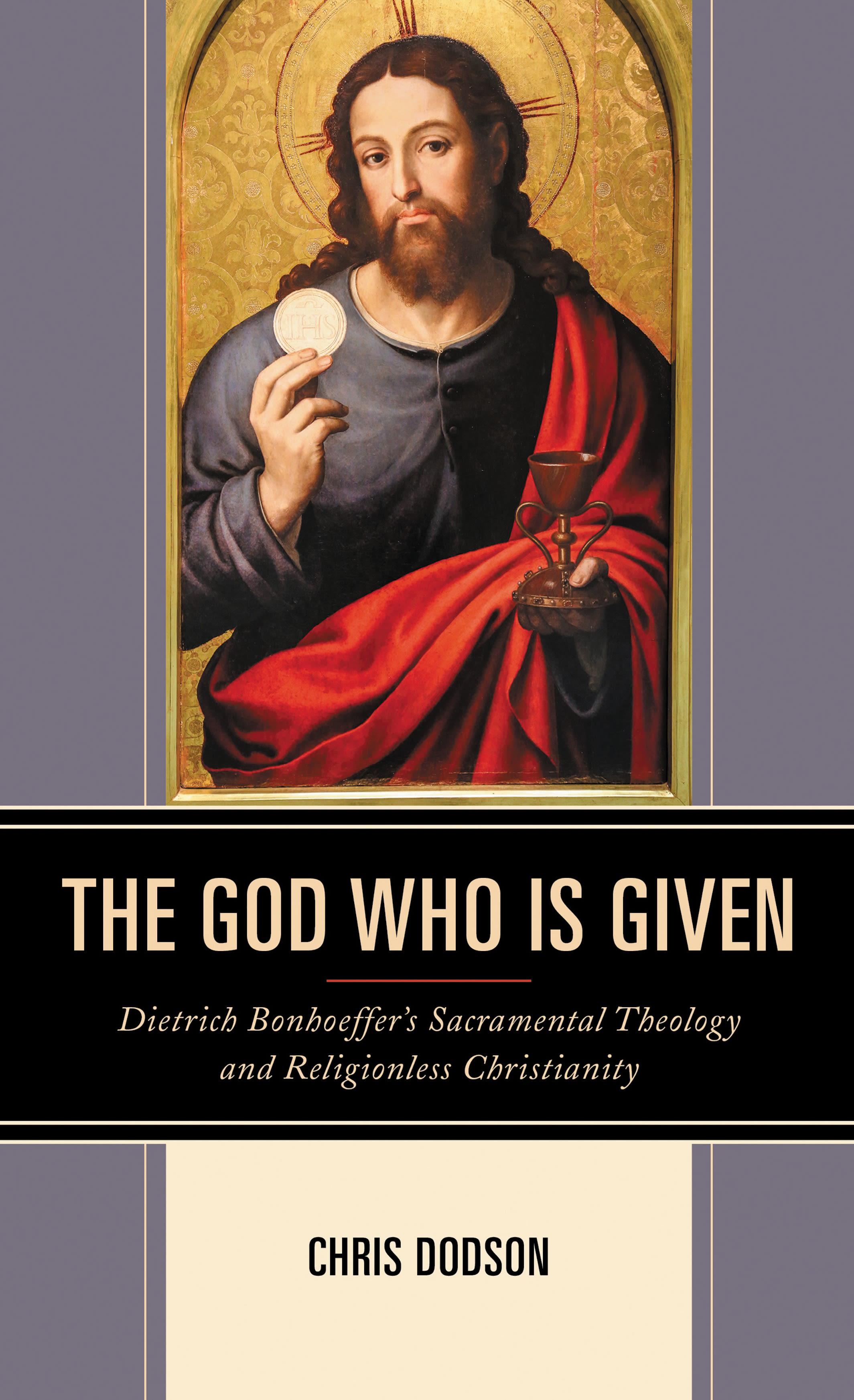
Dietrich Bonhoeffer's notions of religionless Christianity have provoked a great deal of theological inquiry, much of which has hindered evangelical reception of Bonhoeffer's work. By setting religionless Christianity in the context of Bonhoeffer's Lutheran sacramental theology, Chris Dodson furthers Bonhoeffer's belief that receiving the God given in the sacraments both resists Christians' proclivity towards religious, self-serving ends and draws Christians into a life of robust faith and love. Receiving Christ in baptism, the Eucharist, and confession serves to instill, sustain, locate, and vitalize the form of life that Bonhoeffer calls “religionless.” The church and its core practices are not abandoned in Bonhoeffer’s prison letters; they are reengaged with a more proper disposition: faithful love of God and neighbor. In this way, common evangelical skepticisms about Bonhoeffer’s later theology can be assuaged. Bonhoeffer’s theology, rightly construed, provokes evangelicals, and particularly American evangelicals, to reconsider and restructure their worship along the lines of a religionless Christianity that promotes a deeper faith resulting from a more vigorous encounter with Christ as he gives himself over to his people.
Betaal eenvoudig met kaart, Klarna, Apple Pay of Google Pay. Niet tevreden? Je hebt altijd 14 dagen bedenktijd. Lees meer in onze voorwaarden. Heb je vragen, mail ons dan via hello@memmo.org.
Memmo maakt studeren makkelijker – waar je ook bent ter wereld. Wij brengen je cursusboeken en slimme studietools samen op één plek: samenvattingen, quizzen, podcasts en flashcards. En Ted, je studievriend die antwoord geeft op alles wat je je afvraagt. Meer dan 50.000 studenten studeren hier al – gebouwd om je sneller te laten leren en minder stress te geven.