
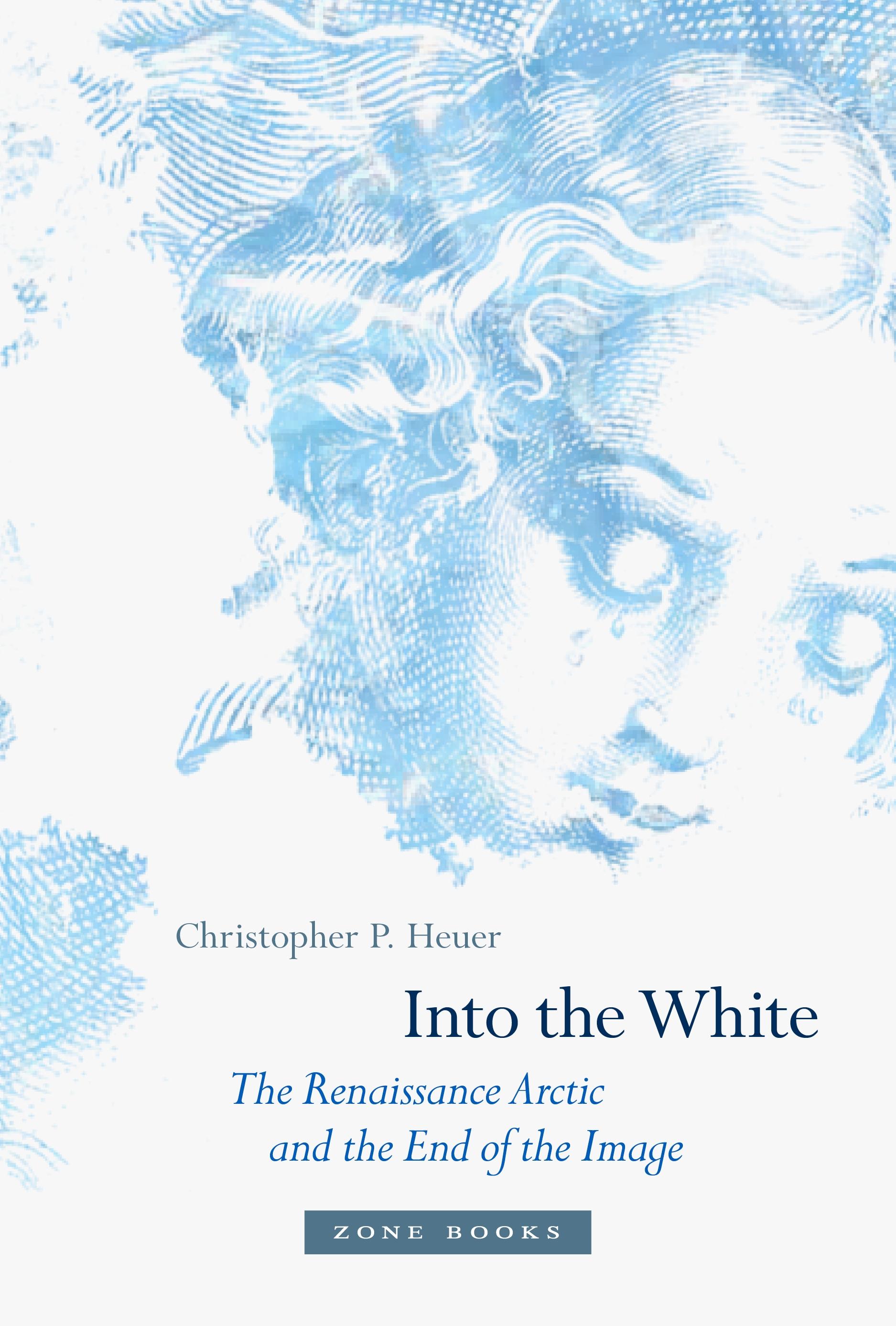
European narratives of the Atlantic New World tell stories of people and things: strange flora, wondrous animals, and sun-drenched populations for Europeans to mythologize or exploit. Yet between 1500 and 1700 one region upended all of these conventions in travel writing, science, and, most unexpectedly, art: the Arctic. Icy, unpopulated, visually and temporally “abstract,” the far North – a different kind of terra incognita for the Renaissance imagination – offered more than new stuff to be mapped, plundered, or even seen. Neither a continent, an ocean, nor a meteorological circumstance, the Arctic forced visitors from England, the Netherlands, Germany, and Italy, to grapple with what we would now call a “nonsite,” spurring dozens of previously unknown works, objects, and texts – and this all in an intellectual and political milieu crackling with Reformation debates over art’s very legitimacy.
Into the White uses five case studies to probe how the early modern Arctic (as site, myth, and ecology) affected contemporary debates of perception and matter, of representation, discovery, and the time of the earth – long before the nineteenth century romanticized the polar landscape. In the far North, this book contends, the Renaissance exotic became something far stranger than the marvelous or the curious, something darkly material and unmasterable, something beyond the idea of image itself.
Betaal eenvoudig met kaart, Klarna, Apple Pay of Google Pay. Niet tevreden? Je hebt altijd 14 dagen bedenktijd. Lees meer in onze voorwaarden. Heb je vragen, mail ons dan via hello@memmo.org.
Memmo maakt studeren makkelijker – waar je ook bent ter wereld. Wij brengen je cursusboeken en slimme studietools samen op één plek: samenvattingen, quizzen, podcasts en flashcards. En Ted, je studievriend die antwoord geeft op alles wat je je afvraagt. Meer dan 50.000 studenten studeren hier al – gebouwd om je sneller te laten leren en minder stress te geven.