
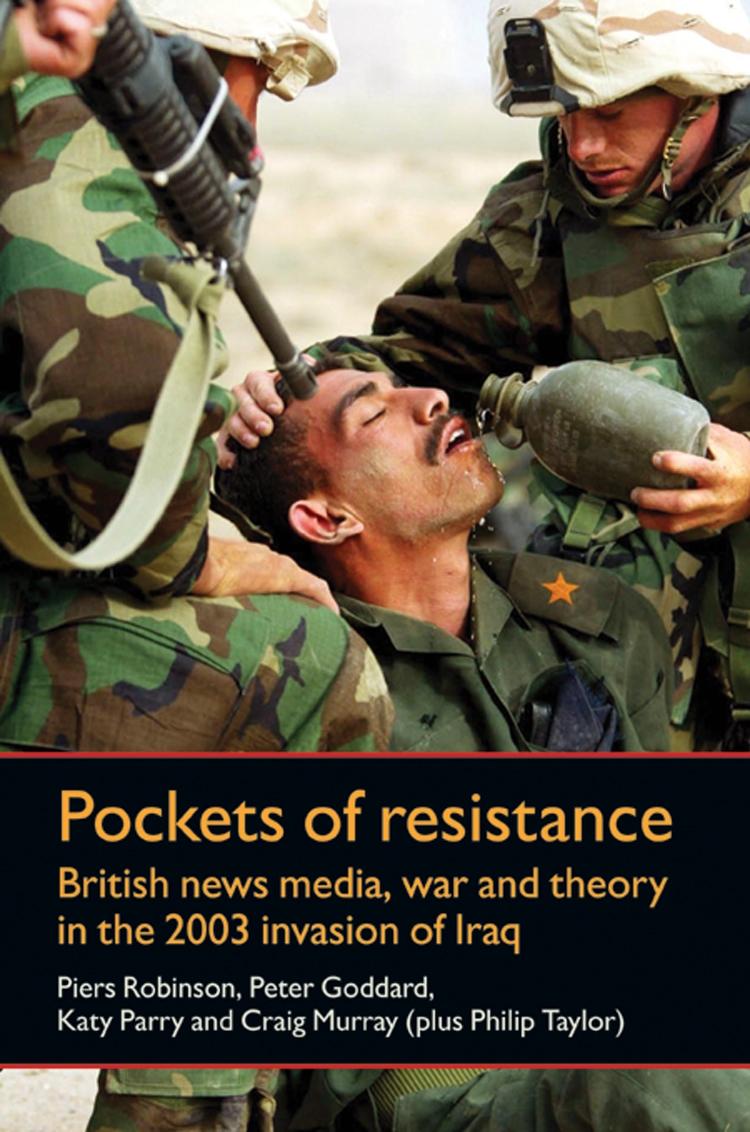
For scholars of media and war, the 2003 invasion of Iraq is a compelling case to study. As part of President Bush’s ‘war on terror’, the invasion was the most controversial British foreign policy decision since Suez, and its ramifications and aftermath have rarely been far from the news. In the many political and public debates regarding this conflict, arguments over the role of the media have been omnipresent. For some, media coverage was biased against the war, for others it became a cheerleader for the invasion. Where does the truth lie? Drawing upon a uniquely-detailed and rich content and framing analysis of television and press coverage, and on interviews with some of the journalists involved, Pockets of Resistance provides an authoritative assessment of how British news media reported the 2003 Iraq invasion and also of the theoretical implications of this case for our understanding of wartime media-state relations.
Pockets of Resistance examines the successes and failures of British television news as it sought to attain independence under the difficult circumstances of war, and describes and explains the emergence of some surprisingly vociferous anti-war voices within a diverse national press.
Betaal eenvoudig met kaart, Klarna, Apple Pay of Google Pay. Niet tevreden? Je hebt altijd 14 dagen bedenktijd. Lees meer in onze voorwaarden. Heb je vragen, mail ons dan via hello@memmo.org.
Memmo maakt studeren makkelijker – waar je ook bent ter wereld. Wij brengen je cursusboeken en slimme studietools samen op één plek: samenvattingen, quizzen, podcasts en flashcards. En Ted, je studievriend die antwoord geeft op alles wat je je afvraagt. Meer dan 50.000 studenten studeren hier al – gebouwd om je sneller te laten leren en minder stress te geven.