
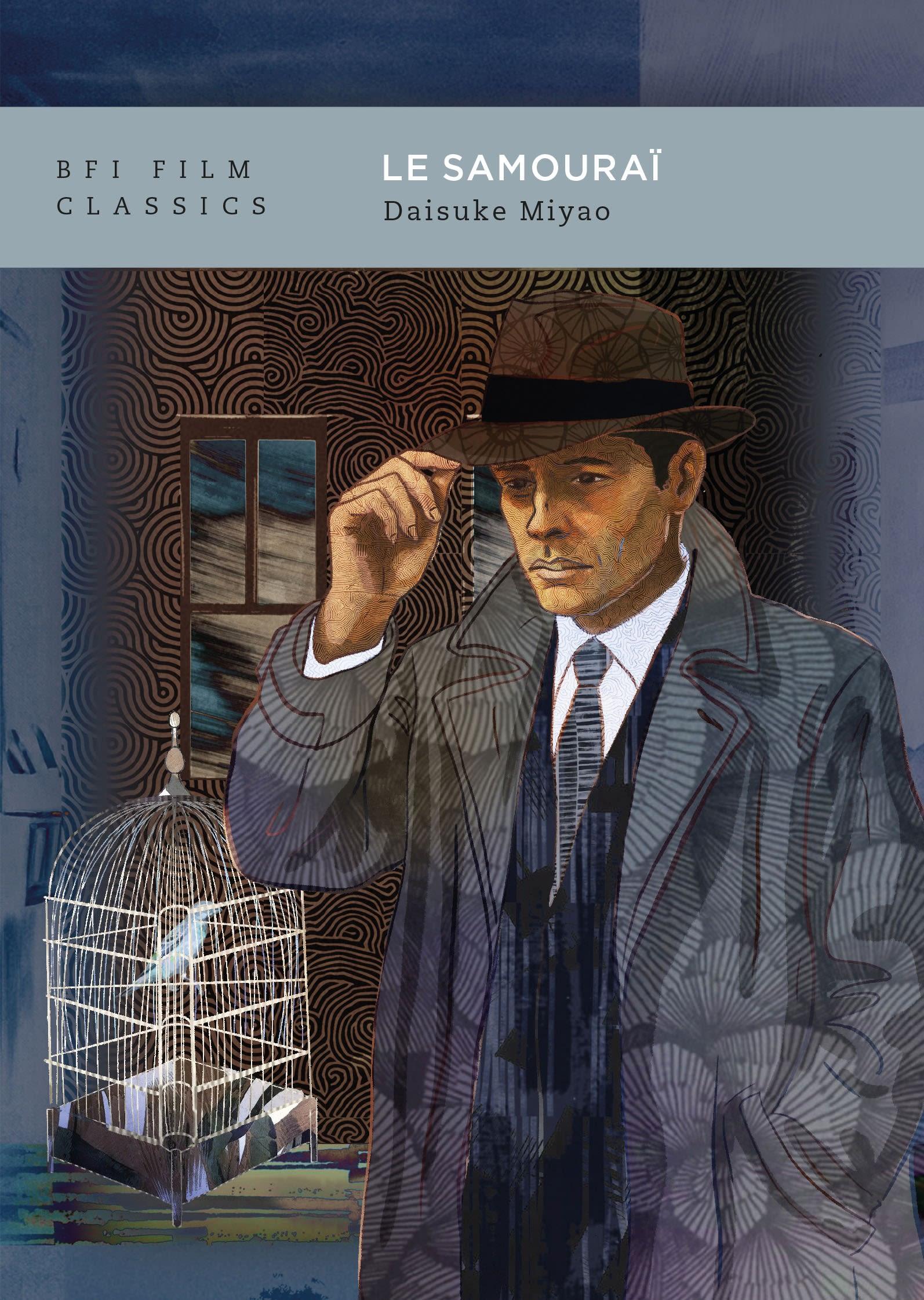
In this compelling study, Daisuke Miyao explores Jean-Pierre Melville's cult 1967 thriller Le Samouraï, a film that unfolds in a coolly stylised Paris where the paths of a contract killer, Jef Costello (Alain Delon), and the police commissaire pursuing him (François Périer) fatally intersect.
Despite its title, Le Samouraï, is not a sword-clashing tale of feudal Japan. Rather, Miyao suggests that the film's philosophical framework draws on both existentialism and the samurai moral philosophy of bushido, or 'the way of the warrior', and considers how these philosophies may help explain Jef Costello's identity crisis and his concluding act of self-annihilation. In a close analysis of Melville's technical and aesthetic decisions, Miyao highlights the film's use of close-ups to convey or mask emotion, the play of light and shadow, and the function of flashbacks and dream sequences in the narrative, as well as the meanings of Costello's pet bullfinch.
Setting Le Samouraï within the shifting landscape of post-war French cinema, Miyao traces its dialogue with Hollywood film noir and Japanese art cinema, particularly Kurosawa's Rashomon (1950), suggesting that both genres informed and influenced Melville's film-making.
Finally, Miyao discusses the film's enduring legacy, from Jim Jarmusch's Ghost Dog: The Way of the Samurai (1999) to Yoko M.'s 2020 novella Jef, a prequel to the film.
Despite its title, Le Samouraï, is not a sword-clashing tale of feudal Japan. Rather, Miyao suggests that the film's philosophical framework draws on both existentialism and the samurai moral philosophy of bushido, or 'the way of the warrior', and considers how these philosophies may help explain Jef Costello's identity crisis and his concluding act of self-annihilation. In a close analysis of Melville's technical and aesthetic decisions, Miyao highlights the film's use of close-ups to convey or mask emotion, the play of light and shadow, and the function of flashbacks and dream sequences in the narrative, as well as the meanings of Costello's pet bullfinch.
Setting Le Samouraï within the shifting landscape of post-war French cinema, Miyao traces its dialogue with Hollywood film noir and Japanese art cinema, particularly Kurosawa's Rashomon (1950), suggesting that both genres informed and influenced Melville's film-making.
Finally, Miyao discusses the film's enduring legacy, from Jim Jarmusch's Ghost Dog: The Way of the Samurai (1999) to Yoko M.'s 2020 novella Jef, a prequel to the film.
Betaal eenvoudig met kaart, Klarna, Apple Pay of Google Pay. Niet tevreden? Je hebt altijd 14 dagen bedenktijd. Lees meer in onze voorwaarden. Heb je vragen, mail ons dan via hello@memmo.org.
Memmo maakt studeren makkelijker – waar je ook bent ter wereld. Wij brengen je cursusboeken en slimme studietools samen op één plek: samenvattingen, quizzen, podcasts en flashcards. En Ted, je studievriend die antwoord geeft op alles wat je je afvraagt. Meer dan 50.000 studenten studeren hier al – gebouwd om je sneller te laten leren en minder stress te geven.