
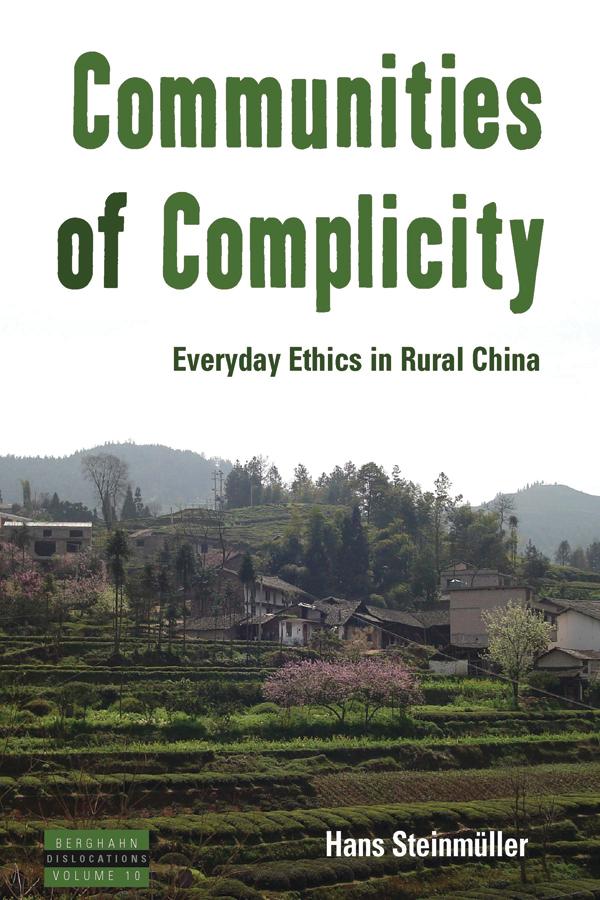
Everyday life in contemporary rural China is characterized by an increased sense of moral challenge and uncertainty. Ordinary people often find themselves caught between the moral frameworks of capitalism, Maoism and the Chinese tradition. This ethnographic study of the village of Zhongba (in Hubei Province, central China) is an attempt to grasp the ethical reflexivity of everyday life in rural China. Drawing on descriptions of village life, interspersed with targeted theoretical analyses, the author examines how ordinary people construct their own senses of their lives and their futures in everyday activities: building houses, working, celebrating marriages and funerals, gambling and dealing with local government. The villagers confront moral uncertainty; they creatively harmonize public discourse and local practice; and sometimes they resolve incoherence and unease through the use of irony. In so doing, they perform everyday ethics and re-create transient moral communities at a time of massive social dislocation.
Betaal eenvoudig met kaart, Klarna, Apple Pay of Google Pay. Niet tevreden? Je hebt altijd 14 dagen bedenktijd. Lees meer in onze voorwaarden. Heb je vragen, mail ons dan via hello@memmo.org.
Memmo maakt studeren makkelijker – waar je ook bent ter wereld. Wij brengen je cursusboeken en slimme studietools samen op één plek: samenvattingen, quizzen, podcasts en flashcards. En Ted, je studievriend die antwoord geeft op alles wat je je afvraagt. Meer dan 50.000 studenten studeren hier al – gebouwd om je sneller te laten leren en minder stress te geven.