
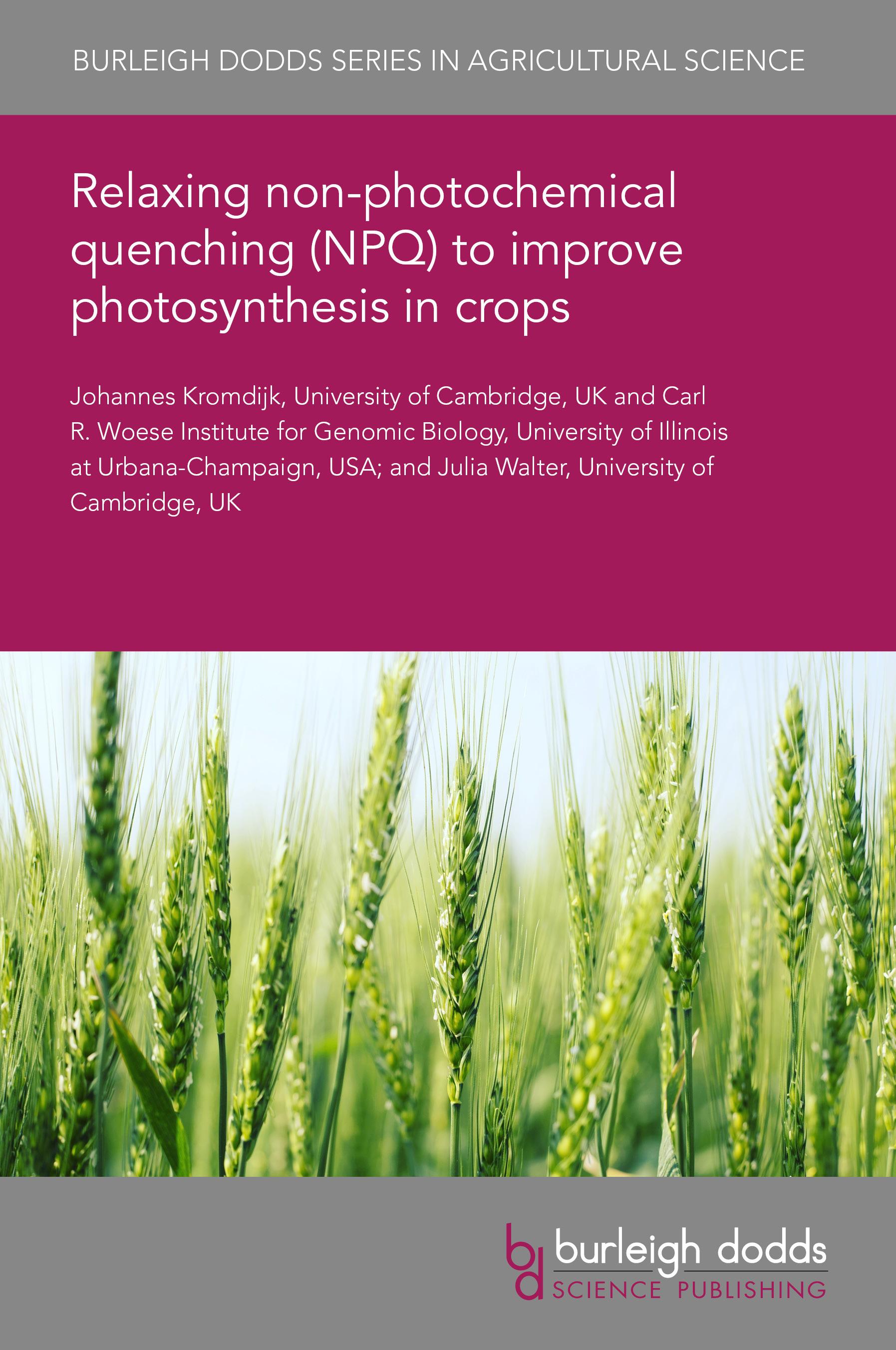
Sunlight intercepted by crop plants drives photosynthesis and growth. However, the light-harvesting antenna complexes that capture light energy for photosynthesis can also absorb too much light, which enhances the formation for reactive oxygen species and can result in damage to photosynthetic reaction centres. In order to prevent excessive damage, light-harvesting efficiency is reduced under high light, via upregulation of non-photochemical quenching (NPQ) processes involved in thermal dissipation of excitation energy in the photosystem II antennae. Relaxation of NPQ following high light exposure is not instantaneous and the response time increases with severity and longevity of the high light exposure. Due to slow NPQ relaxation, photosynthetic light use efficiency can be decreased for prolonged periods after high light exposure. In this chapter we review mechanistic understanding of light harvesting and NPQ, how NPQ can be measured and results from recent attempts to accelerate NPQ responses to light.
Pagina's: 18
Categorie: Biologi
e-ISBN: 9781801463607
Verzendgewicht: 1.2 kg
Verzending binnen: 1-2 dagen
Betaal eenvoudig met kaart, Klarna, Apple Pay of Google Pay. Niet tevreden? Je hebt altijd 14 dagen bedenktijd. Lees meer in onze voorwaarden. Heb je vragen, mail ons dan via hello@memmo.org.
Memmo maakt studeren makkelijker – waar je ook bent ter wereld. Wij brengen je cursusboeken en slimme studietools samen op één plek: samenvattingen, quizzen, podcasts en flashcards. En Ted, je studievriend die antwoord geeft op alles wat je je afvraagt. Meer dan 50.000 studenten studeren hier al – gebouwd om je sneller te laten leren en minder stress te geven.
Misschien vind je dit ook leuk
Koop het boek0