
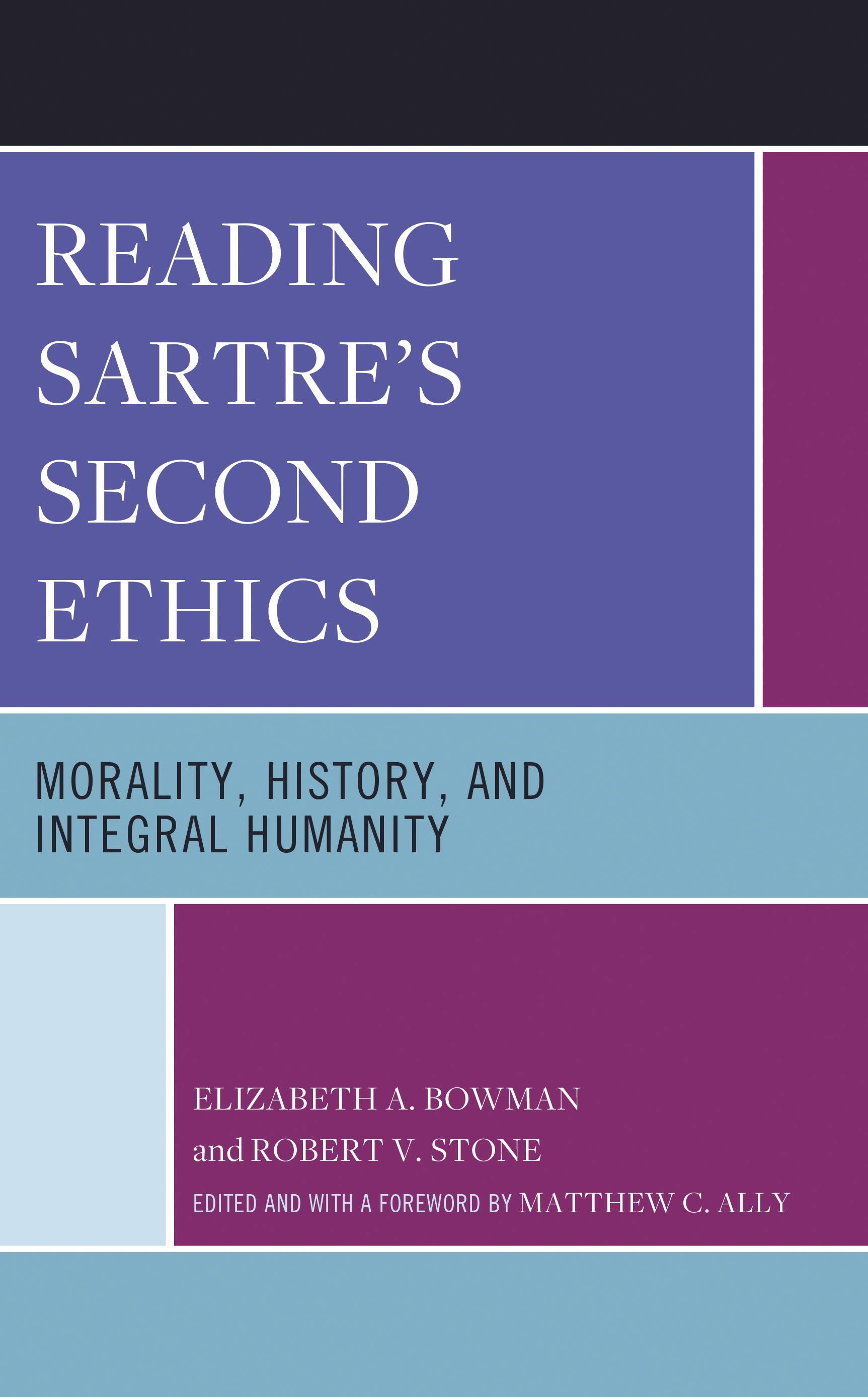
In Reading Sartre’s Second Ethics, Elizabeth A. Bowman and Robert V. Stone provide a comprehensive, reconstructive, and critical interpretation of Jean-Paul Sartre’s mature dialectical ethics. The key Sartrean texts are two posthumously published lectures, one delivered at the Gramsci Institute in Rome in 1964, the other scheduled to be delivered at Cornell University in 1965 but cancelled by Sartre in protest of U.S. foreign policy. Though different in content, method, and intended audience, Sartre gave both lectures the shared title “Morality and History.” As Bowman and Stone argue, these texts comprise a single, systematic ethic in two parts. The Cornell lecture focuses primarily on a regressive and phenomenological analysis of normativity and its ambiguous place in lived moral experience; the Rome lecture focuses primarily on a progressive and dialectical synthesis of the ends or goals of historical conduct. Taken together, the two texts demonstrate that “integral humanity” is always possible because the means to it can always be freely invented.
Betaal eenvoudig met kaart, Klarna, Apple Pay of Google Pay. Niet tevreden? Je hebt altijd 14 dagen bedenktijd. Lees meer in onze voorwaarden. Heb je vragen, mail ons dan via hello@memmo.org.
Memmo maakt studeren makkelijker – waar je ook bent ter wereld. Wij brengen je cursusboeken en slimme studietools samen op één plek: samenvattingen, quizzen, podcasts en flashcards. En Ted, je studievriend die antwoord geeft op alles wat je je afvraagt. Meer dan 50.000 studenten studeren hier al – gebouwd om je sneller te laten leren en minder stress te geven.