
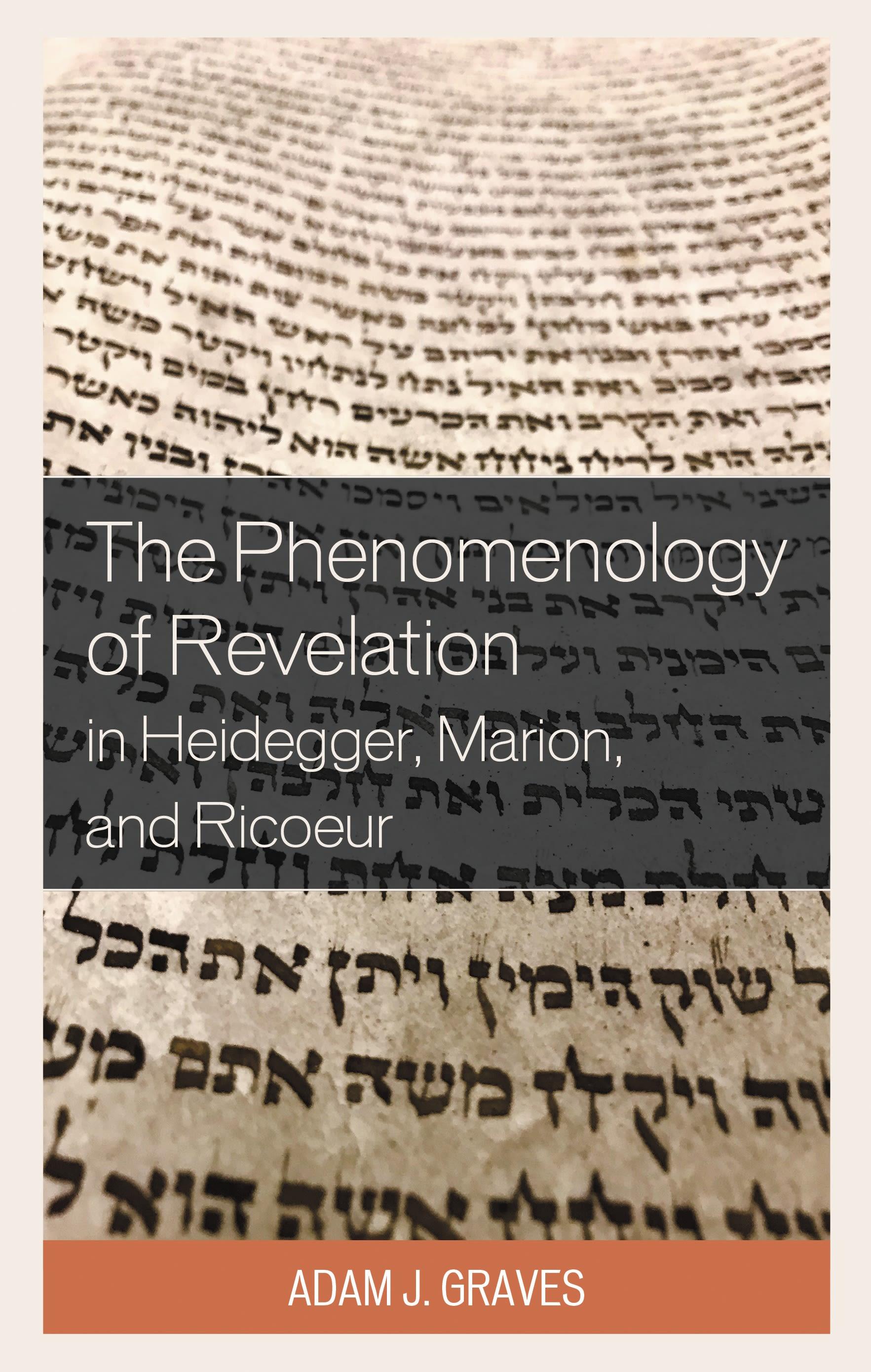
The Phenomenology of Revelation in Heidegger, Marion, and Ricoeur provides a critical framework for understanding the phenomenology of revelation through a series of close readings that serve as the basis for an imagined dialogue between Martin Heidegger, Jean-Luc Marion, and Paul Ricoeur. Adam J. Graves distinguishes between two dominant approaches to revelation: a “radical” approach that seeks to disclose a pre-linguistic experience of revelation through a radicalization of the phenomenological reduction, and a “hermeneutical” one that characterizes revelation as an eruption of meaning arising from our encounter with concrete symbols, narratives, and texts. According to Graves, the radical approach is often driven by a misplaced concern for maintaining philosophical rigor and for avoiding theological biases, or “contaminations.” This preoccupation leads to a process of “counter-contamination” in which the concept of revelation is ultimately estranged from the phenomenon’s rich historical and linguistic content. While Ricoeur’s hermeneutic phenomenology may do a better job of accommodating the concrete content of revelation, it does so at the price of having to renouncing the kind of “presuppositionlessness” generally associated with phenomenological method. Ultimately, Graves argues that a more nuanced appreciation of the complex nature of our linguistic inheritance enables us to reconceive the relationship between revelation and philosophical thought.
Betaal eenvoudig met kaart, Klarna, Apple Pay of Google Pay. Niet tevreden? Je hebt altijd 14 dagen bedenktijd. Lees meer in onze voorwaarden. Heb je vragen, mail ons dan via hello@memmo.org.
Memmo maakt studeren makkelijker – waar je ook bent ter wereld. Wij brengen je cursusboeken en slimme studietools samen op één plek: samenvattingen, quizzen, podcasts en flashcards. En Ted, je studievriend die antwoord geeft op alles wat je je afvraagt. Meer dan 50.000 studenten studeren hier al – gebouwd om je sneller te laten leren en minder stress te geven.