
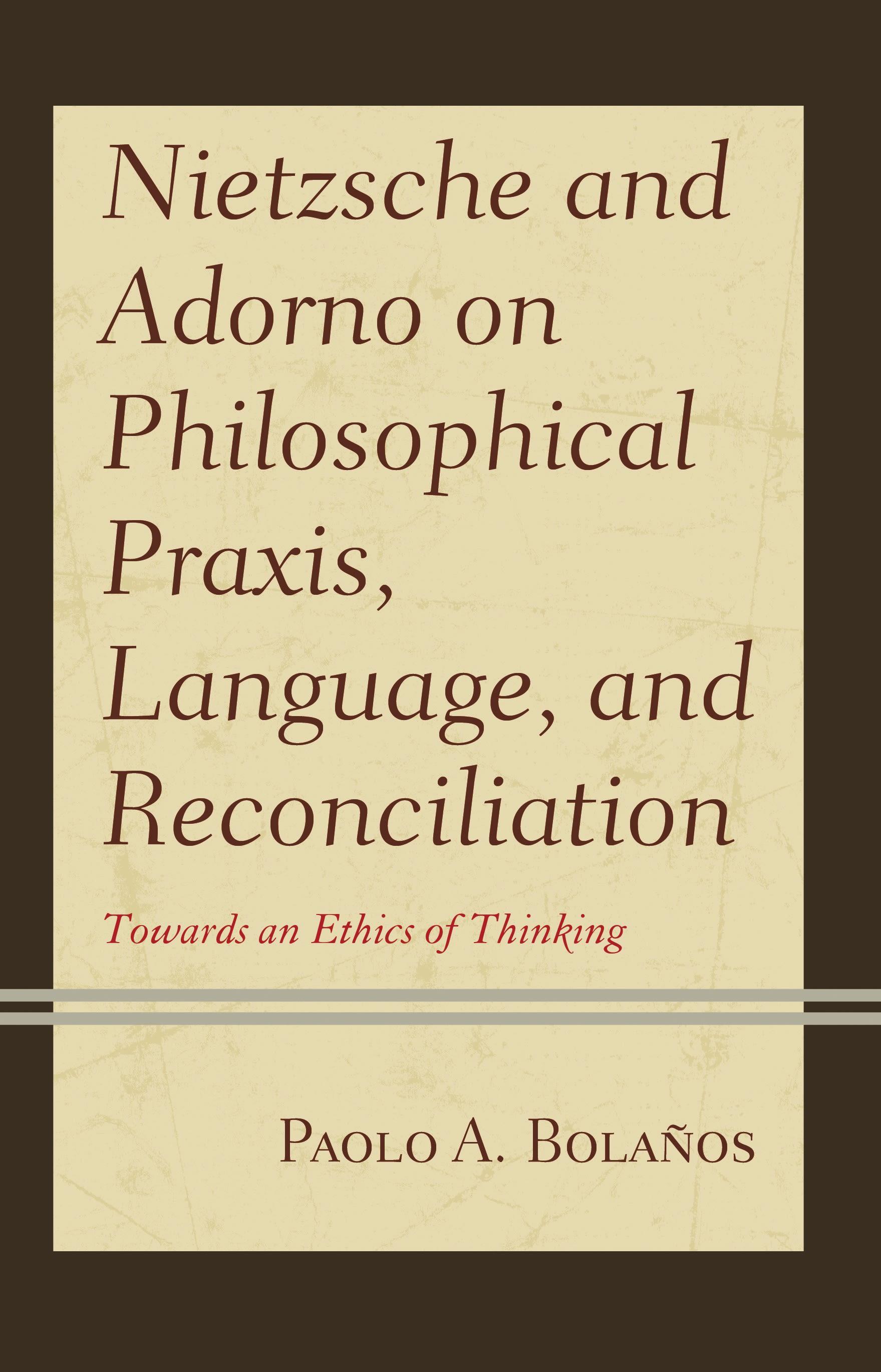
Nietzsche and Adorno on Philosophical Praxis, Language, and Reconciliation: Towards an Ethics of Thinking offers a philosophical notion of an “ethics of thinking,” a kind of thinking that is receptive to the non-identical character of the world of human and non-human objects. Paolo A. Bolaños experiments with the ideas of Friedrich Nietzsche and Theodor W. Adorno, who are presented as contemporary proponents of the Frühromantik tradition. Bolaños offers a reconstruction of the respective philosophies of language of Nietzsche and Adorno, as well as a rehearsal of their critique of metaphysics and identity thinking, in order to develop a notion of philosophical praxis that is grounded in the ethical dimension of thinking. Via Nietzsche and Adorno, Bolaños argues that thinking’s performative participation in uncertainty broadens the domain of reason, thereby also broadening our conceptual capacities and our receptivity to new possibilities of thinking. As an ethical praxis, thinking guards itself from the error of solidification, thereby opening philosophy to a reconciliatory, as opposed to domineering, reception of the world.
Betaal eenvoudig met kaart, Klarna, Apple Pay of Google Pay. Niet tevreden? Je hebt altijd 14 dagen bedenktijd. Lees meer in onze voorwaarden. Heb je vragen, mail ons dan via hello@memmo.org.
Memmo maakt studeren makkelijker – waar je ook bent ter wereld. Wij brengen je cursusboeken en slimme studietools samen op één plek: samenvattingen, quizzen, podcasts en flashcards. En Ted, je studievriend die antwoord geeft op alles wat je je afvraagt. Meer dan 50.000 studenten studeren hier al – gebouwd om je sneller te laten leren en minder stress te geven.