
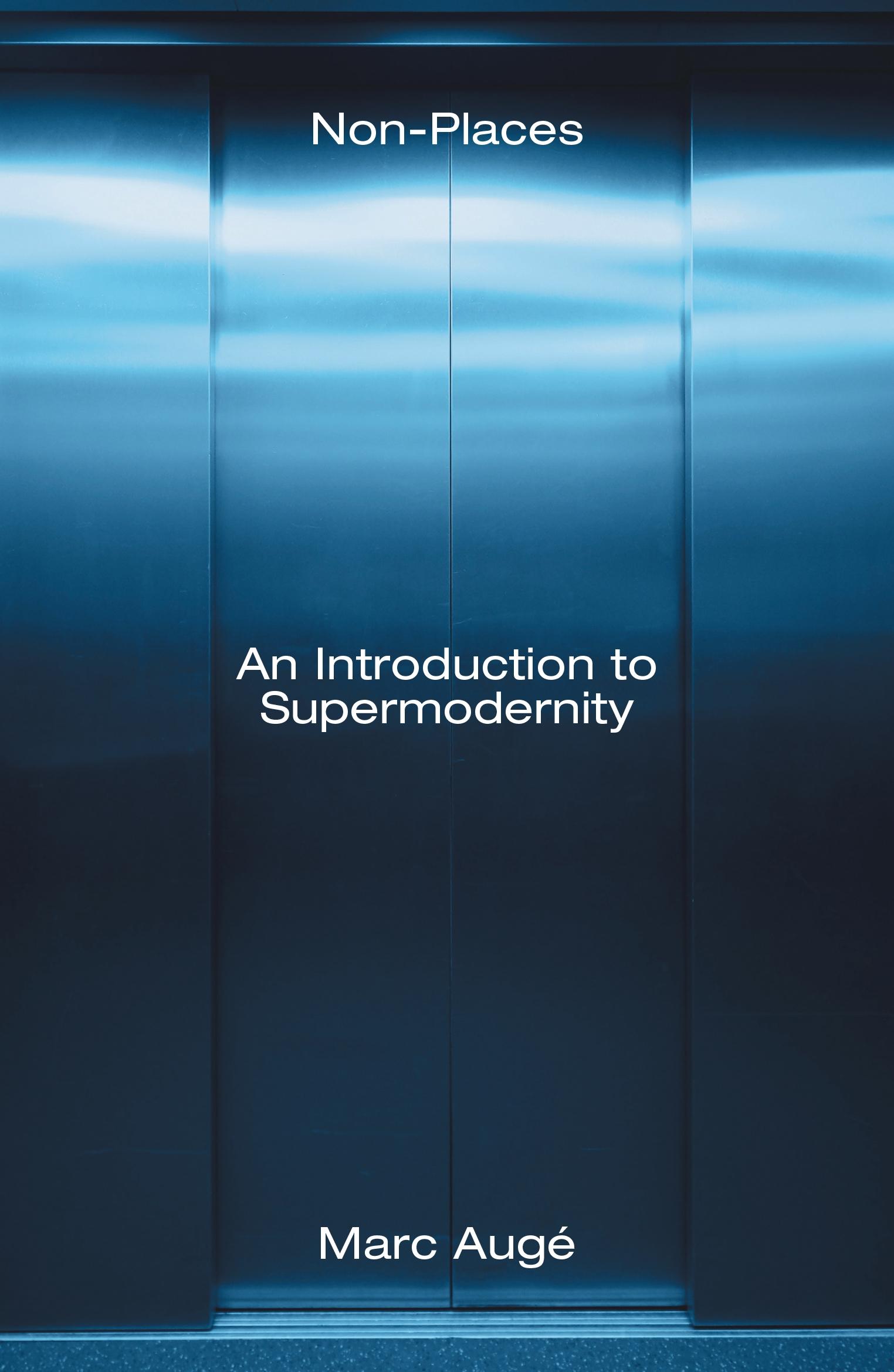
An ever-increasing proportion of our lives is spent in supermarkets, airports and hotels, on motorways or in front of TVs, computer and cash machines. This invasion of the world by what Marc Auge calls 'non-space' results in a profound alteration of awareness: something we perceive, but only in a partial and incoherent manner. Auge uses the concept of 'supermodernity' to describe the logic of these late-capitalist phenomena - a logic of excessive information and excessive space. In this fascinating and lucid essay he seeks to establish and intellectual armature for an anthropology of supermodernity. Starting with an attempt to disentangle anthropology from history, Auge goes on to map the distinction between place, encrusted with historical monuments and creative social life, and non-place, to which individuals are connected in a uniform manner and where no organic social life is possible.
Unlike Baudelairean modernity, where old and new are interwoven, supermodernity is self-contained: from the motorway or aircraft, local or exotic particularities are presented two-dimensionally as a sort of theme-park spectacle. Auge does not suggest that supermodernity is all-encompassing: place still exist outside non-place and tend to reconstitute themselves inside it. But he argues powerfully that we are in transit through non-place for more and more of our time, as if between immense parentheses, and concludes that this new form of solitude should become the subject of an anthropology of its own.
Unlike Baudelairean modernity, where old and new are interwoven, supermodernity is self-contained: from the motorway or aircraft, local or exotic particularities are presented two-dimensionally as a sort of theme-park spectacle. Auge does not suggest that supermodernity is all-encompassing: place still exist outside non-place and tend to reconstitute themselves inside it. But he argues powerfully that we are in transit through non-place for more and more of our time, as if between immense parentheses, and concludes that this new form of solitude should become the subject of an anthropology of its own.
Betaal eenvoudig met kaart, Klarna, Apple Pay of Google Pay. Niet tevreden? Je hebt altijd 14 dagen bedenktijd. Lees meer in onze voorwaarden. Heb je vragen, mail ons dan via hello@memmo.org.
Memmo maakt studeren makkelijker – waar je ook bent ter wereld. Wij brengen je cursusboeken en slimme studietools samen op één plek: samenvattingen, quizzen, podcasts en flashcards. En Ted, je studievriend die antwoord geeft op alles wat je je afvraagt. Meer dan 50.000 studenten studeren hier al – gebouwd om je sneller te laten leren en minder stress te geven.
Misschien vind je dit ook leuk
Koop het boek0