
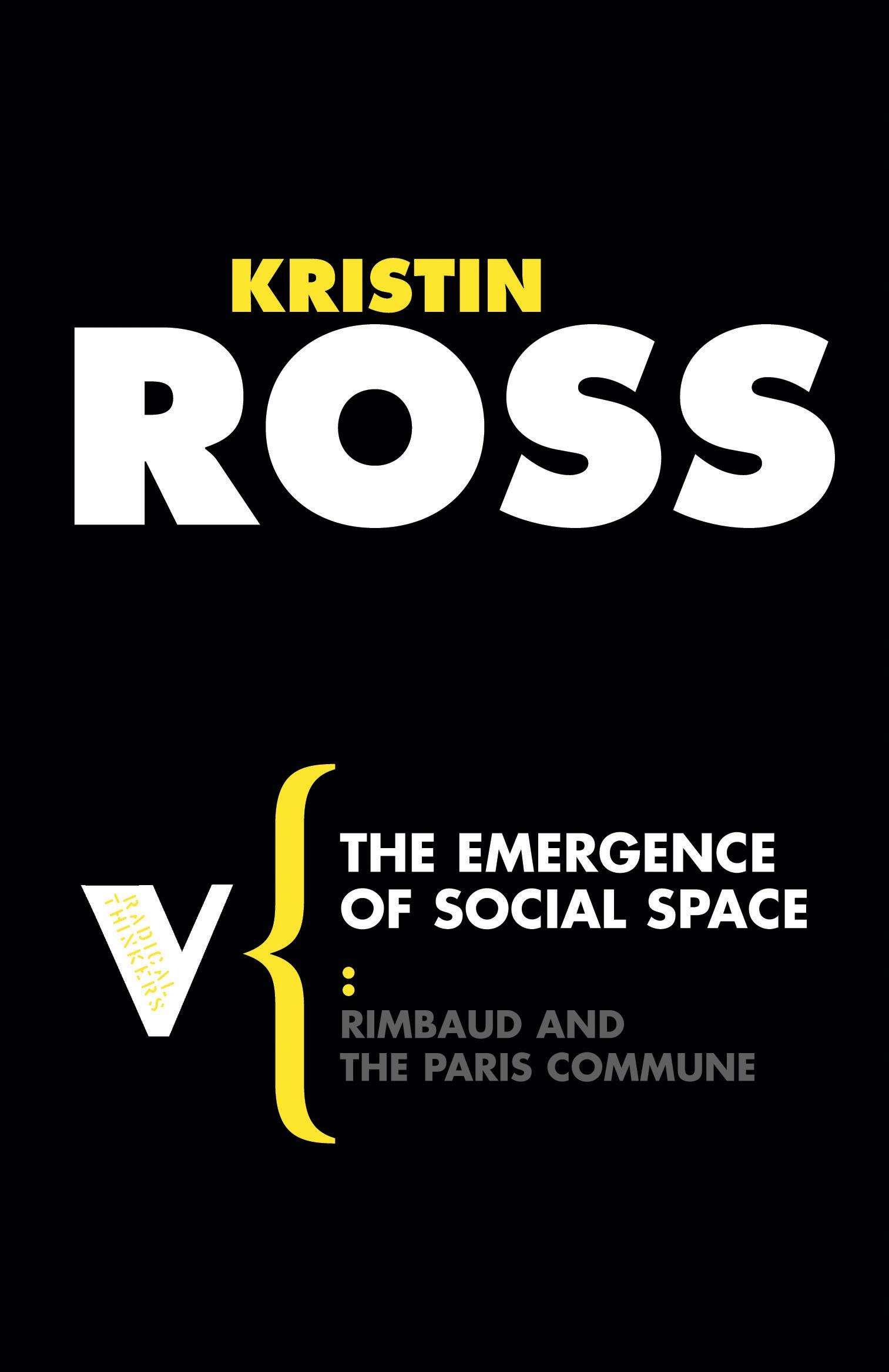
The 1870s in France - Rimbaud's moment, and the subject of this book - is a decade virtually ignored in most standard histories in France. Yet it was the moment of two significant spatial events: France's expansion on a global scale, and, in the spring of 1871, the brief existence on the Paris Commune - the construction of the revolutionary urban space. Arguing that space, as a social fact, is always political and strategic, Kristin Ross has written a book that is at once a history and geography of the Commune's anarchist culture - its political language and social relations, its values, strategies, and stances.
Central to her analysis of the Commune as a social space and oppositional culture is a close textual reading of Arthur Rimabaud's poetry. His poems - a common thread running through the book - are one set of documents among many in Ross's recreation of the Communard experience. Rimbaud, Paul Lafargue, and the social geographer �lis�e Reclus serve as emblematic figures moving within and on the periphery of the Commune; in their resistance to the logic and economy of the capitalist conception of work, in their challenge to work itself as a term of identity, all three posed a threat to the existing order. Ross looks at these and other emancipatory notions as aspects of Communard life, each with an analogous strategy in Rimbaud's poetry. Applying contemporary theory, to a wealth of little-known archival material, she has written a fresh, persuasive, and original book.
Central to her analysis of the Commune as a social space and oppositional culture is a close textual reading of Arthur Rimabaud's poetry. His poems - a common thread running through the book - are one set of documents among many in Ross's recreation of the Communard experience. Rimbaud, Paul Lafargue, and the social geographer �lis�e Reclus serve as emblematic figures moving within and on the periphery of the Commune; in their resistance to the logic and economy of the capitalist conception of work, in their challenge to work itself as a term of identity, all three posed a threat to the existing order. Ross looks at these and other emancipatory notions as aspects of Communard life, each with an analogous strategy in Rimbaud's poetry. Applying contemporary theory, to a wealth of little-known archival material, she has written a fresh, persuasive, and original book.
Betaal eenvoudig met kaart, Klarna, Apple Pay of Google Pay. Niet tevreden? Je hebt altijd 14 dagen bedenktijd. Lees meer in onze voorwaarden. Heb je vragen, mail ons dan via hello@memmo.org.
Memmo maakt studeren makkelijker – waar je ook bent ter wereld. Wij brengen je cursusboeken en slimme studietools samen op één plek: samenvattingen, quizzen, podcasts en flashcards. En Ted, je studievriend die antwoord geeft op alles wat je je afvraagt. Meer dan 50.000 studenten studeren hier al – gebouwd om je sneller te laten leren en minder stress te geven.
Misschien vind je dit ook leuk
Koop het boek0