
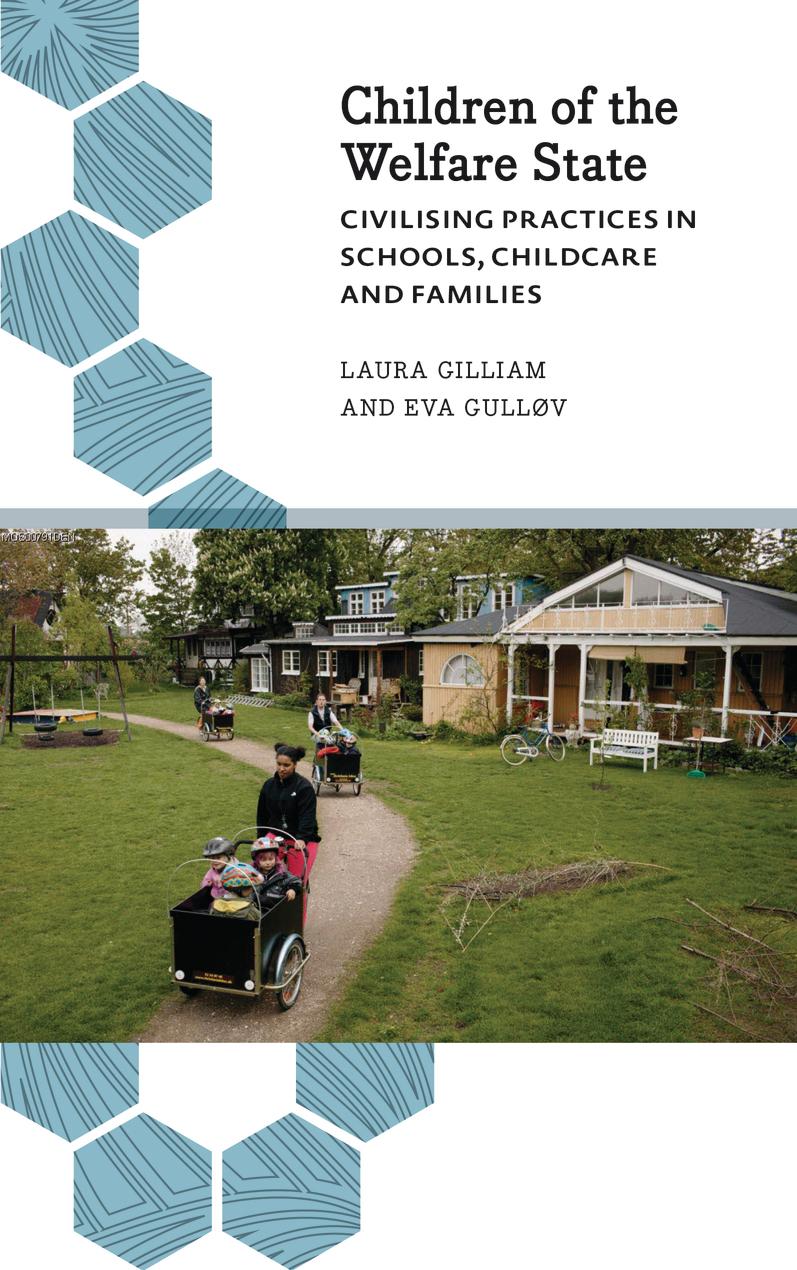
This original ethnographic study looks at how children are ‘civilised’ within child institutions, such as schools, day care centres and families, under the auspices of the welfare state.
As part of a general discussion on civilising projects and the role of state institutions, the authors focus on Denmark, a country characterised by the extent of time children use in public institutions from an early age. They look at the extraordinary amount of attention and effort put into the process of upbringing by the state, as well as the widespread co-operation in this by parents across the social spectrum.
Taking as its point of departure the sociologist Norbert Elias’ concept of civilising, Children of the Welfare State explores the ideals of civilised conduct expressed through institutional upbringing and examine how children of different age, gender, ethnicity and social backgrounds experience and react to these norms and efforts. The analysis demonstrates that welfare state institutions, though characterised by a strong egalitarian ideal, create distinctions between social groups, teach children about moral hierarchies in society and prompts them to identify as more or less civilised citizens of the state.
As part of a general discussion on civilising projects and the role of state institutions, the authors focus on Denmark, a country characterised by the extent of time children use in public institutions from an early age. They look at the extraordinary amount of attention and effort put into the process of upbringing by the state, as well as the widespread co-operation in this by parents across the social spectrum.
Taking as its point of departure the sociologist Norbert Elias’ concept of civilising, Children of the Welfare State explores the ideals of civilised conduct expressed through institutional upbringing and examine how children of different age, gender, ethnicity and social backgrounds experience and react to these norms and efforts. The analysis demonstrates that welfare state institutions, though characterised by a strong egalitarian ideal, create distinctions between social groups, teach children about moral hierarchies in society and prompts them to identify as more or less civilised citizens of the state.
Betaal eenvoudig met kaart, Klarna, Apple Pay of Google Pay. Niet tevreden? Je hebt altijd 14 dagen bedenktijd. Lees meer in onze voorwaarden. Heb je vragen, mail ons dan via hello@memmo.org.
Memmo maakt studeren makkelijker – waar je ook bent ter wereld. Wij brengen je cursusboeken en slimme studietools samen op één plek: samenvattingen, quizzen, podcasts en flashcards. En Ted, je studievriend die antwoord geeft op alles wat je je afvraagt. Meer dan 50.000 studenten studeren hier al – gebouwd om je sneller te laten leren en minder stress te geven.
Misschien vind je dit ook leuk
Koop het boek0