
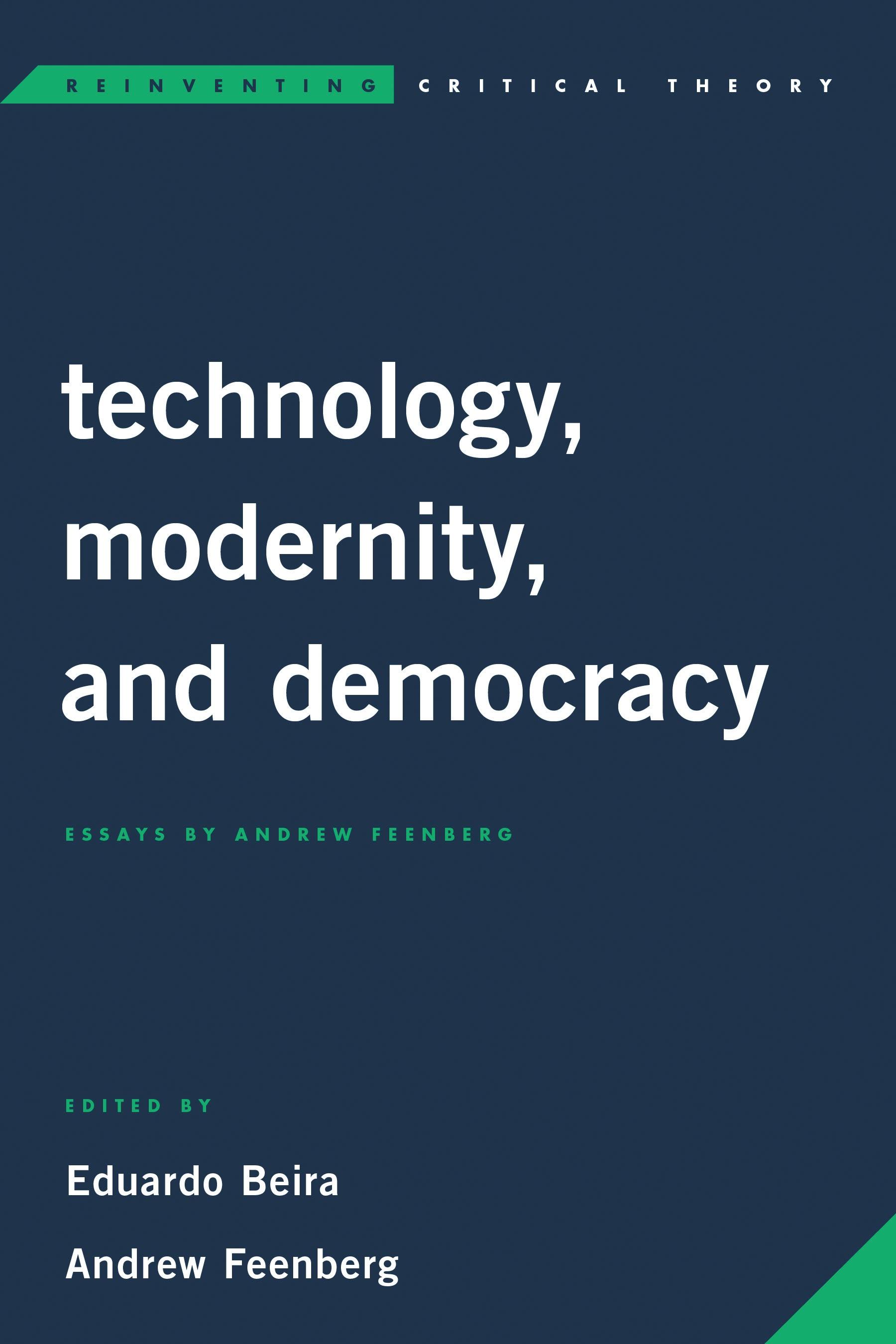
This important collection of essays by Andrew Feenberg presents his critical theory of technology, an innovative approach to philosophy and sociology of technology based on a synthesis of ideas drawn from STS and Frankfurt School Critical Theory.
According to critical theory of technology, technologies are neither neutral nor deterministic, but are encoded with specific socio-economic values and interests. Feenberg explores how they can be developed and adapted to more or less democratic values and institutions, and how their future is subject to social action, negotiation and reinterpretation. Technologies bring with them a particular "rationality," sets of rules and implied ways of behaving and thinking which, despite their profound influence on institutions, ideas and actions, can be transformed in a process of democratic rationalization. Feenberg argues that the emergence of human communication on the Internet and the environmental movement offer abundant examples of public interventions that have reshaped technologies originally designed for different purposes. This volume includes chapters on citizenship and critical theory of technology, philosophy of technology and modernity, and Heidegger and Marcuse, two of the most prominent philosophers of technology.
According to critical theory of technology, technologies are neither neutral nor deterministic, but are encoded with specific socio-economic values and interests. Feenberg explores how they can be developed and adapted to more or less democratic values and institutions, and how their future is subject to social action, negotiation and reinterpretation. Technologies bring with them a particular "rationality," sets of rules and implied ways of behaving and thinking which, despite their profound influence on institutions, ideas and actions, can be transformed in a process of democratic rationalization. Feenberg argues that the emergence of human communication on the Internet and the environmental movement offer abundant examples of public interventions that have reshaped technologies originally designed for different purposes. This volume includes chapters on citizenship and critical theory of technology, philosophy of technology and modernity, and Heidegger and Marcuse, two of the most prominent philosophers of technology.
Pagina's: 192
Categorie: Statsvetenskap & Politik
e-ISBN: 9781786607201
Verzendgewicht: 1.2 kg
Verzending binnen: 1-2 dagen
Betaal eenvoudig met kaart, Klarna, Apple Pay of Google Pay. Niet tevreden? Je hebt altijd 14 dagen bedenktijd. Lees meer in onze voorwaarden. Heb je vragen, mail ons dan via hello@memmo.org.
Memmo maakt studeren makkelijker – waar je ook bent ter wereld. Wij brengen je cursusboeken en slimme studietools samen op één plek: samenvattingen, quizzen, podcasts en flashcards. En Ted, je studievriend die antwoord geeft op alles wat je je afvraagt. Meer dan 50.000 studenten studeren hier al – gebouwd om je sneller te laten leren en minder stress te geven.