
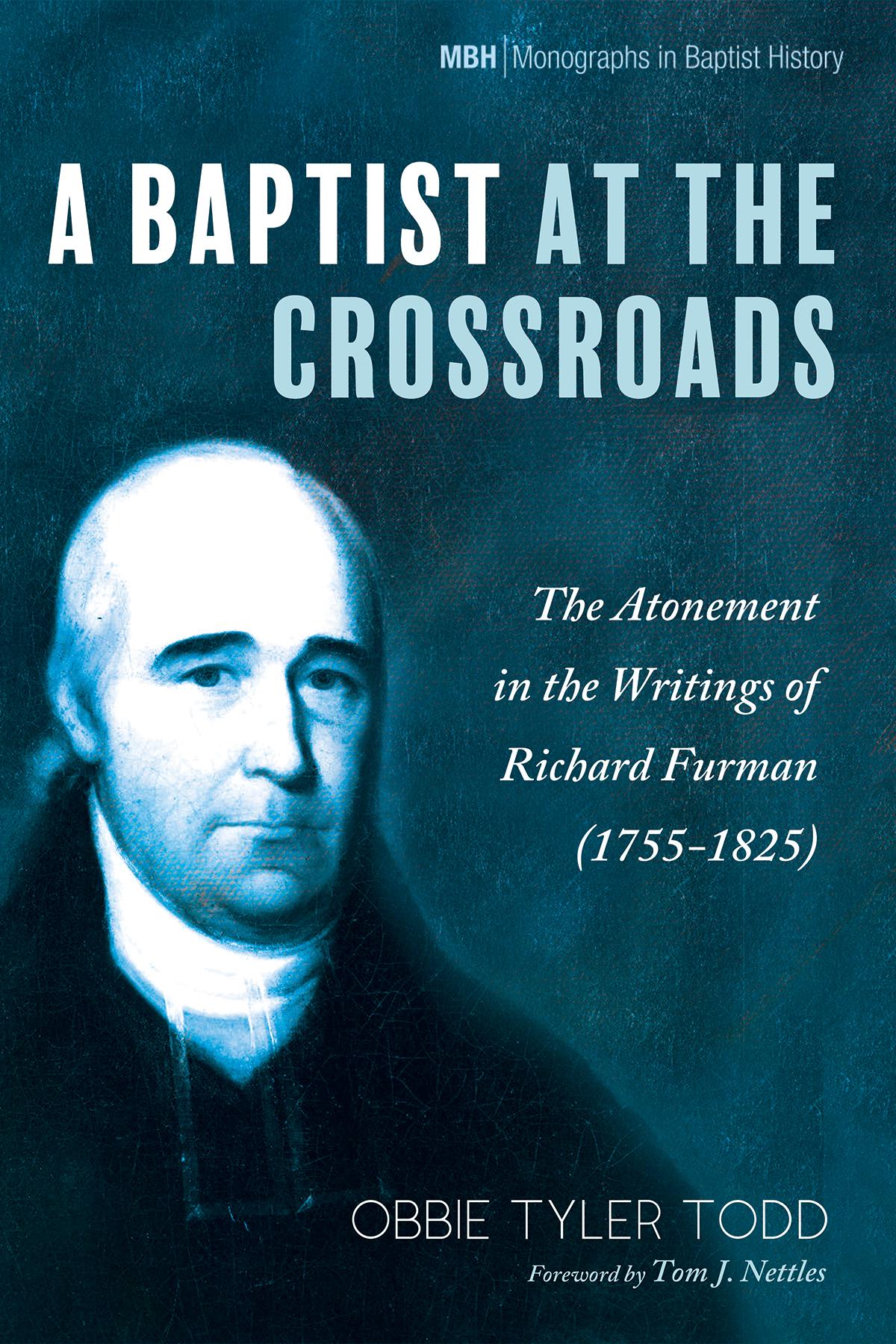
South Carolina Baptist Richard Furman (1755-1825) personified a host of seeming contradictions. As a Regular Baptist baptized by a Separate Baptist, an ardent patriot with puritan sensibilities, a Federalist who zealously defended religious liberty, and a slave-owning aristocrat who associated with backwoods revivalists, Furman is a complex figure in American history. His doctrine of atonement exhibited this same complexity, as he uniquely held to both a penal substitutionary theory of the atonement as well as to a moral governmental view, models of the atonement that were often conceived as mutually exclusive in the nineteenth century. Furman was the first of his American Baptist kind to attempt to integrate these two models. As a Baptist standing at the political, cultural, and theological crossroads of America, Furman blended Edwardsean and confessional Calvinism, Regular and Separate Baptist traditions, and a host of other elements into his theology, laying the groundwork for an entire generation of Southern Baptists who followed in his theological footsteps.
Betaal eenvoudig met kaart, Klarna, Apple Pay of Google Pay. Niet tevreden? Je hebt altijd 14 dagen bedenktijd. Lees meer in onze voorwaarden. Heb je vragen, mail ons dan via hello@memmo.org.
Memmo maakt studeren makkelijker – waar je ook bent ter wereld. Wij brengen je cursusboeken en slimme studietools samen op één plek: samenvattingen, quizzen, podcasts en flashcards. En Ted, je studievriend die antwoord geeft op alles wat je je afvraagt. Meer dan 50.000 studenten studeren hier al – gebouwd om je sneller te laten leren en minder stress te geven.
Misschien vind je dit ook leuk
Koop het boek0