
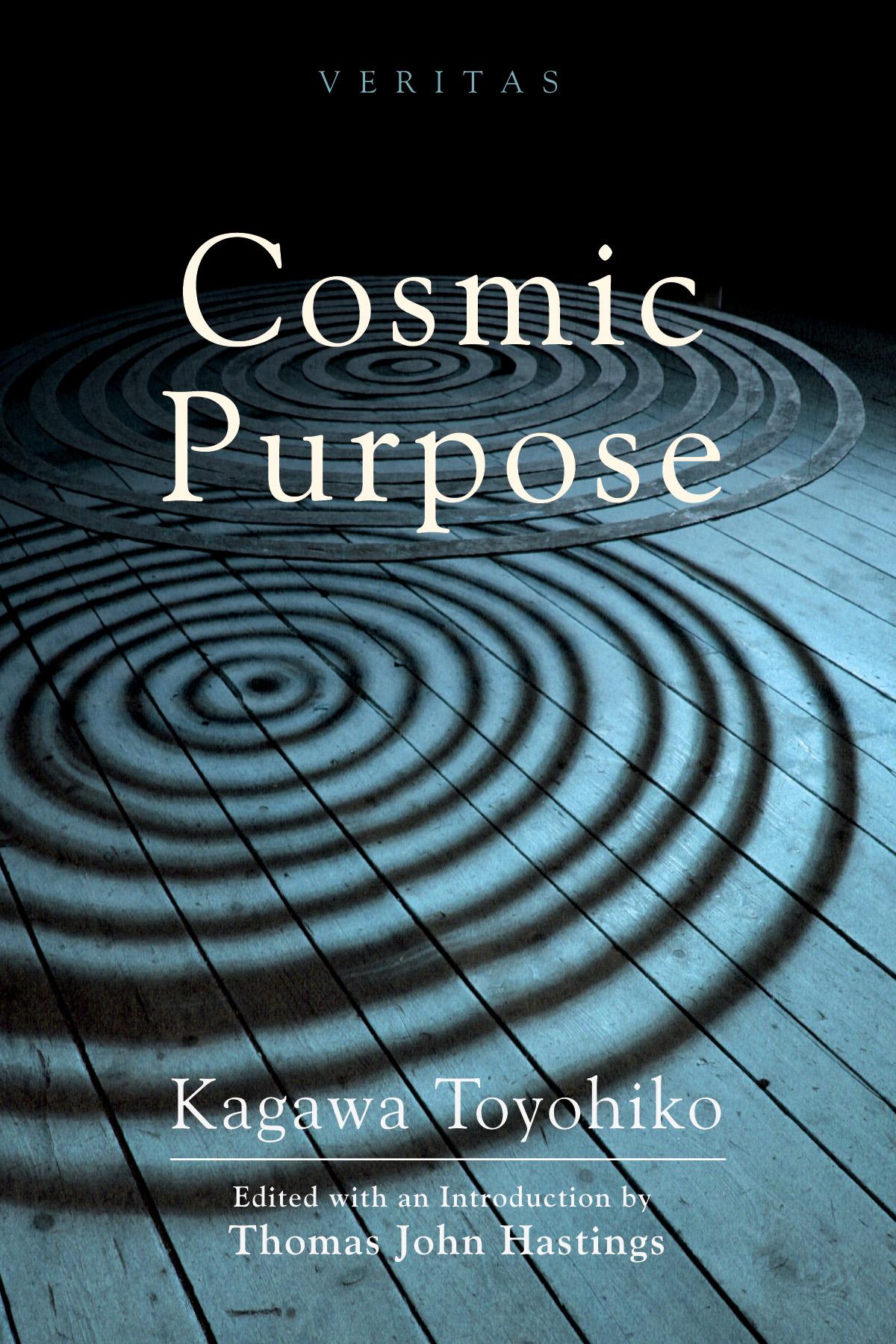
On Christmas Eve in 1909, twenty-one-year-old Kagawa Toyohiko (1888-1960) rented a room in Kōbe's worst slum where, apart from two years of study in the United States, he remained with his wife and co-worker Haru for more than ten years. They engaged in pastoral work, evangelism, social reform movements, and literary activities, founding numerous institutions that are still in operation today.
After publishing a best-selling novel in 1920, Kagawa began to draw the attention of people from around Japan and the world. His literary output was prodigious, amounting to more than 300 books. Often compared with his contemporaries Mahatma Gandhi and Albert Schweitzer, Kagawa was nominated twice for the Nobel Prize in Literature (1947, 1948) and three times for the Nobel Peace Prize (1954, 1955, 1956).
Challenging the materialism of Charles Darwin and the claim of H. G. Wells that "we must give up any idea that evolution is purposeful," Cosmic Purpose draws on research in physics, chemistry, astrophysics, mineralogy, genetics, and biology to offer evidence of purpose in the vast span of evolutionary history from the atom to human consciousness. In his attempt to renew our sense of wonder at this process, Kagawa proposes a "logic of finality" that links life to purpose.
Betaal eenvoudig met kaart, Klarna, Apple Pay of Google Pay. Niet tevreden? Je hebt altijd 14 dagen bedenktijd. Lees meer in onze voorwaarden. Heb je vragen, mail ons dan via hello@memmo.org.
Memmo maakt studeren makkelijker – waar je ook bent ter wereld. Wij brengen je cursusboeken en slimme studietools samen op één plek: samenvattingen, quizzen, podcasts en flashcards. En Ted, je studievriend die antwoord geeft op alles wat je je afvraagt. Meer dan 50.000 studenten studeren hier al – gebouwd om je sneller te laten leren en minder stress te geven.
Misschien vind je dit ook leuk
Koop het boek0