
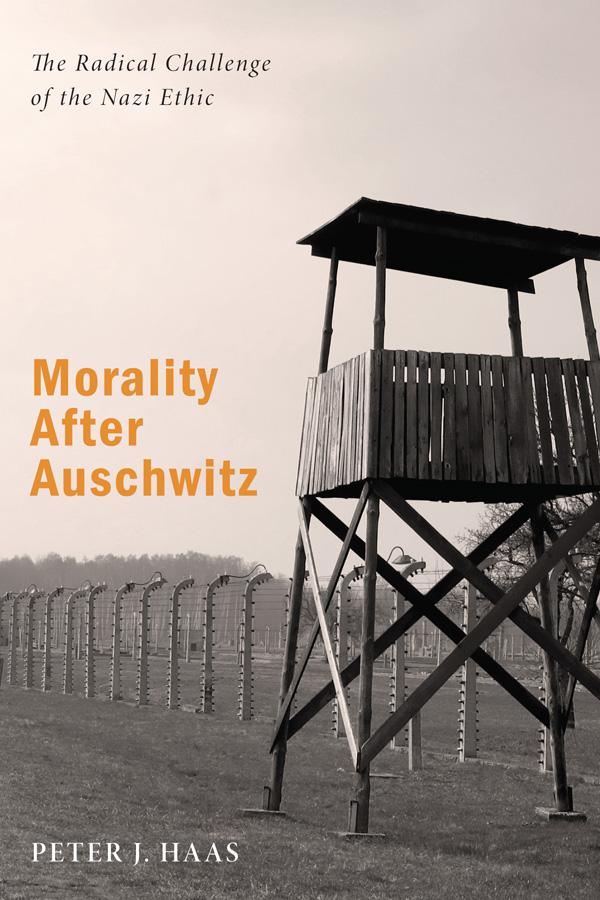
"This book is a study of the Holocaust as problem in ethical theory. How could a whole society participate in an ethic of mass torture and genocide for over a decade without opposition from responsible political, legal, medical, or religious leaders? How does a society create and adopt its ethical norms? This is a study in narrative ethics at its best, yet the author's purpose is to discover how a people redefined evil to the degree that they committed heinous atrocities that were reprehensible under normal circumstances."
--Guy Greenfield, Southwestern Journal of Theology
"Peter Haas gives us a good overall description of the Holocaust, the way the Nazis and their myriad collaborators treated the Jews. The book . . . is well formulated and well written. It makes a good one-volume introduction to the Holocaust."
--Frederick K. Wentz, Lutheran Quarterly
"Peter Haas urges us to recognize ourselves in the perpetrators of the Holocaust. . . . In the course of setting forth his position, the author offers a concise and wonderfully accessible account of the formation of German political culture from Bismarck through Hitler. . . . Morality After Auschwitz is a serious book that should provoke long thoughts, and perhaps useful disputes, about the power of ethics to shape political cultures."
--First Things
Betaal eenvoudig met kaart, Klarna, Apple Pay of Google Pay. Niet tevreden? Je hebt altijd 14 dagen bedenktijd. Lees meer in onze voorwaarden. Heb je vragen, mail ons dan via hello@memmo.org.
Memmo maakt studeren makkelijker – waar je ook bent ter wereld. Wij brengen je cursusboeken en slimme studietools samen op één plek: samenvattingen, quizzen, podcasts en flashcards. En Ted, je studievriend die antwoord geeft op alles wat je je afvraagt. Meer dan 50.000 studenten studeren hier al – gebouwd om je sneller te laten leren en minder stress te geven.
Misschien vind je dit ook leuk
Koop het boek0