
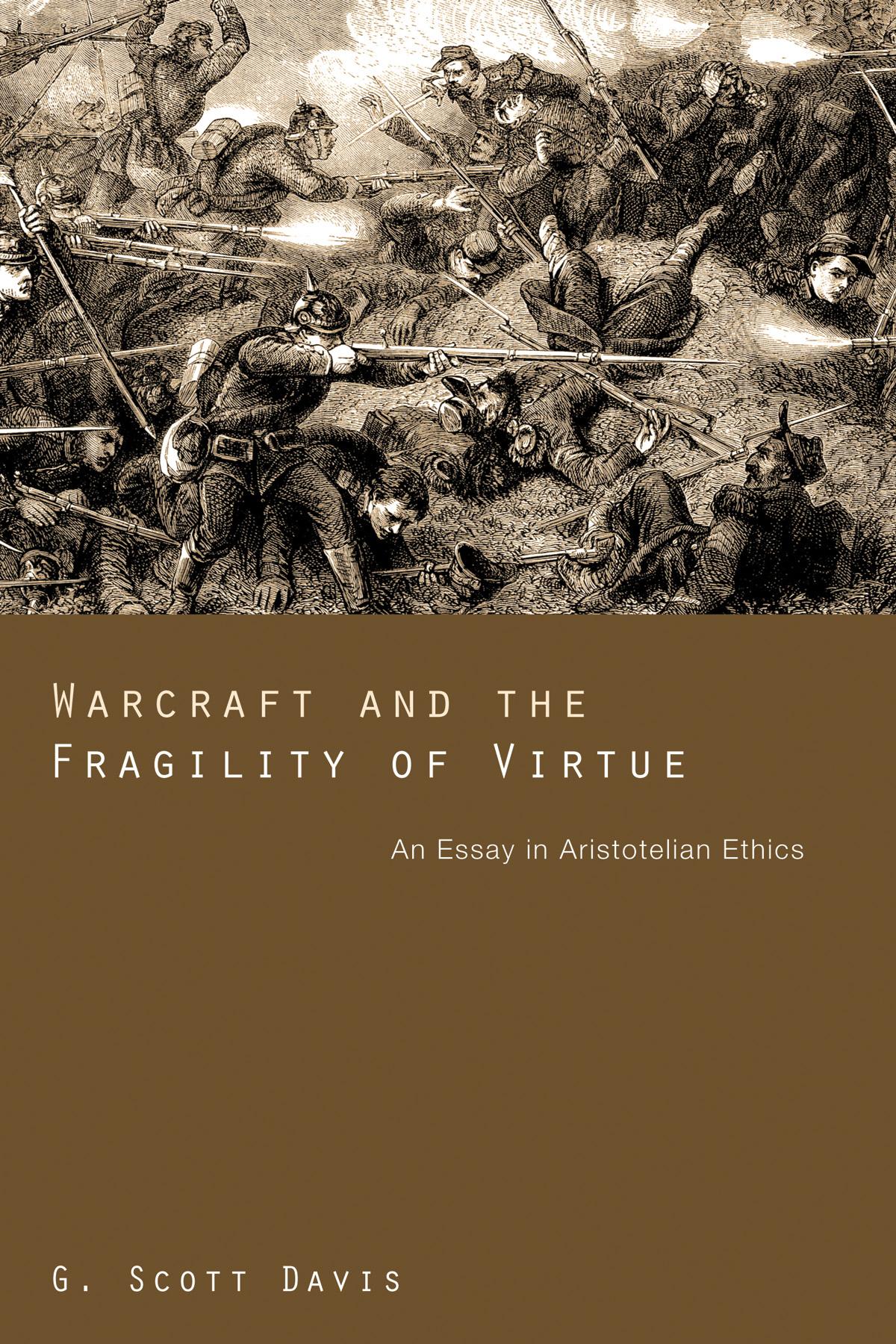
Recent work by Stanley Hauerwas, Alasdair MacIntyre, and Robert Bellah has brought considerable attention to bear on the ethics of virtue. Little clarity has, however, emerged from that discussion on what difference such an ethic would make in practical and political deliberations. Warcraft and the Fragility of Virtue presents, for the first time, a well-developed and effective Aristotelian perspective on reasoning about war and warfare.
Author G. Scott Davis first sketches the fundamentals of as Aristotelian approach to the ethics of war, arguing that the virtue is a craft, of itself fragile, that must be sustained by a community that makes the highest demands upon itself. Introduced as a criterion for evaluating alliances and international relations, the concept of moral community is also of the highest significance for interpreting those ruptures within the community, including resistance and rebellion, that arise concomitantly with the prospect and onset of war.
Betaal eenvoudig met kaart, Klarna, Apple Pay of Google Pay. Niet tevreden? Je hebt altijd 14 dagen bedenktijd. Lees meer in onze voorwaarden. Heb je vragen, mail ons dan via hello@memmo.org.
Memmo maakt studeren makkelijker – waar je ook bent ter wereld. Wij brengen je cursusboeken en slimme studietools samen op één plek: samenvattingen, quizzen, podcasts en flashcards. En Ted, je studievriend die antwoord geeft op alles wat je je afvraagt. Meer dan 50.000 studenten studeren hier al – gebouwd om je sneller te laten leren en minder stress te geven.
Misschien vind je dit ook leuk
Koop het boek0