
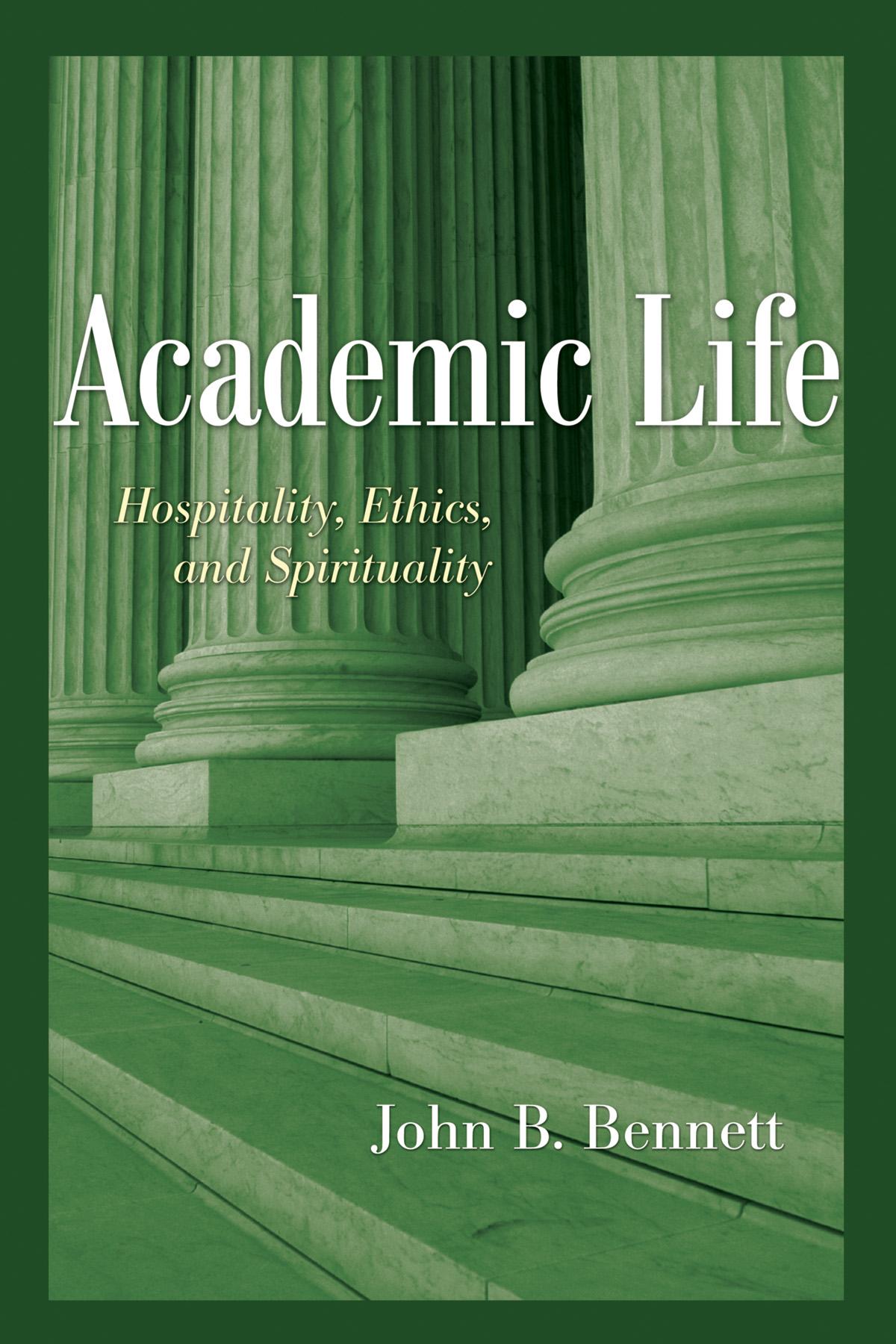
In this profound look at the academy, John Bennett reminds us that our leadership decisions always presuppose our philosophies of life and that understanding precedes practice. How we understand the communities we lead informs the many practical judgments we make about directions to take, structures to create, processes to initiate, and values to uphold.
Bennett argues that faculty may understand their departments or institutions in one of two ways: as simply aggregations of individuals or as communities of intertwined persons. From these views, two different leadership values and positions emerge.
The first disposes us toward seeing academic conflict as inevitable and elevates heroic leadership styles where power is understood in terms of advancing one agenda over competitors. The second underwrites leadership as supposing openness to others and emphasizes the vital contributions that can follow.
By providing specific illustrations of the two modes of leadership and the nature of hospitality and openness, Academic Life presents a strong platform from which to build a rich and rewarding academic community.
Contents include:
The nature of insistent individualism
Why the prevalence of insistent individualism?
Hospitality as an essential virtue
Self, others, institutions, and the common good
Conversation as an essential metaphor
The uses of conversation
Community and covenant
Engaged, but not heroic, leadership
Betaal eenvoudig met kaart, Klarna, Apple Pay of Google Pay. Niet tevreden? Je hebt altijd 14 dagen bedenktijd. Lees meer in onze voorwaarden. Heb je vragen, mail ons dan via hello@memmo.org.
Memmo maakt studeren makkelijker – waar je ook bent ter wereld. Wij brengen je cursusboeken en slimme studietools samen op één plek: samenvattingen, quizzen, podcasts en flashcards. En Ted, je studievriend die antwoord geeft op alles wat je je afvraagt. Meer dan 50.000 studenten studeren hier al – gebouwd om je sneller te laten leren en minder stress te geven.
Misschien vind je dit ook leuk
Koop het boek0