
“Let us not be led astray: they say ‘judge not’ and yet they condemn to hell whoever stands in their way.”
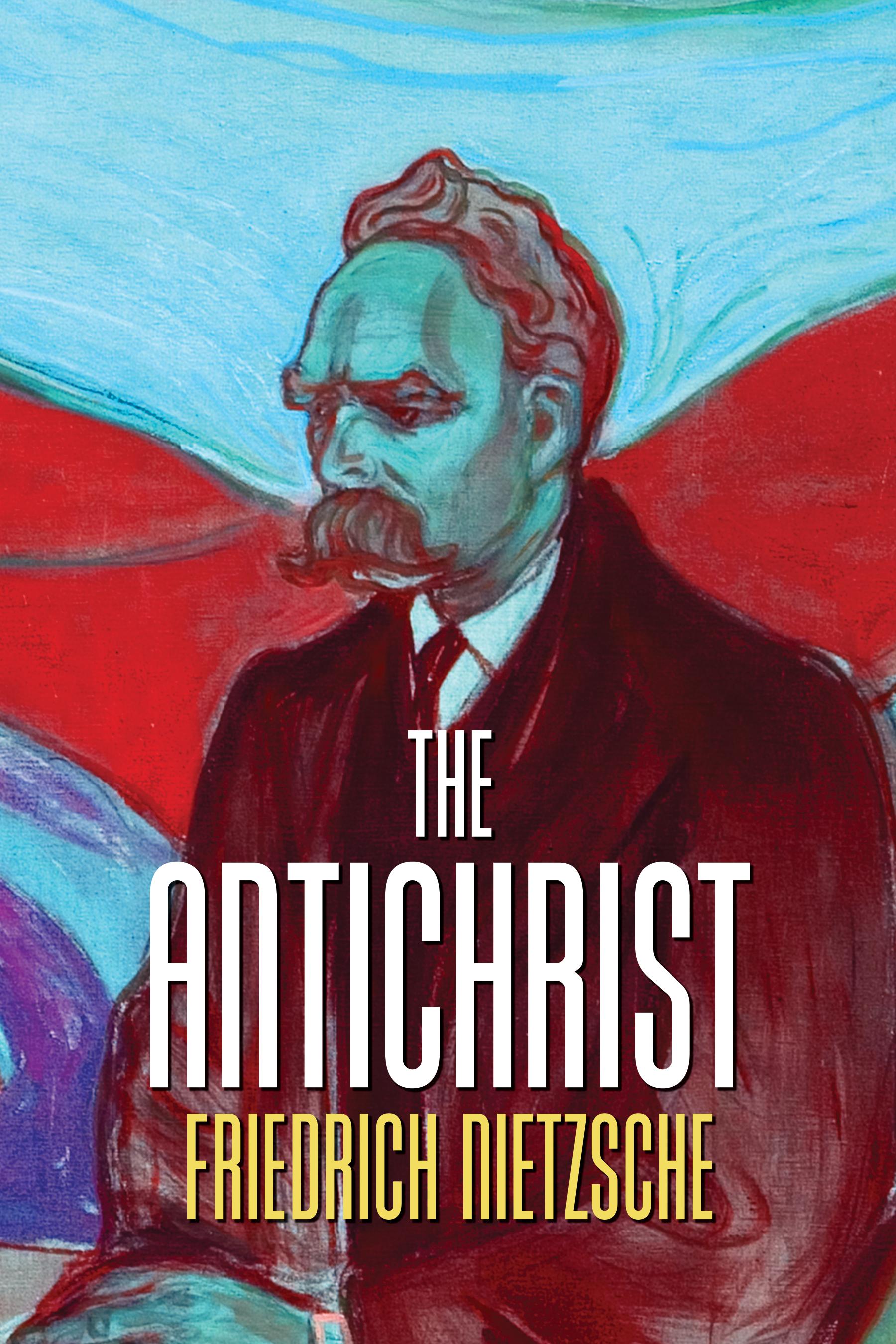
The Antichrist by the philosopher Friedrich Nietzsche, was originally published in 1895. In it, Nietzsche expresses his dissatisfaction with modernity, listing his dislike of “lazy peace”, “cowardly compromise”, “tolerance” and “resignation”. Mankind, according to Nietzsche, is corrupt and its highest values are depraved because nihilistic values dominate under the holiest names. He asserts that "all the values in which mankind at present summarizes its highest desiderata are decadence values". Mankind is depraved because it has lost its instincts and prefers what is harmful to it.
Nietzsche puts forth a provocative critique of Christianity and its moral teachings as he argues that mankind, out of fear, has bred a weak, sick type of human. He blames Christianity for demonizing strong, higher humans. He feels that Christian values are life-denying and impede human progress and advocates instead for a philosophy that affirms life and individual autonomy.
Nietzsche introduces his concept of “will to power using its relation to define the notions of good, bad, and happiness. Good is whatever augments the feeling of power, the will to power and power itself, in man. Evil is whatever springs from weakness. Happiness is the feeling that power increases…that resistance is overcome.
Nietzsche claims to have written the book for a very limited readership who must be honest in intellectual matters in order to understand the book. They must be strong enough to endure Nietzsche’s seriousness and passion.
The Antichrist by the philosopher Friedrich Nietzsche, was originally published in 1895. In it, Nietzsche expresses his dissatisfaction with modernity, listing his dislike of “lazy peace”, “cowardly compromise”, “tolerance” and “resignation”. Mankind, according to Nietzsche, is corrupt and its highest values are depraved because nihilistic values dominate under the holiest names. He asserts that "all the values in which mankind at present summarizes its highest desiderata are decadence values". Mankind is depraved because it has lost its instincts and prefers what is harmful to it.
Nietzsche puts forth a provocative critique of Christianity and its moral teachings as he argues that mankind, out of fear, has bred a weak, sick type of human. He blames Christianity for demonizing strong, higher humans. He feels that Christian values are life-denying and impede human progress and advocates instead for a philosophy that affirms life and individual autonomy.
Nietzsche introduces his concept of “will to power using its relation to define the notions of good, bad, and happiness. Good is whatever augments the feeling of power, the will to power and power itself, in man. Evil is whatever springs from weakness. Happiness is the feeling that power increases…that resistance is overcome.
Nietzsche claims to have written the book for a very limited readership who must be honest in intellectual matters in order to understand the book. They must be strong enough to endure Nietzsche’s seriousness and passion.
Betaal eenvoudig met kaart, Klarna, Apple Pay of Google Pay. Niet tevreden? Je hebt altijd 14 dagen bedenktijd. Lees meer in onze voorwaarden. Heb je vragen, mail ons dan via hello@memmo.org.
Memmo maakt studeren makkelijker – waar je ook bent ter wereld. Wij brengen je cursusboeken en slimme studietools samen op één plek: samenvattingen, quizzen, podcasts en flashcards. En Ted, je studievriend die antwoord geeft op alles wat je je afvraagt. Meer dan 50.000 studenten studeren hier al – gebouwd om je sneller te laten leren en minder stress te geven.
Misschien vind je dit ook leuk
Koop het boek0