
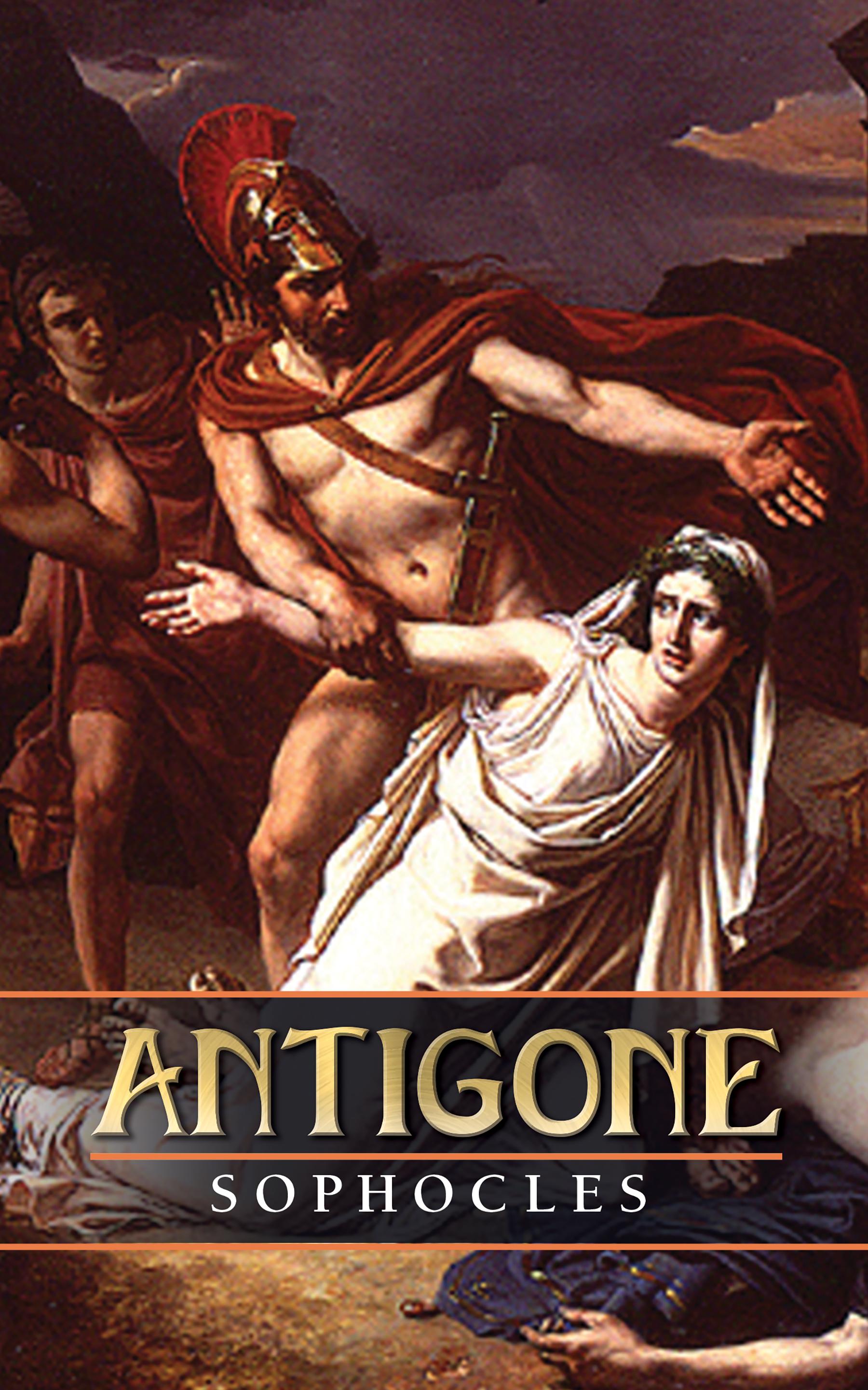
One of the few surviving plays by Sophocles, and one of the most frequently performed of classical Greek dramas of all time, Antigone raises issues of law and morality that are just as relevant today as in ancient times.
Antigone will move you as few pieces of literature can. With its passionate speeches and sensitive probing of moral and philosophical issues, this powerful drama continues to enthrall us today as it did its ancient Athenian audiences.
In Antigone, Sophocles reveals the fate that befalls the children of Oedipus. Polynices, son of Oedipus, has led a rebellious army against his brother, Eteocles, ruler of Thebes. Both have died in single combat. When Creon, their uncle, assumes rule, he commands that the body of the rebel Polynices be left unburied and unmourned, and warns that anyone who tampers with his decree will be put to death.
Antigone, sister of Polynices, defies Creon’s order and buries her brother, claiming that she honors first the laws of the gods. Enraged, Creon condemns her to be sealed in a cave and left to die. How the gods take their revenge on Creon provides the gripping denouement to this compelling tragedy.
The curse placed on Oedipus lingers and haunts a younger generation. The daughter of Oedipus and Jocasta, Antigone is an unconventional heroine who pits her beliefs against the King of Thebes in a bloody test of wills that leaves few unharmed. Emotions fly as she challenges the king for the right to bury her own brother. Determined but doomed, Antigone shows her inner strength throughout the play.
Antigone will move you as few pieces of literature can. With its passionate speeches and sensitive probing of moral and philosophical issues, this powerful drama continues to enthrall us today as it did its ancient Athenian audiences.
In Antigone, Sophocles reveals the fate that befalls the children of Oedipus. Polynices, son of Oedipus, has led a rebellious army against his brother, Eteocles, ruler of Thebes. Both have died in single combat. When Creon, their uncle, assumes rule, he commands that the body of the rebel Polynices be left unburied and unmourned, and warns that anyone who tampers with his decree will be put to death.
Antigone, sister of Polynices, defies Creon’s order and buries her brother, claiming that she honors first the laws of the gods. Enraged, Creon condemns her to be sealed in a cave and left to die. How the gods take their revenge on Creon provides the gripping denouement to this compelling tragedy.
The curse placed on Oedipus lingers and haunts a younger generation. The daughter of Oedipus and Jocasta, Antigone is an unconventional heroine who pits her beliefs against the King of Thebes in a bloody test of wills that leaves few unharmed. Emotions fly as she challenges the king for the right to bury her own brother. Determined but doomed, Antigone shows her inner strength throughout the play.
Betaal eenvoudig met kaart, Klarna, Apple Pay of Google Pay. Niet tevreden? Je hebt altijd 14 dagen bedenktijd. Lees meer in onze voorwaarden. Heb je vragen, mail ons dan via hello@memmo.org.
Memmo maakt studeren makkelijker – waar je ook bent ter wereld. Wij brengen je cursusboeken en slimme studietools samen op één plek: samenvattingen, quizzen, podcasts en flashcards. En Ted, je studievriend die antwoord geeft op alles wat je je afvraagt. Meer dan 50.000 studenten studeren hier al – gebouwd om je sneller te laten leren en minder stress te geven.
Misschien vind je dit ook leuk
Koop het boek0