
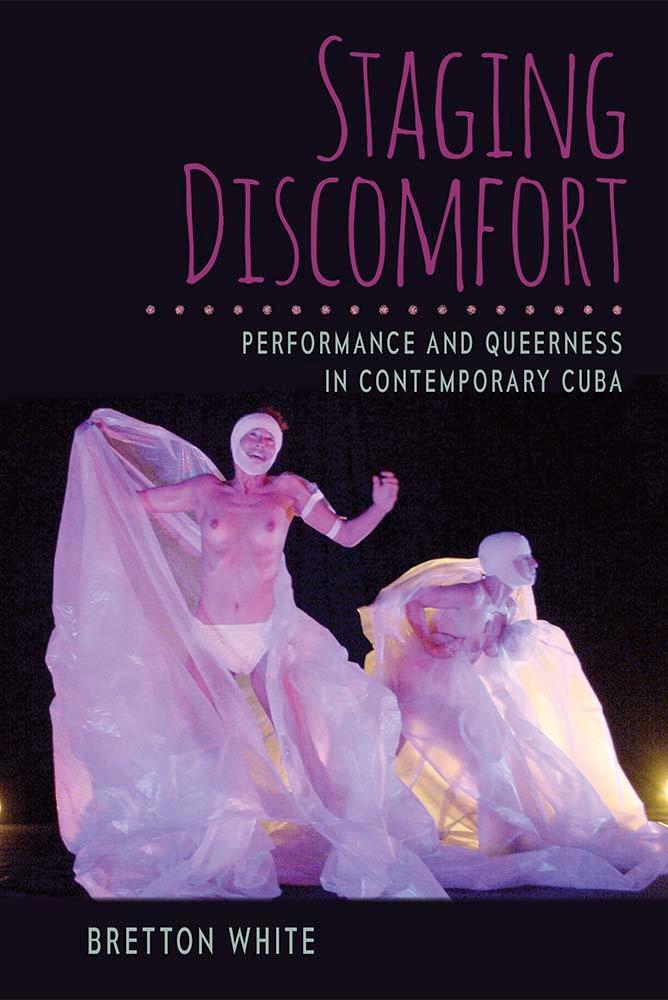
This visionary volume examines how queer bodies are theatrically represented on the Cuban stage in ways that challenge one of the state’s primary revolutionary tools, the categorization and homogenization of individuals. Bretton White critically analyzes contemporary performances that upset traditional understandings of performer and spectator, as well as what constitutes the ideal Cuban citizenry.
Following the 1959 revolution, nonconformists were monitored and reported by local committees and punished or reformed by the government. Censorship was rampant, and Cuban art suffered as the state tried to control the national message. Through the lens of queer theory, White explores how the body has been central to the state’s fear-based marginalization of gay life and looks at the ways these theatrical performances defuse that fear. She highlights the revolutionary model of masculinity and the role it plays in excluding people based upon visible queer difference. White finds that, through experimental performances of sexuality, actors create connections with audiences to evoke shared feelings of discomfort, intimacy, shame, longing, frustration, and failure, which echo the prevalence of these feelings in other Cuban spaces. By performing queerness, these plays question the state’s narrative of heteronormativity and empower citizens to negotiate alternative understandings of Cuban identity.
Betaal eenvoudig met kaart, Klarna, Apple Pay of Google Pay. Niet tevreden? Je hebt altijd 14 dagen bedenktijd. Lees meer in onze voorwaarden. Heb je vragen, mail ons dan via hello@memmo.org.
Memmo maakt studeren makkelijker – waar je ook bent ter wereld. Wij brengen je cursusboeken en slimme studietools samen op één plek: samenvattingen, quizzen, podcasts en flashcards. En Ted, je studievriend die antwoord geeft op alles wat je je afvraagt. Meer dan 50.000 studenten studeren hier al – gebouwd om je sneller te laten leren en minder stress te geven.
Misschien vind je dit ook leuk
Koop het boek0