
Choice 2025 Outstanding Academic Title
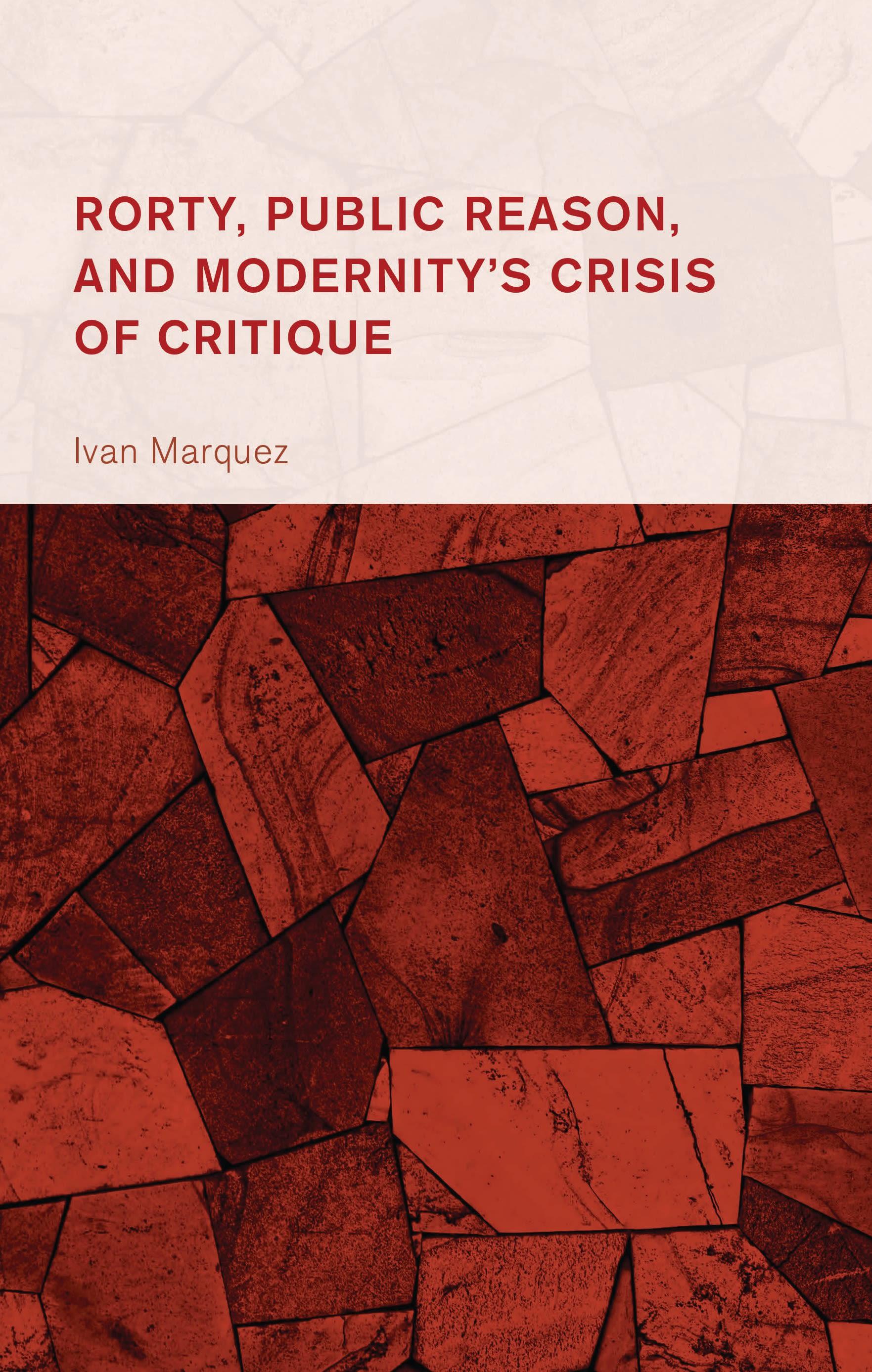
Starting with Richard Rorty's critique of reason, this book discusses modernity's legitimation crisis in political discourse. Rorty, Public Reason, and Modernity's Crisis of Critique explores the contemporary crisis of rational justification and collective will-formation in our current political institutions and the public sphere, arguing that there is an array of untapped rational resources that should be deployed to justify social, political, and economic views, agendas, and programs. It also identifies limits to the powers of public reason to generate rational agreement and collective will-formation. Using a critical analysis of Rorty's non-foundationalist perspective as a vehicle to study modernity's project of rational critique, Ivan Marquez highlights both the strengths and promise and the weaknesses and limitations of liberal and democratic societies-especially within pluralistic socio-cultural contexts-and some possible ways to work within this space of possibilities and constraints. Ultimately, this book can be seen as elaborating a political epistemology view that argues for a redefinition of philosophy and defends a type of post-metaphysical culture.
Starting with Richard Rorty's critique of reason, this book discusses modernity's legitimation crisis in political discourse. Rorty, Public Reason, and Modernity's Crisis of Critique explores the contemporary crisis of rational justification and collective will-formation in our current political institutions and the public sphere, arguing that there is an array of untapped rational resources that should be deployed to justify social, political, and economic views, agendas, and programs. It also identifies limits to the powers of public reason to generate rational agreement and collective will-formation. Using a critical analysis of Rorty's non-foundationalist perspective as a vehicle to study modernity's project of rational critique, Ivan Marquez highlights both the strengths and promise and the weaknesses and limitations of liberal and democratic societies-especially within pluralistic socio-cultural contexts-and some possible ways to work within this space of possibilities and constraints. Ultimately, this book can be seen as elaborating a political epistemology view that argues for a redefinition of philosophy and defends a type of post-metaphysical culture.
Betaal eenvoudig met kaart, Klarna, Apple Pay of Google Pay. Niet tevreden? Je hebt altijd 14 dagen bedenktijd. Lees meer in onze voorwaarden. Heb je vragen, mail ons dan via hello@memmo.org.
Memmo maakt studeren makkelijker – waar je ook bent ter wereld. Wij brengen je cursusboeken en slimme studietools samen op één plek: samenvattingen, quizzen, podcasts en flashcards. En Ted, je studievriend die antwoord geeft op alles wat je je afvraagt. Meer dan 50.000 studenten studeren hier al – gebouwd om je sneller te laten leren en minder stress te geven.