
Choice 2025 Outstanding Academic Title
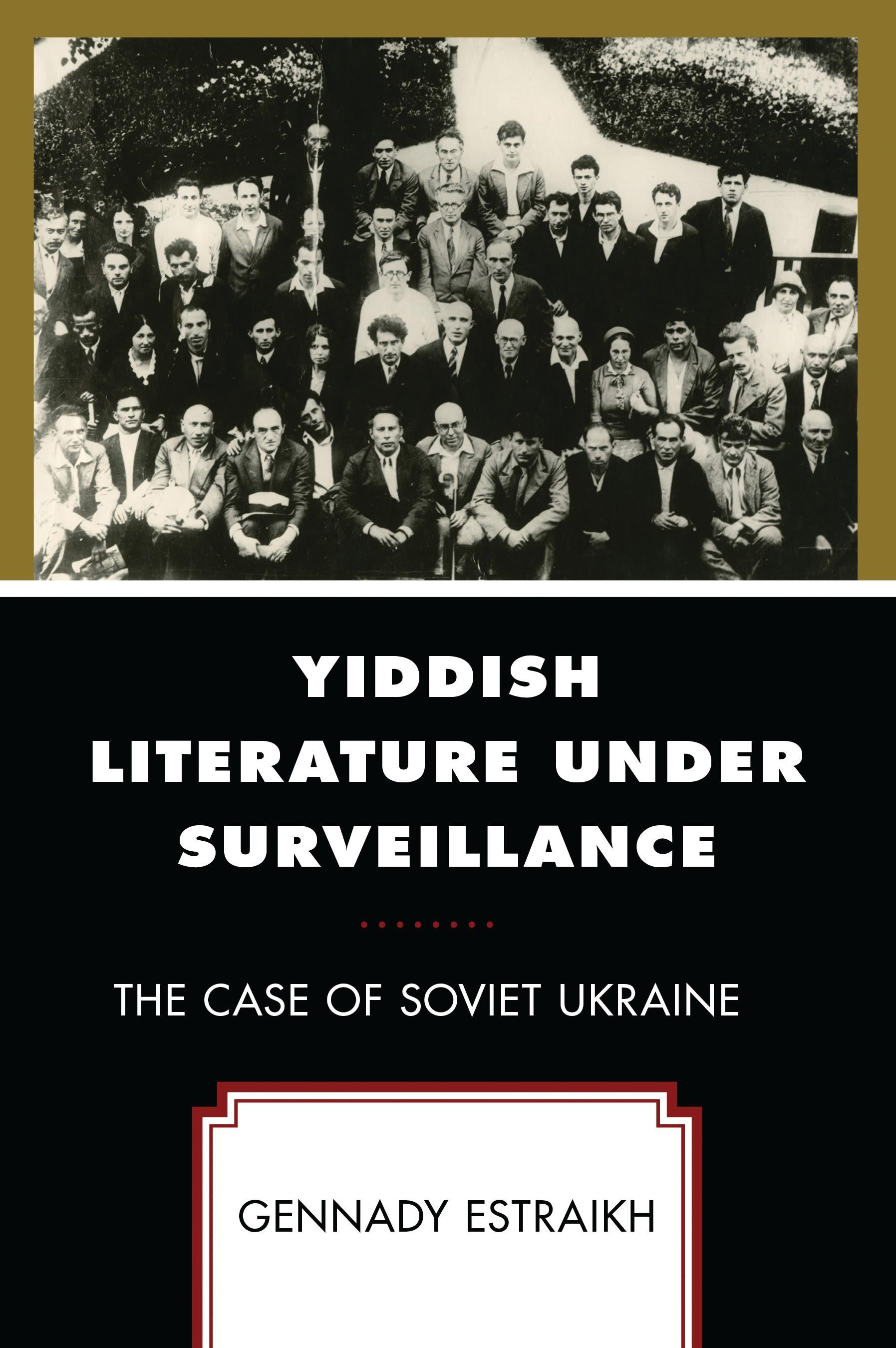
Yiddish Literature Under Surveillance: The Case of Soviet Ukraine gives a broad view on Soviet Jewish literary life, and on the repression suffered by Yiddish writers under Stalinist rule. It moves from the paradigm of writing almost exclusively about the most prominent authors, whose execution in Moscow on August 12, 1952 is tragically known as "The Night of Murdered Poets." Instead, the narrative is built as a group biography of five writers whose literary home was in Kyiv, the capital of Soviet Ukraine from 1934 to 1991. Those authors are as follows: Avrom Abchuk (arrested and executed in 1937), Chaim Gildin (arrested in 1940; died in a camp in 1943), Itsik Kipnis (arrested in 1949; released in 1955), Rive Balyasne (arrested in 1952; released in 1955), and Hirsh Bloshteyn, an enthusiastic agent of the secret police. In addition, this book is populated by other Yiddish, Ukrainian, and Russian literati. Kyiv was the primary fountainhead for Yiddish literary creativity in the early postrevolutionary period for seven decades and remained a leading Soviet Yiddish literary center, second in importance only to Moscow. Attention is paid to the victims' rehabilitation, posthumous or otherwise, in the mid-1950s and onwards.
Yiddish Literature Under Surveillance: The Case of Soviet Ukraine gives a broad view on Soviet Jewish literary life, and on the repression suffered by Yiddish writers under Stalinist rule. It moves from the paradigm of writing almost exclusively about the most prominent authors, whose execution in Moscow on August 12, 1952 is tragically known as "The Night of Murdered Poets." Instead, the narrative is built as a group biography of five writers whose literary home was in Kyiv, the capital of Soviet Ukraine from 1934 to 1991. Those authors are as follows: Avrom Abchuk (arrested and executed in 1937), Chaim Gildin (arrested in 1940; died in a camp in 1943), Itsik Kipnis (arrested in 1949; released in 1955), Rive Balyasne (arrested in 1952; released in 1955), and Hirsh Bloshteyn, an enthusiastic agent of the secret police. In addition, this book is populated by other Yiddish, Ukrainian, and Russian literati. Kyiv was the primary fountainhead for Yiddish literary creativity in the early postrevolutionary period for seven decades and remained a leading Soviet Yiddish literary center, second in importance only to Moscow. Attention is paid to the victims' rehabilitation, posthumous or otherwise, in the mid-1950s and onwards.
Betaal eenvoudig met kaart, Klarna, Apple Pay of Google Pay. Niet tevreden? Je hebt altijd 14 dagen bedenktijd. Lees meer in onze voorwaarden. Heb je vragen, mail ons dan via hello@memmo.org.
Memmo maakt studeren makkelijker – waar je ook bent ter wereld. Wij brengen je cursusboeken en slimme studietools samen op één plek: samenvattingen, quizzen, podcasts en flashcards. En Ted, je studievriend die antwoord geeft op alles wat je je afvraagt. Meer dan 50.000 studenten studeren hier al – gebouwd om je sneller te laten leren en minder stress te geven.