
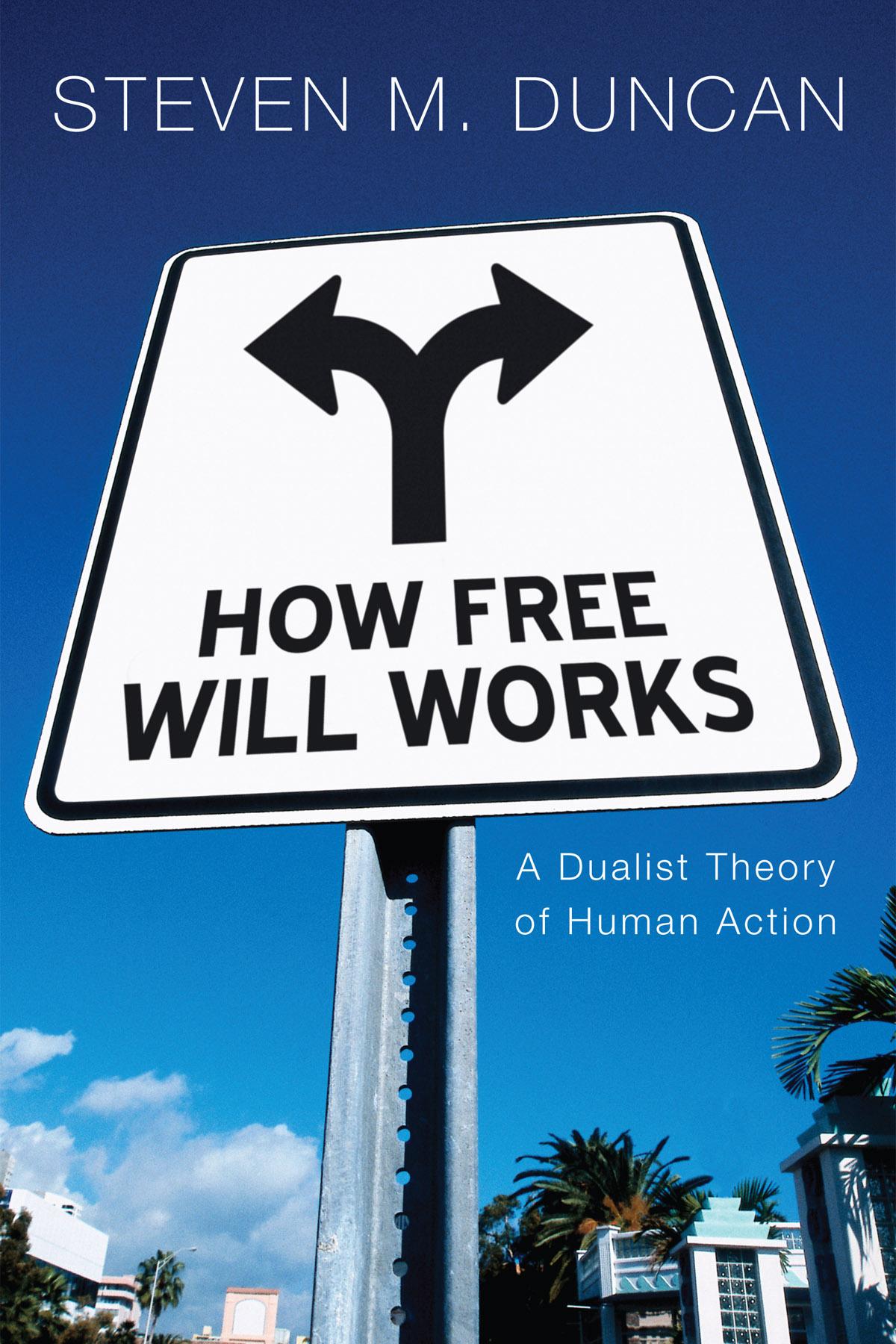
In How Free Will Works, Steven M. Duncan provides not merely discussions of, but potential answers to two of the most vexed questions discussed by philosophers concerning free choice. First, supposing that the mind and the body are separate substances of opposed natures, how is it possible for them to interact such that an entirely non-physical immanent mental act can give rise to changes in the external world? Second, supposing that there is free will, how is it possible for our acts of volition/free choice to be neither causally determined nor merely chance/random events?
This book spells out a new way of envisaging the mind/body relation and the nature of mind/body causal interaction that avoids the traditional "interaction problem." It also explains how it is possible for free choice neither to require an efficient cause nor to act as an efficient cause while nevertheless affecting the processes in the physical world through which intentional action is realized in human behavior. In the second half of the book, the theory developed in the first part of the book is applied to the difficult issues arising from the Christian doctrine of salvation: sin, grace, and redemption.
Betaal eenvoudig met kaart, Klarna, Apple Pay of Google Pay. Niet tevreden? Je hebt altijd 14 dagen bedenktijd. Lees meer in onze voorwaarden. Heb je vragen, mail ons dan via hello@memmo.org.
Memmo maakt studeren makkelijker – waar je ook bent ter wereld. Wij brengen je cursusboeken en slimme studietools samen op één plek: samenvattingen, quizzen, podcasts en flashcards. En Ted, je studievriend die antwoord geeft op alles wat je je afvraagt. Meer dan 50.000 studenten studeren hier al – gebouwd om je sneller te laten leren en minder stress te geven.
Misschien vind je dit ook leuk
Koop het boek0