
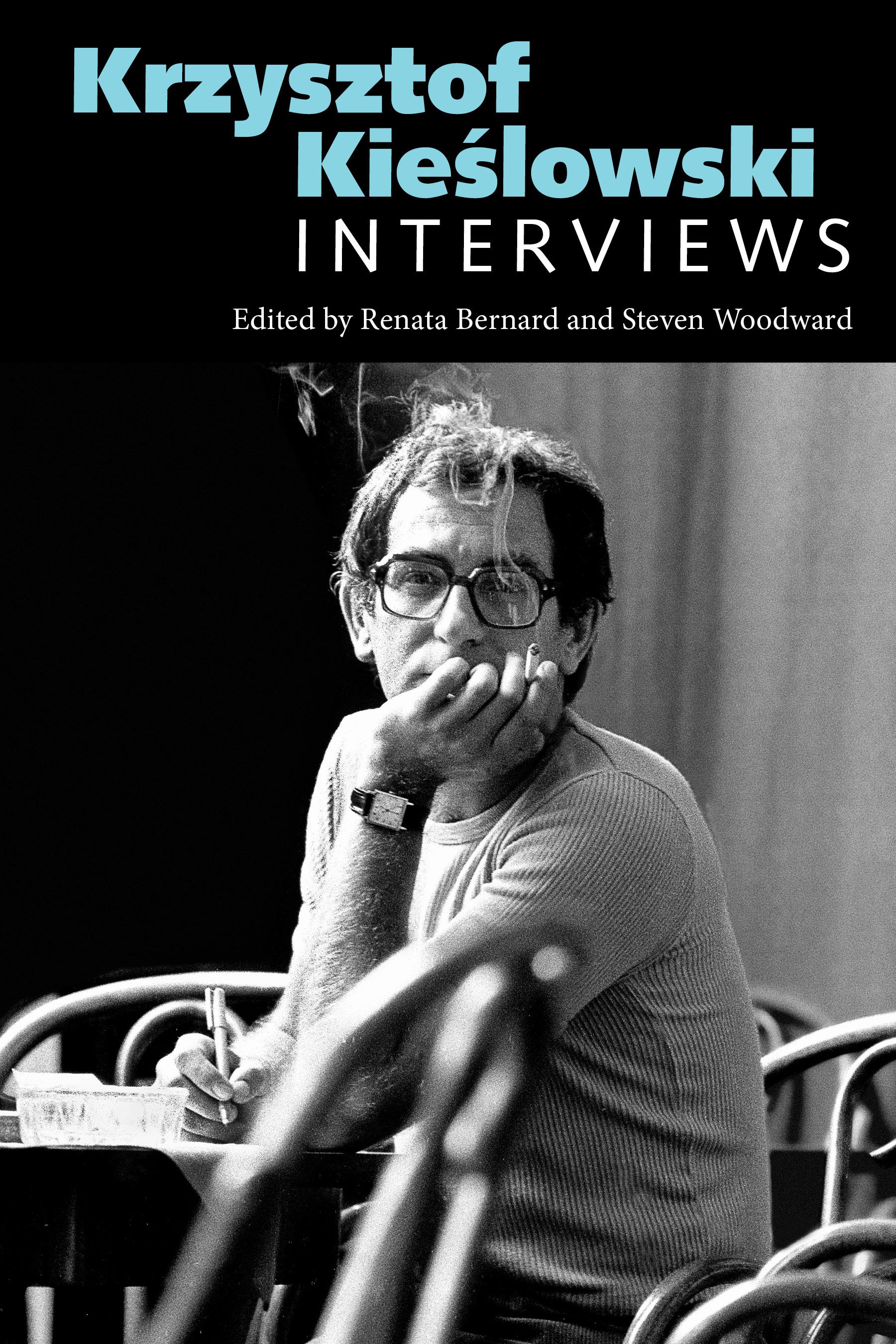
Krzysztof Kieślowski’s untimely death came at the height of his career, after his Three Colors trilogy of films garnered international acclaim (and an Oscar nomination), and he had been proclaimed Europe’s most important filmmaker by many critics. Born in 1941, he was only fifty-four years old when he died.
Kieślowski himself tried to tell the story of his life and career in the 1993 book Kieślowski on Kieślowski. This collection, by contrast, reveals the shifting voice of a filmmaker who was initially optimistic about his social and cultural role, then felt himself buffeted by the turbulent politics and events of the People’s Republic of Poland. As described in the chronology in this book, he found himself subject to the “economic censorship” of post-Communist filmmaking.
How Kieślowski responded at each moment of his life, what he tried to achieve with each of his films, is finely detailed in thirty-five selections. These pieces bring together his thesis from the famous Lodz film school, a manifesto written just before the dark days of martial law in Poland, diary entries from the first time he was working outside Poland, and numerous rare interviews from Polish-, French-, and English-language sources.
Kieślowski himself tried to tell the story of his life and career in the 1993 book Kieślowski on Kieślowski. This collection, by contrast, reveals the shifting voice of a filmmaker who was initially optimistic about his social and cultural role, then felt himself buffeted by the turbulent politics and events of the People’s Republic of Poland. As described in the chronology in this book, he found himself subject to the “economic censorship” of post-Communist filmmaking.
How Kieślowski responded at each moment of his life, what he tried to achieve with each of his films, is finely detailed in thirty-five selections. These pieces bring together his thesis from the famous Lodz film school, a manifesto written just before the dark days of martial law in Poland, diary entries from the first time he was working outside Poland, and numerous rare interviews from Polish-, French-, and English-language sources.
Betaal eenvoudig met kaart, Klarna, Apple Pay of Google Pay. Niet tevreden? Je hebt altijd 14 dagen bedenktijd. Lees meer in onze voorwaarden. Heb je vragen, mail ons dan via hello@memmo.org.
Memmo maakt studeren makkelijker – waar je ook bent ter wereld. Wij brengen je cursusboeken en slimme studietools samen op één plek: samenvattingen, quizzen, podcasts en flashcards. En Ted, je studievriend die antwoord geeft op alles wat je je afvraagt. Meer dan 50.000 studenten studeren hier al – gebouwd om je sneller te laten leren en minder stress te geven.
Misschien vind je dit ook leuk
Koop het boek0