
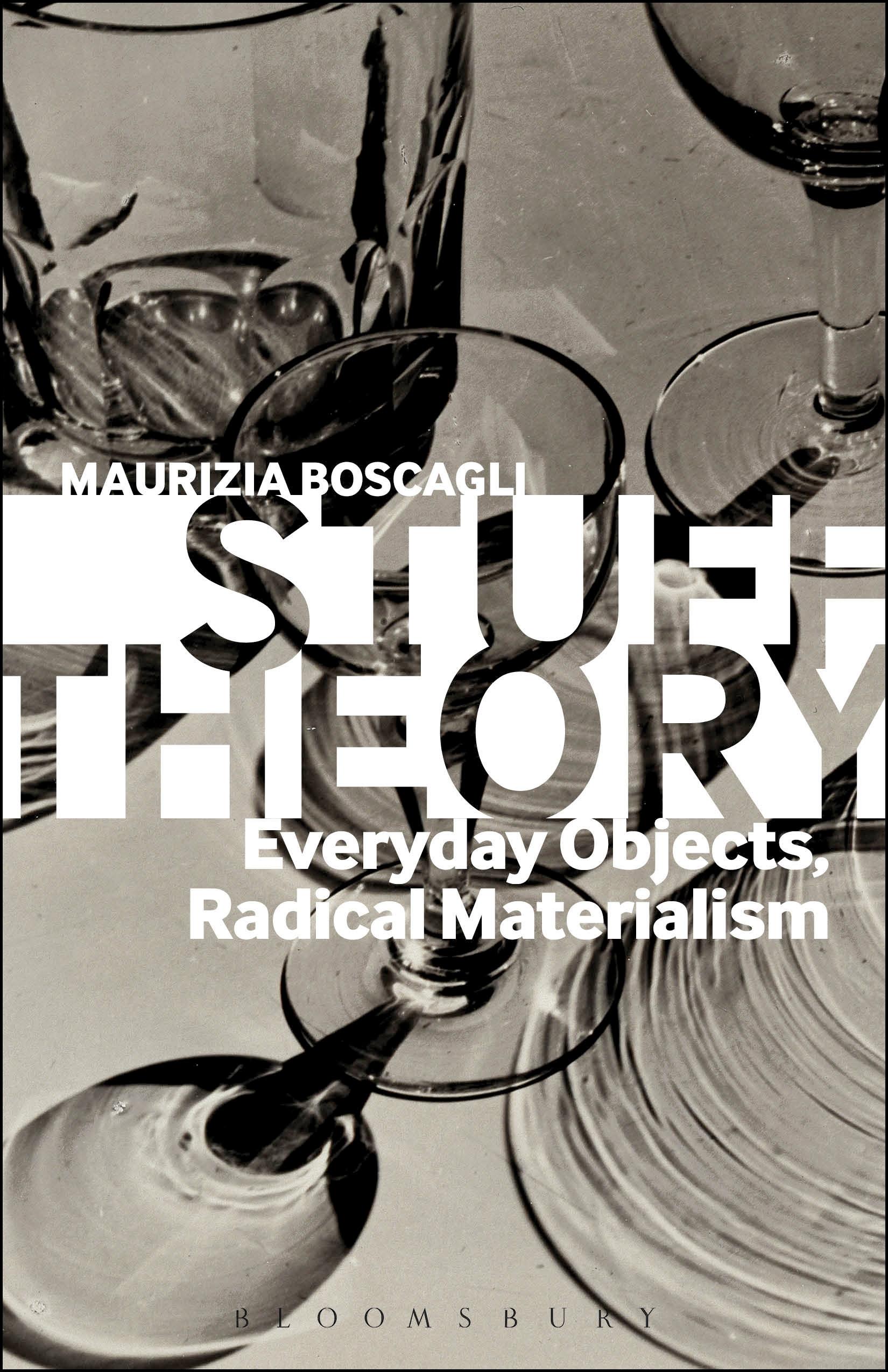
Stuff, the hoard of minor objects which have shed their commodity glamor but which we refuse to recycle, flashes up in fiction, films and photographs as alluring, unruly reminder of how people and matter are intertwined. Stuff is modern materiality out of bounds that refuses to be contained by the western semiotic system. It declines its role as the eternal sidekick of the subject, and is thus the ideal basis for a counter-narrative of materiality in flux. Can such a narrative, developed by the new materialism, reinvigorate the classical materialist account of human alienation from commodities under capital? By shifting the discussion of materiality toward the aesthetic and the everyday, the book both embraces and challenges the project of new materialism. It argues that matter has a politics, and that its new plasticity offers a continued possibility of critique.
Stuff Theory's five chapters illustrate the intermittent flashes of modern 'minor' materiality in twentieth-century modernity as fashion, memory object, clutter, home décor, and waste in a wide range of texts: Benjamin's essays, Virginia Woolf's and Elfriede Jelinek's fiction, Rem Koolhaas' criticism, 1920s German photography and the cinema of Tati, Bertolucci, and Mendes. To call the commodified, ebullient materiality the book tracks stuff, is to foreground its plastic and transformative power, its fluidity and its capacity to generate events. Stuff Theory interrogates the political value of stuff's instability. It investigates the potential of stuff to revitalize the oppositional power of the object.
Stuff Theory traces a genealogy of materiality: flashpoints of one kind of minor matter in a succession of cultural moments. It asserts that in culture, stuff becomes a rallying point for a new critique of capital, which always works to reassign stuff to a subaltern position. Stuff is not merely unruly: it becomes the terrain on which a new relation between people and matter might be built.
Stuff Theory's five chapters illustrate the intermittent flashes of modern 'minor' materiality in twentieth-century modernity as fashion, memory object, clutter, home décor, and waste in a wide range of texts: Benjamin's essays, Virginia Woolf's and Elfriede Jelinek's fiction, Rem Koolhaas' criticism, 1920s German photography and the cinema of Tati, Bertolucci, and Mendes. To call the commodified, ebullient materiality the book tracks stuff, is to foreground its plastic and transformative power, its fluidity and its capacity to generate events. Stuff Theory interrogates the political value of stuff's instability. It investigates the potential of stuff to revitalize the oppositional power of the object.
Stuff Theory traces a genealogy of materiality: flashpoints of one kind of minor matter in a succession of cultural moments. It asserts that in culture, stuff becomes a rallying point for a new critique of capital, which always works to reassign stuff to a subaltern position. Stuff is not merely unruly: it becomes the terrain on which a new relation between people and matter might be built.
Pagina's: 272
Categorie: Kultur-, Genus- & Postkoloniala studier
e-ISBN: 9781623566302
Verzendgewicht: 1.2 kg
Verzending binnen: 1-2 dagen
Betaal eenvoudig met kaart, Klarna, Apple Pay of Google Pay. Niet tevreden? Je hebt altijd 14 dagen bedenktijd. Lees meer in onze voorwaarden. Heb je vragen, mail ons dan via hello@memmo.org.
Memmo maakt studeren makkelijker – waar je ook bent ter wereld. Wij brengen je cursusboeken en slimme studietools samen op één plek: samenvattingen, quizzen, podcasts en flashcards. En Ted, je studievriend die antwoord geeft op alles wat je je afvraagt. Meer dan 50.000 studenten studeren hier al – gebouwd om je sneller te laten leren en minder stress te geven.