
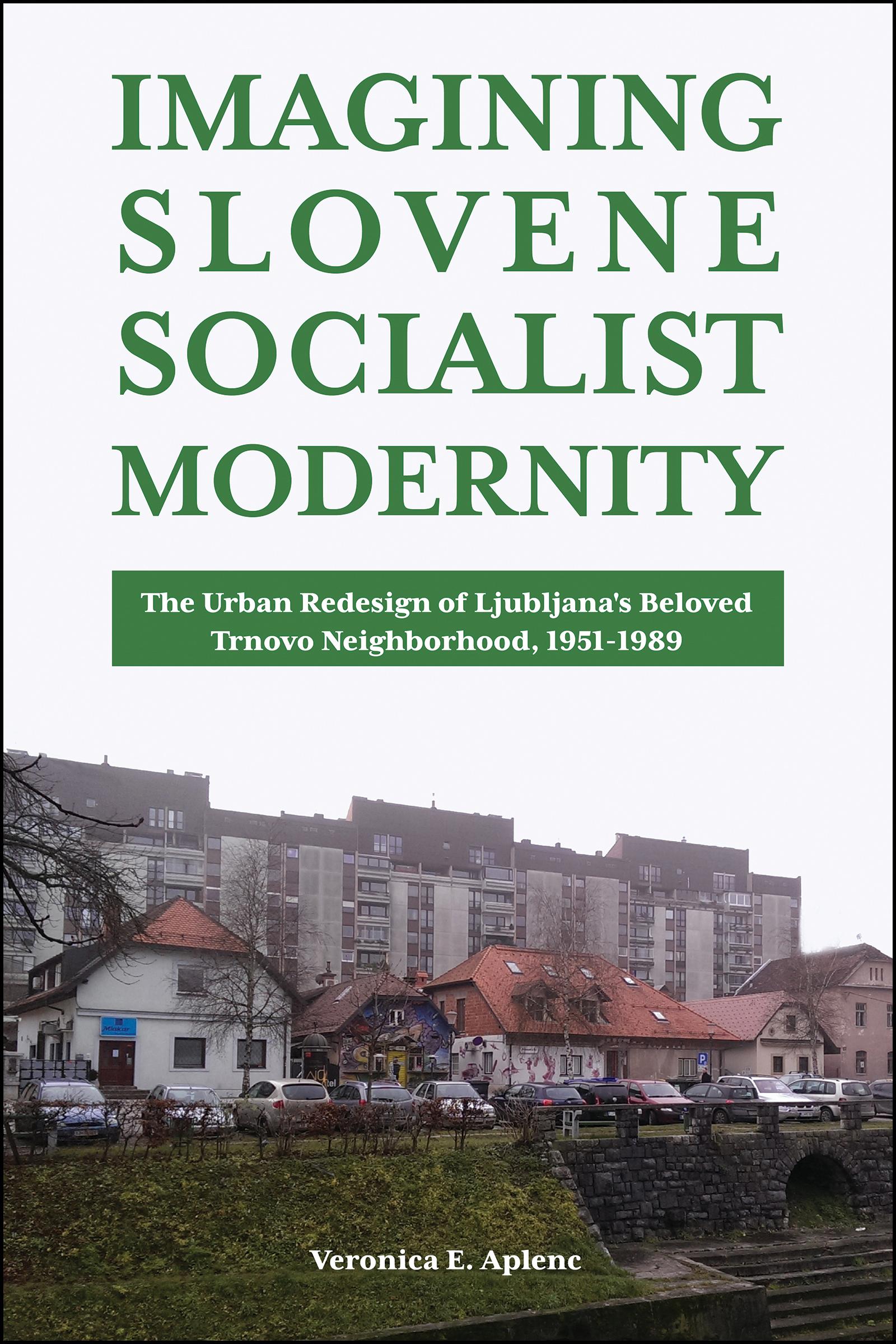
After the Second World War, Yugoslavia’s small regional cities represented a challenge for the new socialist state. These cities’ older buildings, local historic sites, and low-quality housing clashed with socialism’s promises and ideals. How would the state transform these cities’ everyday neighborhoods? In the Slovene republic’s capital city of Ljubljana, the Trnovo neighborhood embodied this challenge through its modest housing, small medieval section, vast gardens, acclaimed interwar architecture, and iconic local reputation. Imagining Slovene Socialist Modernity explores how urban planners, architects, historic preservationists, neighborhood residents, and even folklorists transformed this beloved neighborhood into a Slovene socialist city district. Aplenc demonstrates that this urban redesign centered on republic-level interpretations of a Yugoslav socialist built environment, versus a re-envisioned Slovene national past or design style. This interdisciplinary study sheds light on how Yugoslav state socialism operated at the republic level, within a decentralized system, and on the diverse forces behind success or failure. With its focus on vernacular architecture, small-scale historic sites, single-family homes, and illegal housing, this book expands our understanding of the everyday built environment in socialist cities.
Betaal eenvoudig met kaart, Klarna, Apple Pay of Google Pay. Niet tevreden? Je hebt altijd 14 dagen bedenktijd. Lees meer in onze voorwaarden. Heb je vragen, mail ons dan via hello@memmo.org.
Memmo maakt studeren makkelijker – waar je ook bent ter wereld. Wij brengen je cursusboeken en slimme studietools samen op één plek: samenvattingen, quizzen, podcasts en flashcards. En Ted, je studievriend die antwoord geeft op alles wat je je afvraagt. Meer dan 50.000 studenten studeren hier al – gebouwd om je sneller te laten leren en minder stress te geven.
Misschien vind je dit ook leuk
Koop het boek0