
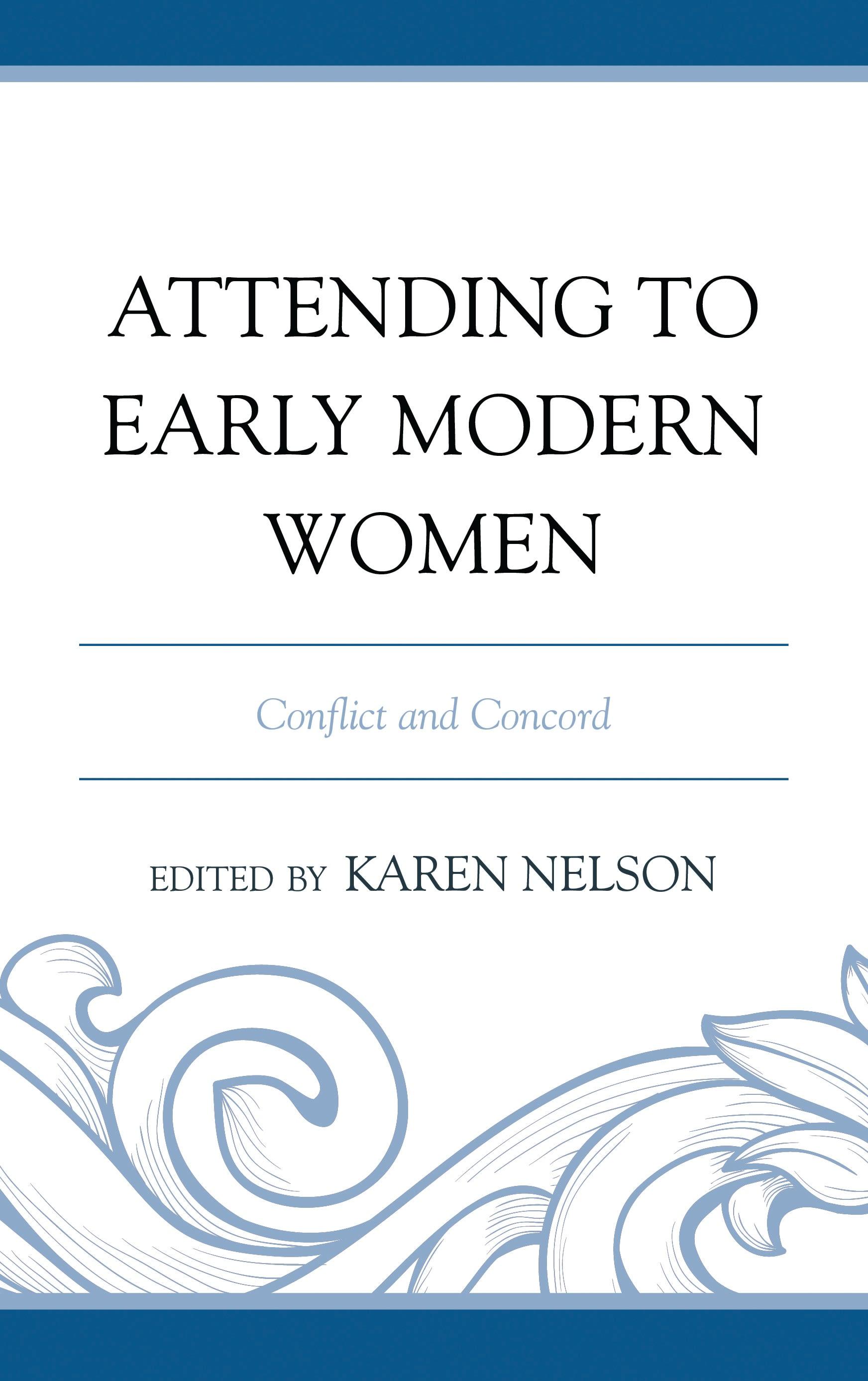
This volume considers women's roles in the conflicts and negotiations of the early modern world. Essays explore the ways that gender shapes women's agency in times of war, religious strife, and economic change. How were conflict and concord gendered in histories, literature, music, and political, legal, didactic, and religious treatises?
Four interdisciplinary plenary topics ground this exploration: Negotiations, Economies, Faiths & Spiritualities, and Pedagogies. Scholars focus upon many regions of the early modern world--the Atlantic world, the Mediterranean world, Granada, Indonesia, the Low Countries, England, and Italy--inflected by such religions as Islam, Catholicism, and Reformed Protestantism, as they came into contact with indigenous spiritualities and with one another.
Essays and workshop summaries analyze how gender and class are implicated in economic change and assess the ways gender and religion map onto voyages of trade, exploration, or imperialism. They investigate how women, as individuals and as members of political or family networks, were instrumental in transmitting, promoting, supporting, or thwarting different religions during times of religious crises. This volume also offers methods for teaching and researching these topics. It will be invaluable to scholars of medieval and early modern women's studies, especially those working in history, literature, languages, musicology, and religious studies.
Four interdisciplinary plenary topics ground this exploration: Negotiations, Economies, Faiths & Spiritualities, and Pedagogies. Scholars focus upon many regions of the early modern world--the Atlantic world, the Mediterranean world, Granada, Indonesia, the Low Countries, England, and Italy--inflected by such religions as Islam, Catholicism, and Reformed Protestantism, as they came into contact with indigenous spiritualities and with one another.
Essays and workshop summaries analyze how gender and class are implicated in economic change and assess the ways gender and religion map onto voyages of trade, exploration, or imperialism. They investigate how women, as individuals and as members of political or family networks, were instrumental in transmitting, promoting, supporting, or thwarting different religions during times of religious crises. This volume also offers methods for teaching and researching these topics. It will be invaluable to scholars of medieval and early modern women's studies, especially those working in history, literature, languages, musicology, and religious studies.
Pagina's: 268
Categorie: Kultur-, Genus- & Postkoloniala studier
e-ISBN: 9781611494457
Verzendgewicht: 1.2 kg
Verzending binnen: 1-2 dagen
Betaal eenvoudig met kaart, Klarna, Apple Pay of Google Pay. Niet tevreden? Je hebt altijd 14 dagen bedenktijd. Lees meer in onze voorwaarden. Heb je vragen, mail ons dan via hello@memmo.org.
Memmo maakt studeren makkelijker – waar je ook bent ter wereld. Wij brengen je cursusboeken en slimme studietools samen op één plek: samenvattingen, quizzen, podcasts en flashcards. En Ted, je studievriend die antwoord geeft op alles wat je je afvraagt. Meer dan 50.000 studenten studeren hier al – gebouwd om je sneller te laten leren en minder stress te geven.