
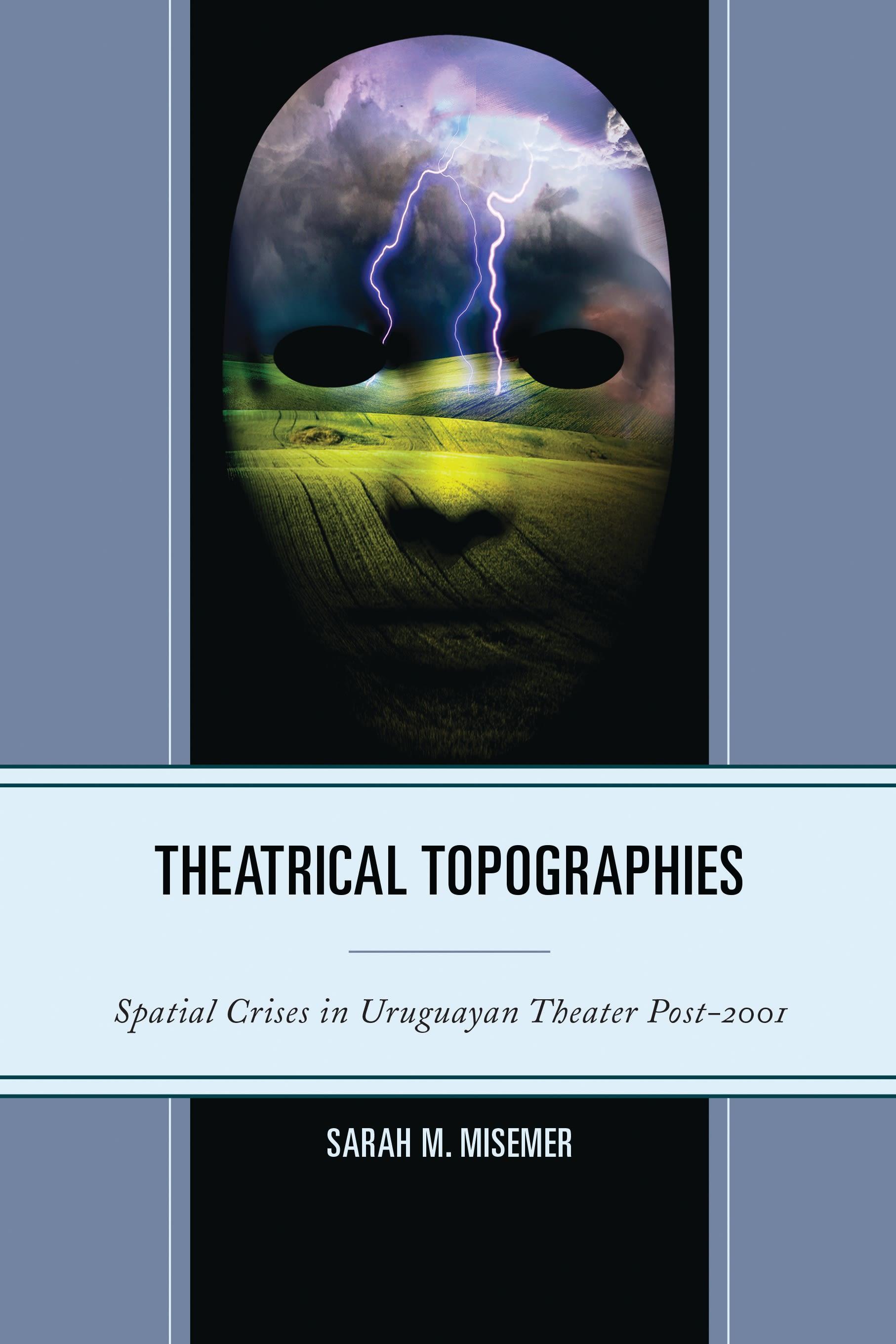
The economic crisis in Argentina in 2001-2002 that spilled over into Uruguay causing fiscal and political problems is the starting point for my research on space and theater, and it demonstrates why we must look at the River Plate in both global and local ways. Connections among monetary policies, industries, and legal, social, and political movements mean that national spaces like Uruguay’s are fraught with tensions that come from both within and outside of borders. Recent economic crises like the one that is occurring in Greece, further demonstrate how nation states and trade blocks must constantly negotiate power as they toggle between national and international pressures. Nation states are being prompted to reconceive perspectives on governance that fall away from the parameters of Westphalian autonomy and reconcile their views with trends that instead require thinking about power as a network with shifting centers.
The introduction launches the study by addressing these political and economic trends, the spatial turn in theater and performance studies, the rise of multiculturalism, and also examines the Uruguayan historical context of the post-dictatorship and impunity laws that pit national sovereignty against international human rights laws. These crises are enacted on the Uruguayan stage and contextualized through networks and spatial topographies, intertextualties on the page, explorations of history and memory, and ultimately notions of identity in four areas: the postdramatic and economic realm (chapter one: Peveroni), cultural geography and pyschogeography (chapter two: Morena), midrash and questions of human rights and growing fascist trends (chapter three: Sanguinetti), and finally in mapmaking on the stage through mise-en-perf/performise and “wayfinding” through sites of contested power (chapter four: Calderón). The concluding chapter (Blanco) looks at the reinterpretation of Greek tragedy as a commentary on the messy process of democratization. Here, access to the polis and power are problematized through the lens of international sex trafficking and gendered roles that exclude portions of the populace from participation in the process of self-governance.
The introduction launches the study by addressing these political and economic trends, the spatial turn in theater and performance studies, the rise of multiculturalism, and also examines the Uruguayan historical context of the post-dictatorship and impunity laws that pit national sovereignty against international human rights laws. These crises are enacted on the Uruguayan stage and contextualized through networks and spatial topographies, intertextualties on the page, explorations of history and memory, and ultimately notions of identity in four areas: the postdramatic and economic realm (chapter one: Peveroni), cultural geography and pyschogeography (chapter two: Morena), midrash and questions of human rights and growing fascist trends (chapter three: Sanguinetti), and finally in mapmaking on the stage through mise-en-perf/performise and “wayfinding” through sites of contested power (chapter four: Calderón). The concluding chapter (Blanco) looks at the reinterpretation of Greek tragedy as a commentary on the messy process of democratization. Here, access to the polis and power are problematized through the lens of international sex trafficking and gendered roles that exclude portions of the populace from participation in the process of self-governance.
Pagina's: 228
Categorie: Drama, Teater & Scenkonst
e-ISBN: 9781611487985
Verzendgewicht: 1.2 kg
Verzending binnen: 1-2 dagen
Betaal eenvoudig met kaart, Klarna, Apple Pay of Google Pay. Niet tevreden? Je hebt altijd 14 dagen bedenktijd. Lees meer in onze voorwaarden. Heb je vragen, mail ons dan via hello@memmo.org.
Memmo maakt studeren makkelijker – waar je ook bent ter wereld. Wij brengen je cursusboeken en slimme studietools samen op één plek: samenvattingen, quizzen, podcasts en flashcards. En Ted, je studievriend die antwoord geeft op alles wat je je afvraagt. Meer dan 50.000 studenten studeren hier al – gebouwd om je sneller te laten leren en minder stress te geven.