
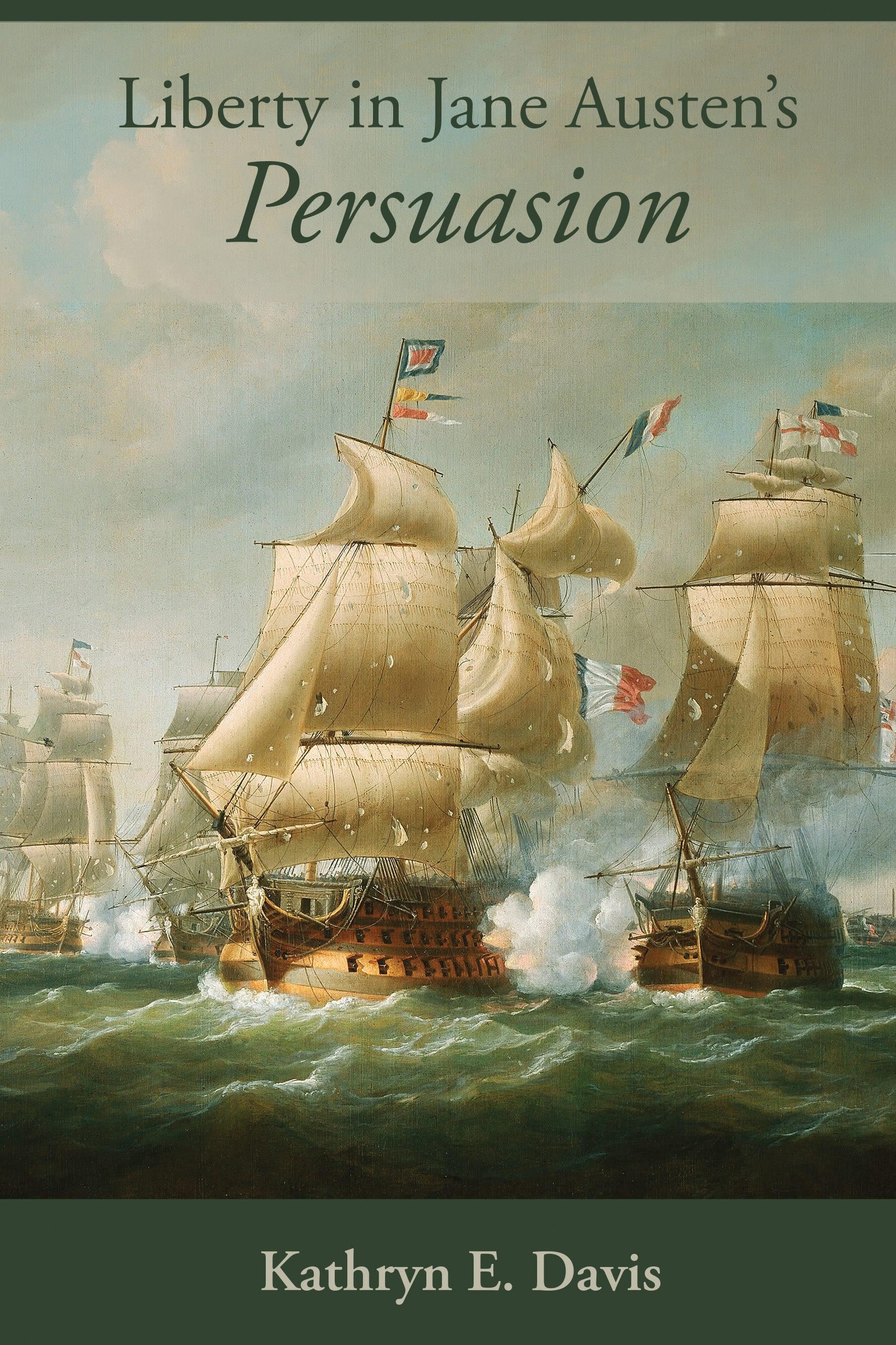
Liberty in Jane Austen’s Persuasion is a meditation on Persuasion as a text in which Jane Austen, writing in the Age of Revolution, enters the conversation of her epoch. Poets, philosophers, theologians and political thinkers of the long eighteenth century, including William Cowper, George Gordon Byron, Samuel Johnson, Hugh Blair, Thomas Sherlock, Edmund Burke, and Charles Pasley, endeavored definitively to determine what it means for a human being to be free. Persuasion is Austen’s elegant, artful and complex addition to this conversation. In this study, Kathryn Davis proposes that Austen's last complete novel offers an apologia for human liberty primarily understood as self-governance. Austen’s characters struggle to attain liberty, not from an oppressive political regime or stifling social conventions, but for a type of excellence that is available to each human being. The novel's presentation of moral virtue has wider cultural significance as a force that shapes both the “little social commonwealth[s]” inhabited by characters of Austen’s own making and, possibly, the identity of the nation whose sovereign read Persuasion.
Pagina's: 194
Categorie: Litteraturvetenskap & Teori
e-ISBN: 9781611462289
Verzendgewicht: 1.2 kg
Verzending binnen: 1-2 dagen
Betaal eenvoudig met kaart, Klarna, Apple Pay of Google Pay. Niet tevreden? Je hebt altijd 14 dagen bedenktijd. Lees meer in onze voorwaarden. Heb je vragen, mail ons dan via hello@memmo.org.
Memmo maakt studeren makkelijker – waar je ook bent ter wereld. Wij brengen je cursusboeken en slimme studietools samen op één plek: samenvattingen, quizzen, podcasts en flashcards. En Ted, je studievriend die antwoord geeft op alles wat je je afvraagt. Meer dan 50.000 studenten studeren hier al – gebouwd om je sneller te laten leren en minder stress te geven.