
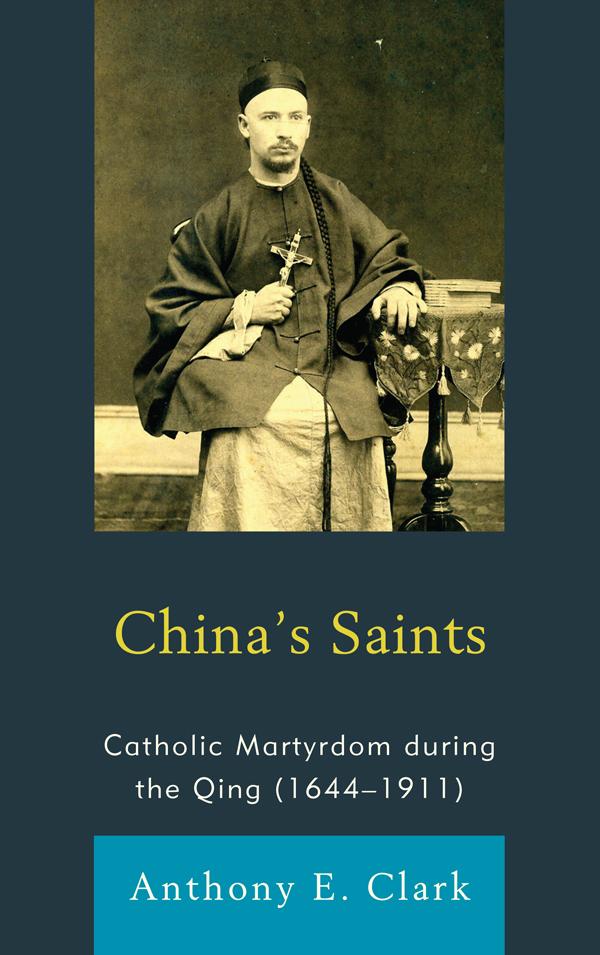
While previous works on the history of Christianity in China have largely centered on the scientific and philosophical areas of Catholic missions in the Middle Kingdom, China's Saints recounts the history of Christian martyrdom, precipitated as it was by cultural antagonisms and misunderstanding. Anthony Clark shows that Christianity in China began and grew under similar circumstances to those during the Roman Empire, with the notable exception that Catholic missionaries were not successful at producing a "Chinese Constantine."
One of the principal results of Catholic martyrdom in China was the increased indigenization of Christianity. During the reconstruction of mission churches, hospitals, and orphanages after the hostilities of the Boxer Uprising (1898–1900), the Roman Catholic tradition of venerating martyrs was attached to the reinvigoration of Christian communities. Not only did Catholic architecture accommodate to Chinese sensibilities, but causes for sainthood were also begun at the Vatican to add Chinese names to the Church's list of saints. The implications of Clark's work extend beyond the subject of Christianity in China to the broader fields of cultural, social, economic, political, and religious history. This pioneering study follows the trails of Western missionaries and Chinese converts as they negotiate the religious and cultural chasms that existed between the West and China, and it demonstrates that these differences resulted in two very different outcomes. Whereas converts appear to have bridged the cultural divide, often to the point of self-sacrifice, political and cultural tensions on the macro level sometimes ended with forceful conflicts. This book contributes to a deeper understanding of cultural and religious interaction, and provides an account of an heretofore unstudied chapter in the history of Christianity on the global landscape.
One of the principal results of Catholic martyrdom in China was the increased indigenization of Christianity. During the reconstruction of mission churches, hospitals, and orphanages after the hostilities of the Boxer Uprising (1898–1900), the Roman Catholic tradition of venerating martyrs was attached to the reinvigoration of Christian communities. Not only did Catholic architecture accommodate to Chinese sensibilities, but causes for sainthood were also begun at the Vatican to add Chinese names to the Church's list of saints. The implications of Clark's work extend beyond the subject of Christianity in China to the broader fields of cultural, social, economic, political, and religious history. This pioneering study follows the trails of Western missionaries and Chinese converts as they negotiate the religious and cultural chasms that existed between the West and China, and it demonstrates that these differences resulted in two very different outcomes. Whereas converts appear to have bridged the cultural divide, often to the point of self-sacrifice, political and cultural tensions on the macro level sometimes ended with forceful conflicts. This book contributes to a deeper understanding of cultural and religious interaction, and provides an account of an heretofore unstudied chapter in the history of Christianity on the global landscape.
Betaal eenvoudig met kaart, Klarna, Apple Pay of Google Pay. Niet tevreden? Je hebt altijd 14 dagen bedenktijd. Lees meer in onze voorwaarden. Heb je vragen, mail ons dan via hello@memmo.org.
Memmo maakt studeren makkelijker – waar je ook bent ter wereld. Wij brengen je cursusboeken en slimme studietools samen op één plek: samenvattingen, quizzen, podcasts en flashcards. En Ted, je studievriend die antwoord geeft op alles wat je je afvraagt. Meer dan 50.000 studenten studeren hier al – gebouwd om je sneller te laten leren en minder stress te geven.