
Reveals the emergence and endurance of vocabularies, habits, and preferences that sustained ancient textual cultures
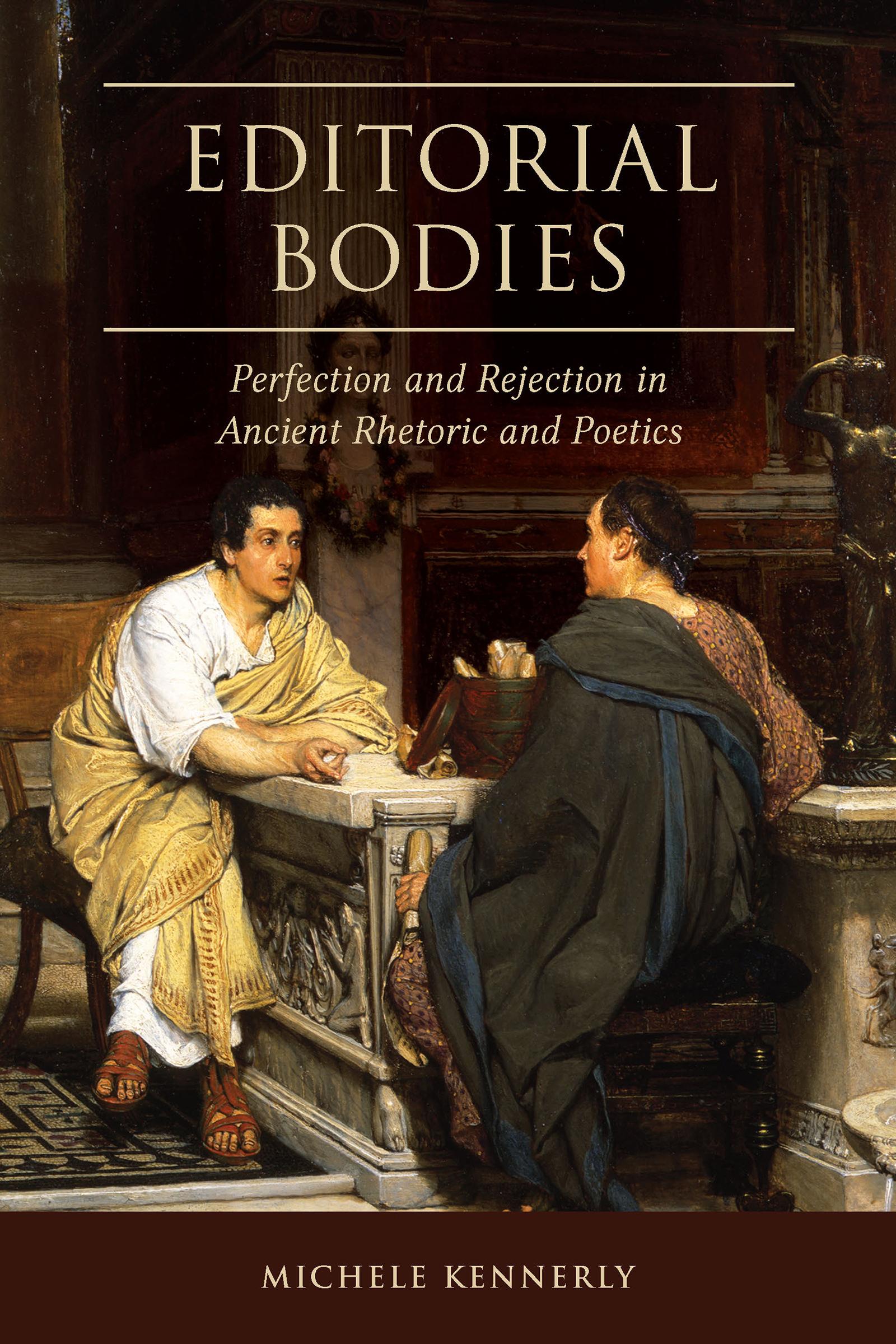
Though typically considered oral cultures, ancient Greece and Rome also boasted textual cultures, enabled by efforts to perfect, publish, and preserve both new and old writing. In Editorial Bodies, Michele Kennerly argues that such efforts were commonly articulated through the extended metaphor of the body. They were also supported by people upon whom writers relied for various kinds of assistance and necessitated by lively debates about what sort of words should be put out and remain in public.
Spanning ancient Athenian, Alexandrian, and Roman textual cultures, Kennerly shows that orators and poets attributed public value to their seemingly inward-turning compositional labors. After establishing certain key terms of writing and editing from classical Athens through late republican Rome, Kennerly focuses on works from specific orators and poets writing in Latin in the first century B.C.E. and the first century C.E.: Cicero, Horace, Ovid, Quintilian, Tacitus, and Pliny the Younger.
The result is a rich and original history of rhetoric that reveals the emergence and endurance of vocabularies, habits, and preferences that sustained ancient textual cultures. This major contribution to rhetorical studies unsettles longstanding assumptions about ancient rhetoric and poetics by means of generative readings of both well-known and understudied texts.
Betaal eenvoudig met kaart, Klarna, Apple Pay of Google Pay. Niet tevreden? Je hebt altijd 14 dagen bedenktijd. Lees meer in onze voorwaarden. Heb je vragen, mail ons dan via hello@memmo.org.
Memmo maakt studeren makkelijker – waar je ook bent ter wereld. Wij brengen je cursusboeken en slimme studietools samen op één plek: samenvattingen, quizzen, podcasts en flashcards. En Ted, je studievriend die antwoord geeft op alles wat je je afvraagt. Meer dan 50.000 studenten studeren hier al – gebouwd om je sneller te laten leren en minder stress te geven.