
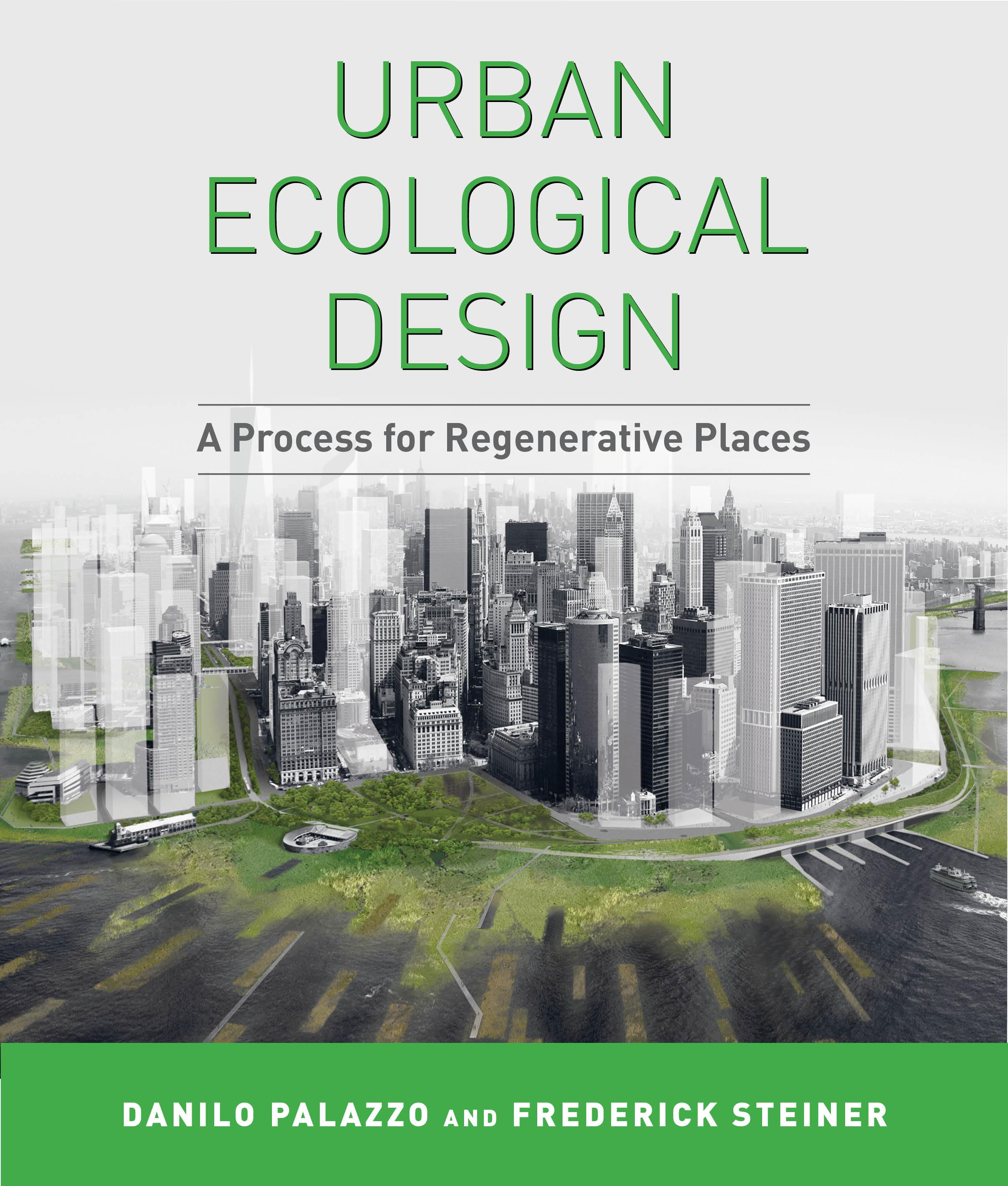
This trailblazing book outlines an interdisciplinary "process model" for urban design that has been developed and tested over time. Its goal is not to explain how to design a specific city precinct or public space, but to describe useful steps to approach the transformation of urban spaces. Urban Ecological Design illustrates the different stages in which the process is organized, using theories, techniques, images, and case studies. In essence, it presents a "how-to" method to transform the urban landscape that is thoroughly informed by theory and practice.
The authors note that urban design is viewed as an interface between different disciplines. They describe the field as "peacefully overrun, invaded, and occupied" by city planners, architects, engineers, and landscape architects (with developers and politicians frequently joining in). They suggest that environmental concerns demand the consideration of ecology and sustainability issues in urban design. It is, after all, the urban designer who helps to orchestrate human relationships with other living organisms in the built environment.
The overall objective of the book is to reinforce the role of the urban designer as an honest broker and promoter of design processes and as an active agent of social creativity in the production of the public realm.
Betaal eenvoudig met kaart, Klarna, Apple Pay of Google Pay. Niet tevreden? Je hebt altijd 14 dagen bedenktijd. Lees meer in onze voorwaarden. Heb je vragen, mail ons dan via hello@memmo.org.
Memmo maakt studeren makkelijker – waar je ook bent ter wereld. Wij brengen je cursusboeken en slimme studietools samen op één plek: samenvattingen, quizzen, podcasts en flashcards. En Ted, je studievriend die antwoord geeft op alles wat je je afvraagt. Meer dan 50.000 studenten studeren hier al – gebouwd om je sneller te laten leren en minder stress te geven.