
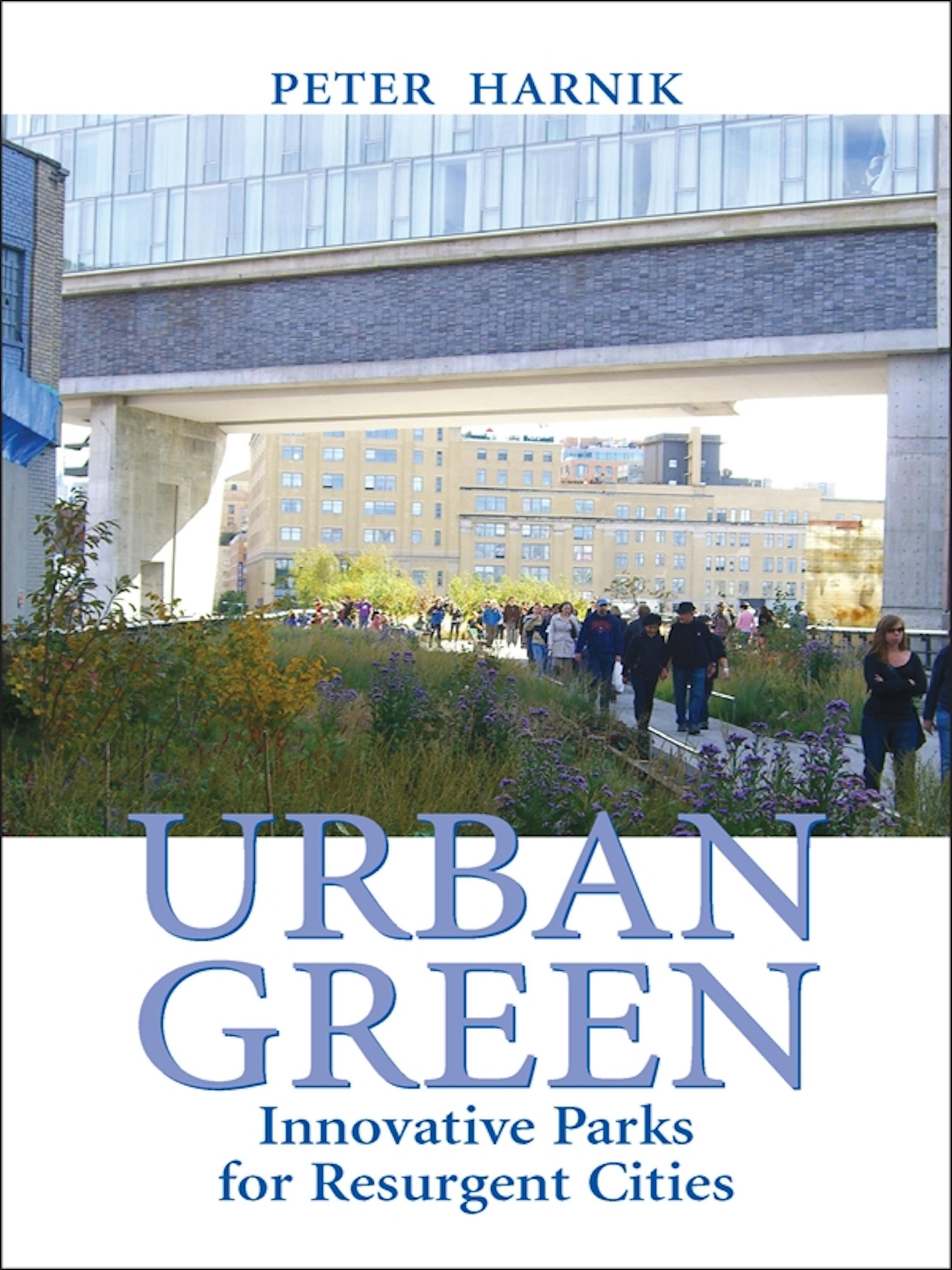
For years American urban parks fell into decay due to disinvestment, but as cities began to rebound—and evidence of the economic, cultural, and health benefits of parks grew— investment in urban parks swelled. The U.S. Conference of Mayors recently cited meeting the growing demand for parks and open space as one of the biggest challenges for urban leaders today. It is now widely agreed that the U.S. needs an ambitious and creative plan to increase urban parklands.
Urban Green explores new and innovative ways for “built out” cities to add much-needed parks. Peter Harnik first explores the question of why urban parkland is needed and then looks at ways to determine how much is possible and where park investment should go. When presenting the ideas and examples for parkland, he also recommends political practices that help create parks.
The book offers many practical solutions, from reusing the land under defunct factories to sharing schoolyards, from building trails on abandoned tracks to planting community gardens, from decking parks over highways to allowing more activities in cemeteries, from eliminating parking lots to uncovering buried streams, and more. No strategy alone is perfect, and each has its own set of realities. But collectively they suggest a path toward making modern cities more beautiful, more sociable, more fun, more ecologically sound, and more successful.
Betaal eenvoudig met kaart, Klarna, Apple Pay of Google Pay. Niet tevreden? Je hebt altijd 14 dagen bedenktijd. Lees meer in onze voorwaarden. Heb je vragen, mail ons dan via hello@memmo.org.
Memmo maakt studeren makkelijker – waar je ook bent ter wereld. Wij brengen je cursusboeken en slimme studietools samen op één plek: samenvattingen, quizzen, podcasts en flashcards. En Ted, je studievriend die antwoord geeft op alles wat je je afvraagt. Meer dan 50.000 studenten studeren hier al – gebouwd om je sneller te laten leren en minder stress te geven.