
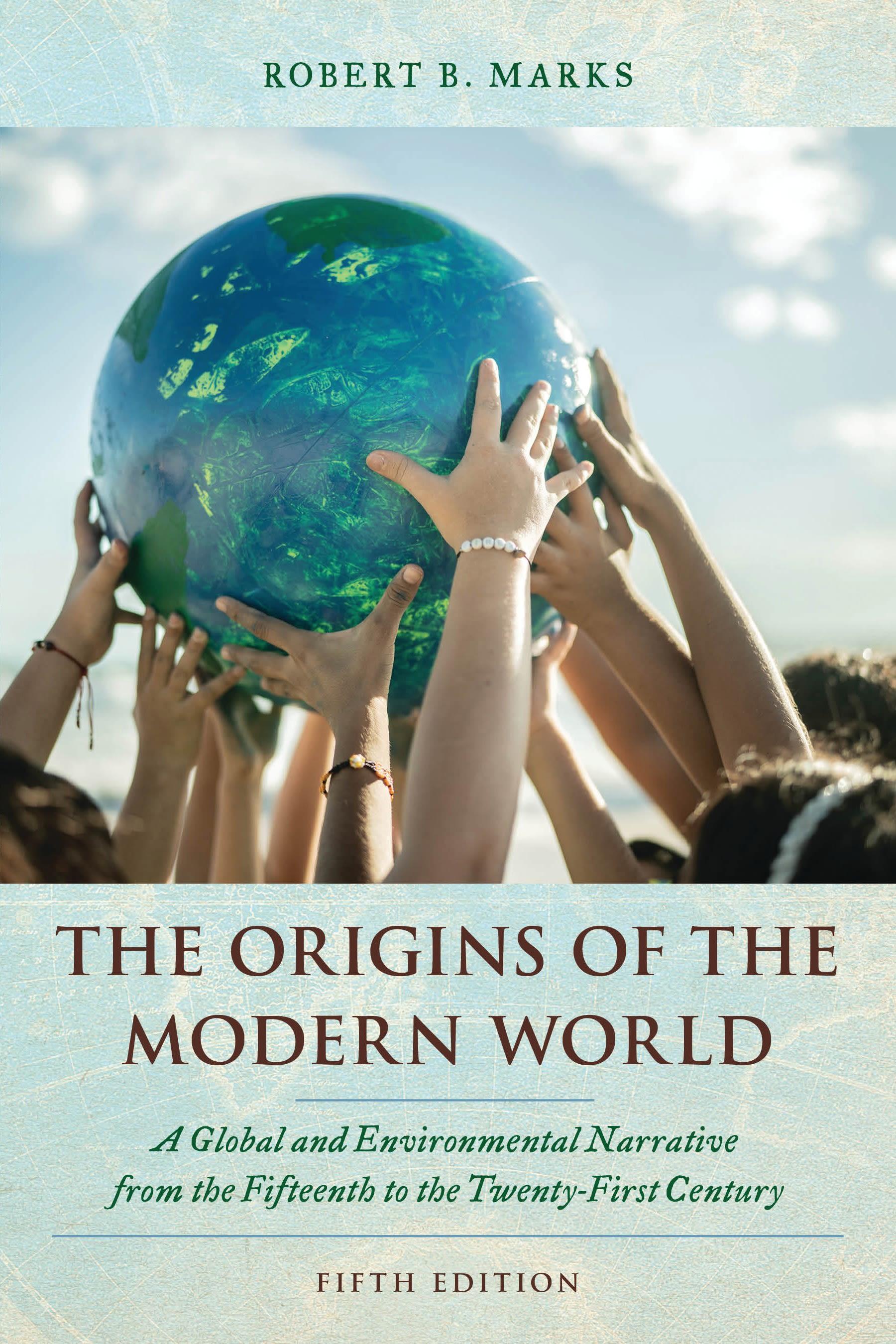
This clearly written and engrossing book presents a global narrative of the origins of the modern world from 1400 to the present. Unlike most studies, which assume that the “rise of the West” is the story of the coming of the modern world, this history, drawing upon new scholarship on Asia, Africa, and the New World and upon the maturing field of environmental history, constructs a story in which those parts of the world play major roles, including their impacts on the environment. Robert B. Marks defines the modern world as one marked by industry, the nation state, interstate warfare, a large and growing gap between the wealthiest and poorest parts of the world, increasing inequality within the wealthiest industrialized countries, and an escape from the environmental constraints of the “biological old regime.” He explains its origins by emphasizing contingencies (such as the conquest of the New World); the broad comparability of the most advanced regions in China, India, and Europe; the reasons why England was able to escape from common ecological constraints facing all of those regions by the end of the eighteenth century; a conjuncture of human and natural forces that solidified a gap between the industrialized and non-industrialized parts of the world; the mounting environmental crisis that defines the modern world; and the ways in which the forces of globalization stress the economic and political underpinnings of the modern world.
Now in a new edition that brings the saga of the modern world to the present in an environmental context, the book considers how and why the United States emerged as a world power in the twentieth century and became the sole superpower by the twenty-first century, and why the changed relationship of humans to the environmental likely will be the hallmark of the modern era—the Anthropocene. Once again arguing that the US rise to global hegemon was contingent, not inevitable, Marks also points to the resurgence of Asia and the vastly changed relationship of humans to the environment that may in the long run overshadow any political and economic milestones of the past hundred years.
Now in a new edition that brings the saga of the modern world to the present in an environmental context, the book considers how and why the United States emerged as a world power in the twentieth century and became the sole superpower by the twenty-first century, and why the changed relationship of humans to the environmental likely will be the hallmark of the modern era—the Anthropocene. Once again arguing that the US rise to global hegemon was contingent, not inevitable, Marks also points to the resurgence of Asia and the vastly changed relationship of humans to the environment that may in the long run overshadow any political and economic milestones of the past hundred years.
Betaal eenvoudig met kaart, Klarna, Apple Pay of Google Pay. Niet tevreden? Je hebt altijd 14 dagen bedenktijd. Lees meer in onze voorwaarden. Heb je vragen, mail ons dan via hello@memmo.org.
Memmo maakt studeren makkelijker – waar je ook bent ter wereld. Wij brengen je cursusboeken en slimme studietools samen op één plek: samenvattingen, quizzen, podcasts en flashcards. En Ted, je studievriend die antwoord geeft op alles wat je je afvraagt. Meer dan 50.000 studenten studeren hier al – gebouwd om je sneller te laten leren en minder stress te geven.