
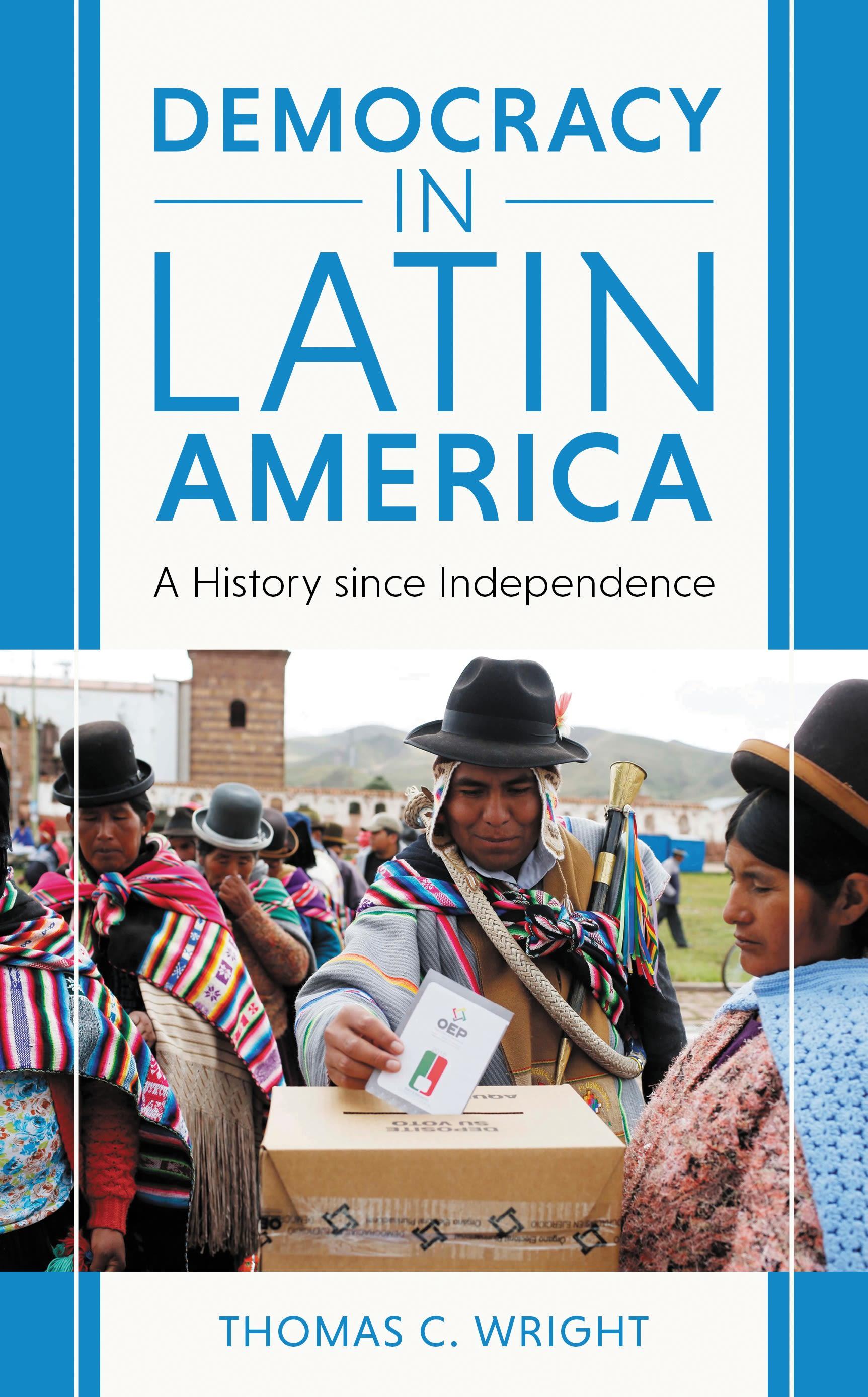
This book expertly traces the long, erratic, and incomplete path of Latin America’s political and socioeconomic democratization, from a group of colonies lacking democratic practice and culture up to the present. Using the lens of democracy defined by the charter of the Organization of American States (OAS), it examines the periods of US gunboat diplomacy in the Caribbean Basin, the Cold War, the state terrorist dictatorships of the 1970s and 1980s, the imposition of neoliberalism in the 1990s, and the rise of the Pink Tide in the new millennium.
The meaning of democracy has changed over time, from nineteenth-century liberalism—in which only a handful of wealthy males voted and individuals were responsible for their economic and social conditions—to governments in the late twentieth century that have embraced socioeconomic democracy by assuming responsibility (at least formally) for citizens’ welfare. Latin America’s movement toward democracy has not been linear. The book follows the appearance and evolution of both proponents and opponents of democracy over the last two centuries. The balance of these forces has shifted periodically, often in waves that swept across the entire region. Commitment to democracy does not guarantee implementation, but despite many setbacks, Latin America has made significant progress toward the democratic aspirations set forth in the OAS charter.
Thorough and accessibly written, Democracy in Latin America is an essential text for students studying Latin American politics and history.
The meaning of democracy has changed over time, from nineteenth-century liberalism—in which only a handful of wealthy males voted and individuals were responsible for their economic and social conditions—to governments in the late twentieth century that have embraced socioeconomic democracy by assuming responsibility (at least formally) for citizens’ welfare. Latin America’s movement toward democracy has not been linear. The book follows the appearance and evolution of both proponents and opponents of democracy over the last two centuries. The balance of these forces has shifted periodically, often in waves that swept across the entire region. Commitment to democracy does not guarantee implementation, but despite many setbacks, Latin America has made significant progress toward the democratic aspirations set forth in the OAS charter.
Thorough and accessibly written, Democracy in Latin America is an essential text for students studying Latin American politics and history.
Pagina's: 238
Categorie: Statsvetenskap & Politik
e-ISBN: 9781538149355
Verzendgewicht: 1.2 kg
Verzending binnen: 1-2 dagen
Betaal eenvoudig met kaart, Klarna, Apple Pay of Google Pay. Niet tevreden? Je hebt altijd 14 dagen bedenktijd. Lees meer in onze voorwaarden. Heb je vragen, mail ons dan via hello@memmo.org.
Memmo maakt studeren makkelijker – waar je ook bent ter wereld. Wij brengen je cursusboeken en slimme studietools samen op één plek: samenvattingen, quizzen, podcasts en flashcards. En Ted, je studievriend die antwoord geeft op alles wat je je afvraagt. Meer dan 50.000 studenten studeren hier al – gebouwd om je sneller te laten leren en minder stress te geven.