
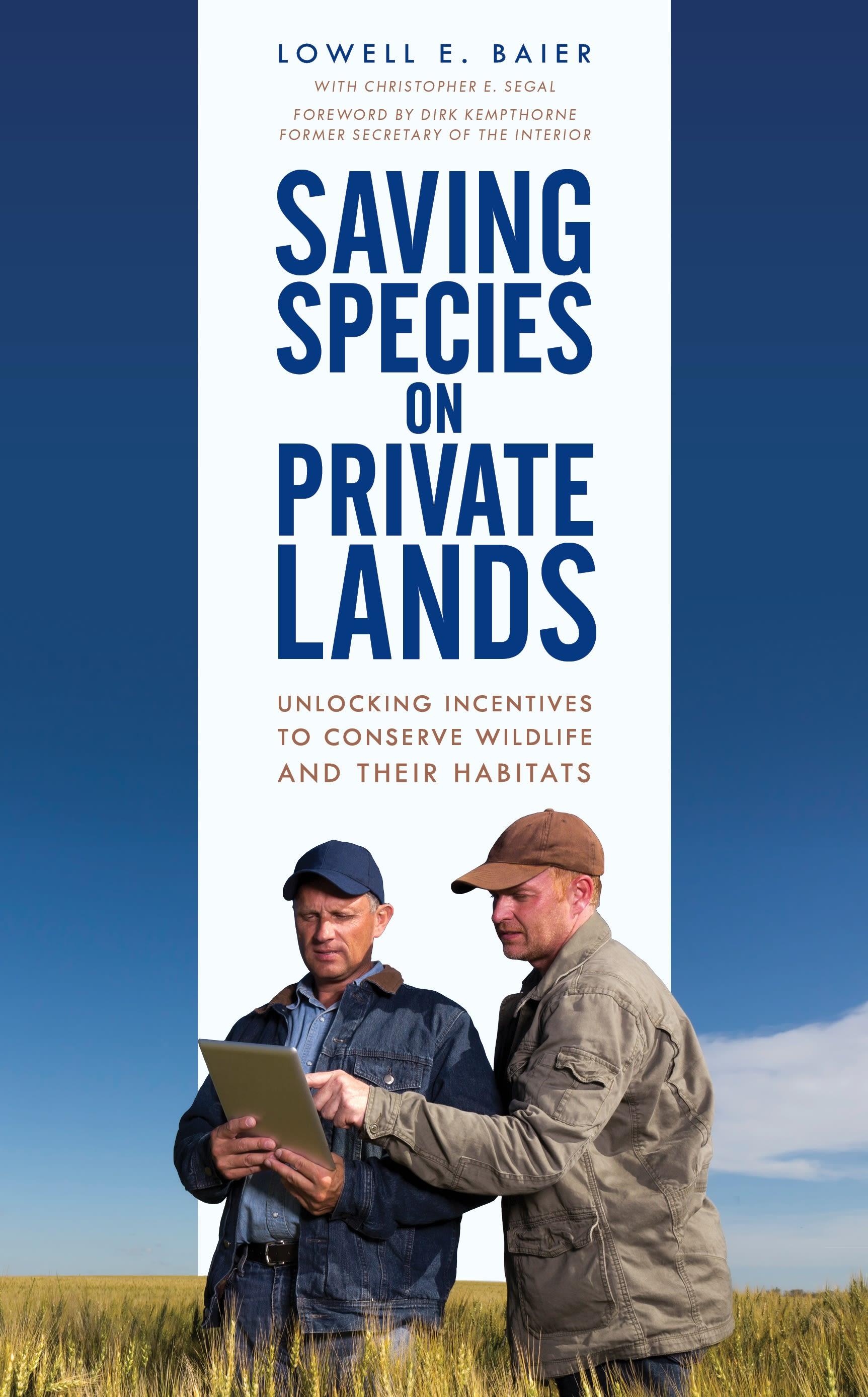
Winner, Independent Press Award - Conservation/Green, 2021
The only hope for successful conservation of America’s threatened, endangered, and at-risk wildlife is through voluntary, cooperative partnerships that focus on private land, where over 75% of at-risk species can be found. Private landowners form the bedrock of these partnerships, and they have a long history of rising to meet the challenge of conservation. But they can’t do it alone.
This book is a guide for private landowners who want to conserve wildlife. Whether engaged in farming, ranching, forestry, mining, energy development, or another business, private working lands all have value as wildlife habitat, with the proper management and financial support. This book provides landowners and their partners with a roadmap to achieve conservation compatible with their financial and personal goals.
This book introduces the art and language of land management planning as well as regulatory compliance with laws such as the Endangered Species Act of 1973. It categorizes and explains the tools used by wildlife professionals to implement conservation on private lands. Moreover it documents the multitude of federal, state, local, and private opportunities for landowners to find financial and technical assistance in managing wildlife, from working with a local NGO to accessing the $6 billion per year available through the federal Farm Bill.
The only hope for successful conservation of America’s threatened, endangered, and at-risk wildlife is through voluntary, cooperative partnerships that focus on private land, where over 75% of at-risk species can be found. Private landowners form the bedrock of these partnerships, and they have a long history of rising to meet the challenge of conservation. But they can’t do it alone.
This book is a guide for private landowners who want to conserve wildlife. Whether engaged in farming, ranching, forestry, mining, energy development, or another business, private working lands all have value as wildlife habitat, with the proper management and financial support. This book provides landowners and their partners with a roadmap to achieve conservation compatible with their financial and personal goals.
This book introduces the art and language of land management planning as well as regulatory compliance with laws such as the Endangered Species Act of 1973. It categorizes and explains the tools used by wildlife professionals to implement conservation on private lands. Moreover it documents the multitude of federal, state, local, and private opportunities for landowners to find financial and technical assistance in managing wildlife, from working with a local NGO to accessing the $6 billion per year available through the federal Farm Bill.
Betaal eenvoudig met kaart, Klarna, Apple Pay of Google Pay. Niet tevreden? Je hebt altijd 14 dagen bedenktijd. Lees meer in onze voorwaarden. Heb je vragen, mail ons dan via hello@memmo.org.
Memmo maakt studeren makkelijker – waar je ook bent ter wereld. Wij brengen je cursusboeken en slimme studietools samen op één plek: samenvattingen, quizzen, podcasts en flashcards. En Ted, je studievriend die antwoord geeft op alles wat je je afvraagt. Meer dan 50.000 studenten studeren hier al – gebouwd om je sneller te laten leren en minder stress te geven.