
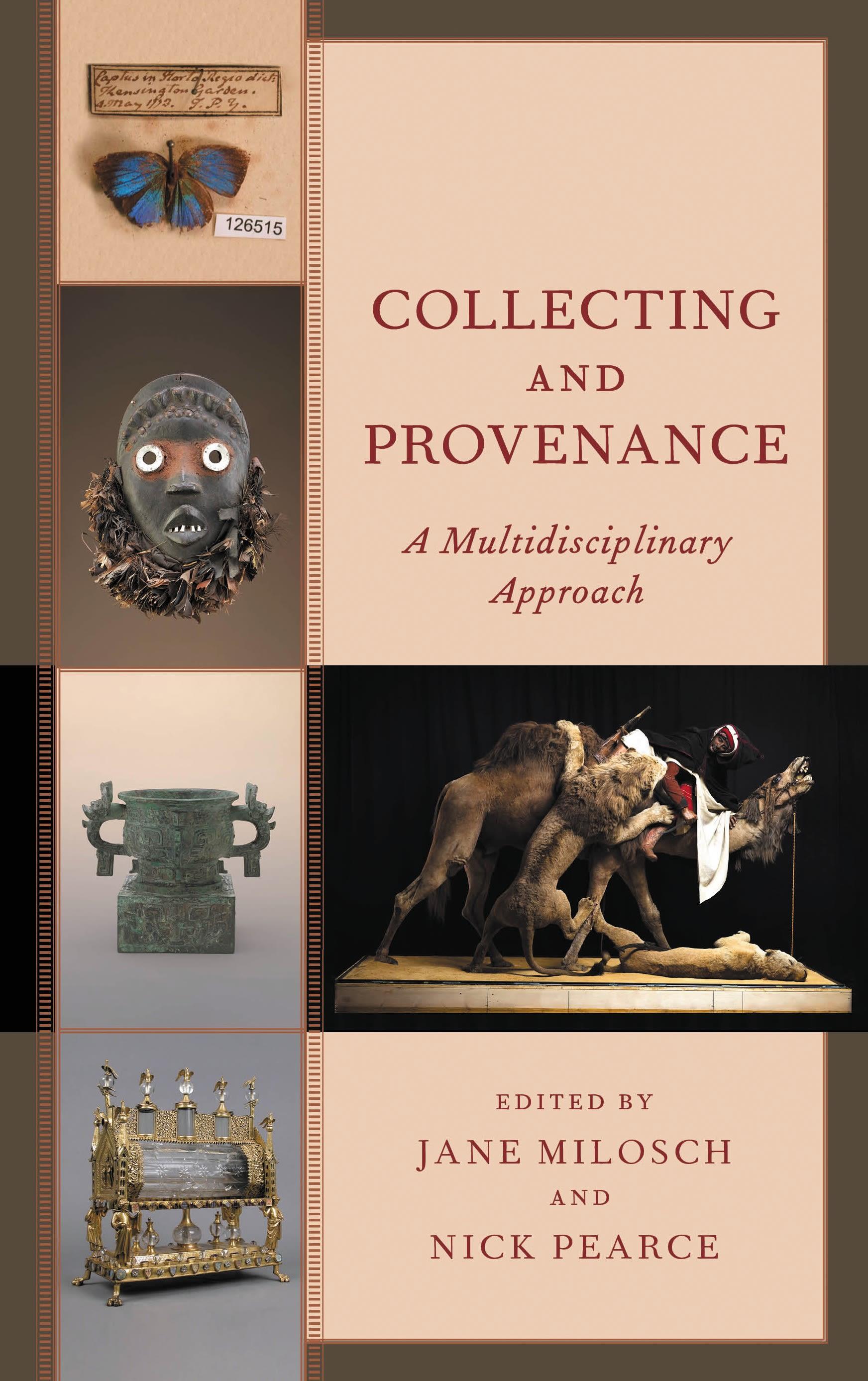
The study of provenance—the history of the creation and ownership of an artefact, work of art, or specimen—provides insights into the history of taste and collecting, illuminating the social, economic, and historic trends in which an object was created and collected. It is as much a history of people as it is of objects, and its study often reveals intricate networks of relationships, patterns of activity and motivations.
This book promotes the study of the history of collecting and collections in all their variety through the lens of provenance, and explores the subject as a cross-disciplinary activity. Perhaps for the first time in a publication, it draws on expertise ranging from art history and anthropology, to natural history and law, looking at periods from antiquity through the 18th century and the Holocaust era to the present, and materials from Europe and the Americas to China and the Pacific. The issues raised are wide-ranging, touching on aspects of authenticity, cultural meaning and material transformation and economic and commercial drivers, as well as collector and object biography.
The book fills a gap in the study of collecting and provenance, taking the subject holistically and from multiple standpoints, better to reflect the widening interest in provenance from a range of disciplinary perspectives. This book will be a service to the field, from established scholars and museum professionals to students of collecting history, cultural heritage, and museum studies.
This book promotes the study of the history of collecting and collections in all their variety through the lens of provenance, and explores the subject as a cross-disciplinary activity. Perhaps for the first time in a publication, it draws on expertise ranging from art history and anthropology, to natural history and law, looking at periods from antiquity through the 18th century and the Holocaust era to the present, and materials from Europe and the Americas to China and the Pacific. The issues raised are wide-ranging, touching on aspects of authenticity, cultural meaning and material transformation and economic and commercial drivers, as well as collector and object biography.
The book fills a gap in the study of collecting and provenance, taking the subject holistically and from multiple standpoints, better to reflect the widening interest in provenance from a range of disciplinary perspectives. This book will be a service to the field, from established scholars and museum professionals to students of collecting history, cultural heritage, and museum studies.
Betaal eenvoudig met kaart, Klarna, Apple Pay of Google Pay. Niet tevreden? Je hebt altijd 14 dagen bedenktijd. Lees meer in onze voorwaarden. Heb je vragen, mail ons dan via hello@memmo.org.
Memmo maakt studeren makkelijker – waar je ook bent ter wereld. Wij brengen je cursusboeken en slimme studietools samen op één plek: samenvattingen, quizzen, podcasts en flashcards. En Ted, je studievriend die antwoord geeft op alles wat je je afvraagt. Meer dan 50.000 studenten studeren hier al – gebouwd om je sneller te laten leren en minder stress te geven.