
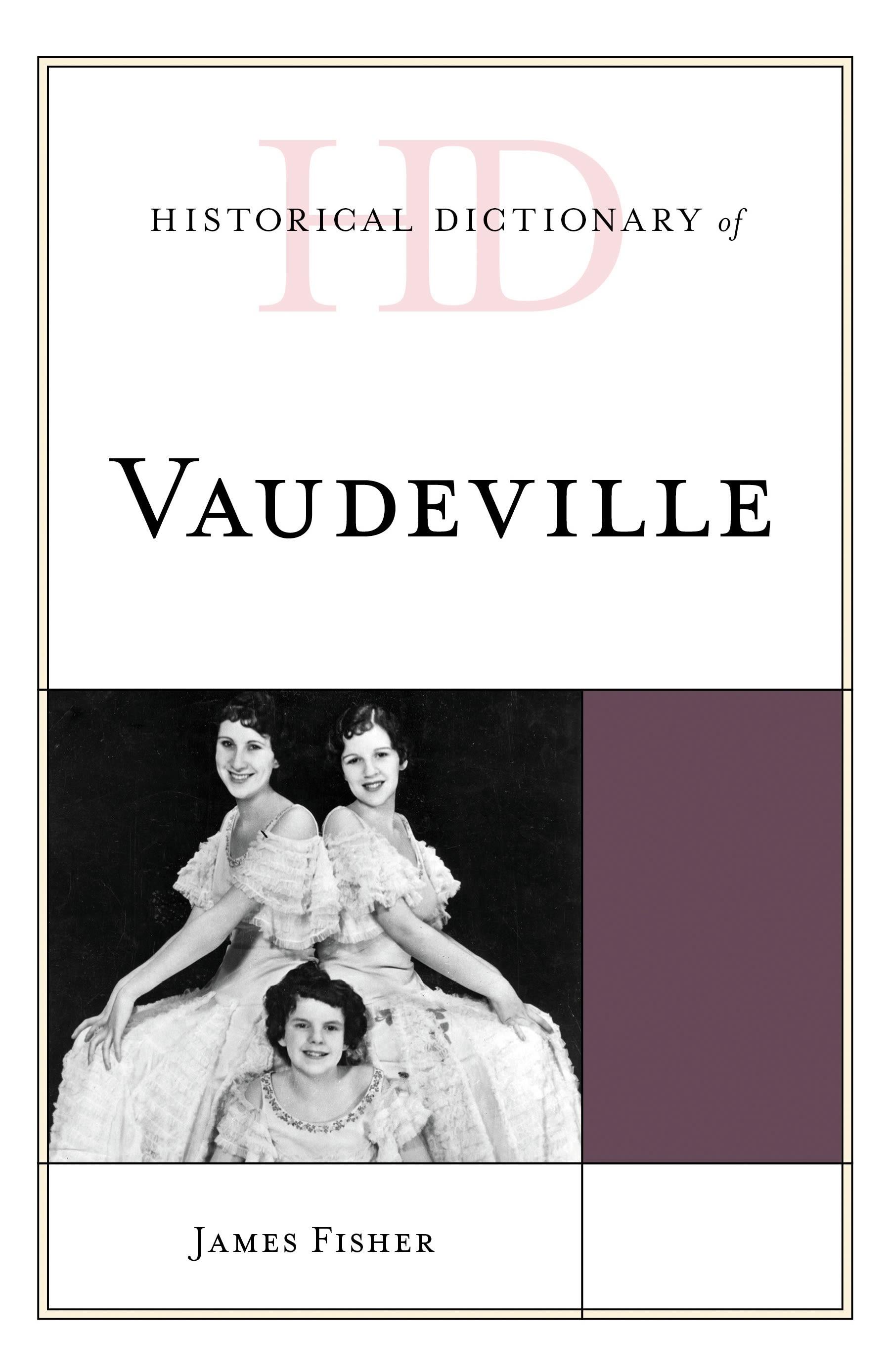
Vaudeville, as it is commonly known today, began as a response to scandalous variety performances appealing mostly to adult, male patrons. When former minstrel performer and balladeer Tony Pastor opened the Fourteenth Street Theatre in New York in 1881, he was guided by a mission to provide family-friendly variety shows in hopes of drawing in that portion of the audience – women and children – otherwise inherently excluded from variety bills prior to 1881. There he perfected a framework for family-oriented amusements of the highest obtainable quality and style.
Historical Dictionary of Vaudeville contains a chronology, an introduction, an extensive bibliography, and the dictionary section has more than 1,000 cross-referenced entries on performing artists, managers and agents, theatre facilities, and the terminology central to the history of vaudeville. This book is an excellent resource for students, researchers, and anyone wanting to know more about vaudeville.
Historical Dictionary of Vaudeville contains a chronology, an introduction, an extensive bibliography, and the dictionary section has more than 1,000 cross-referenced entries on performing artists, managers and agents, theatre facilities, and the terminology central to the history of vaudeville. This book is an excellent resource for students, researchers, and anyone wanting to know more about vaudeville.
Betaal eenvoudig met kaart, Klarna, Apple Pay of Google Pay. Niet tevreden? Je hebt altijd 14 dagen bedenktijd. Lees meer in onze voorwaarden. Heb je vragen, mail ons dan via hello@memmo.org.
Memmo maakt studeren makkelijker – waar je ook bent ter wereld. Wij brengen je cursusboeken en slimme studietools samen op één plek: samenvattingen, quizzen, podcasts en flashcards. En Ted, je studievriend die antwoord geeft op alles wat je je afvraagt. Meer dan 50.000 studenten studeren hier al – gebouwd om je sneller te laten leren en minder stress te geven.