
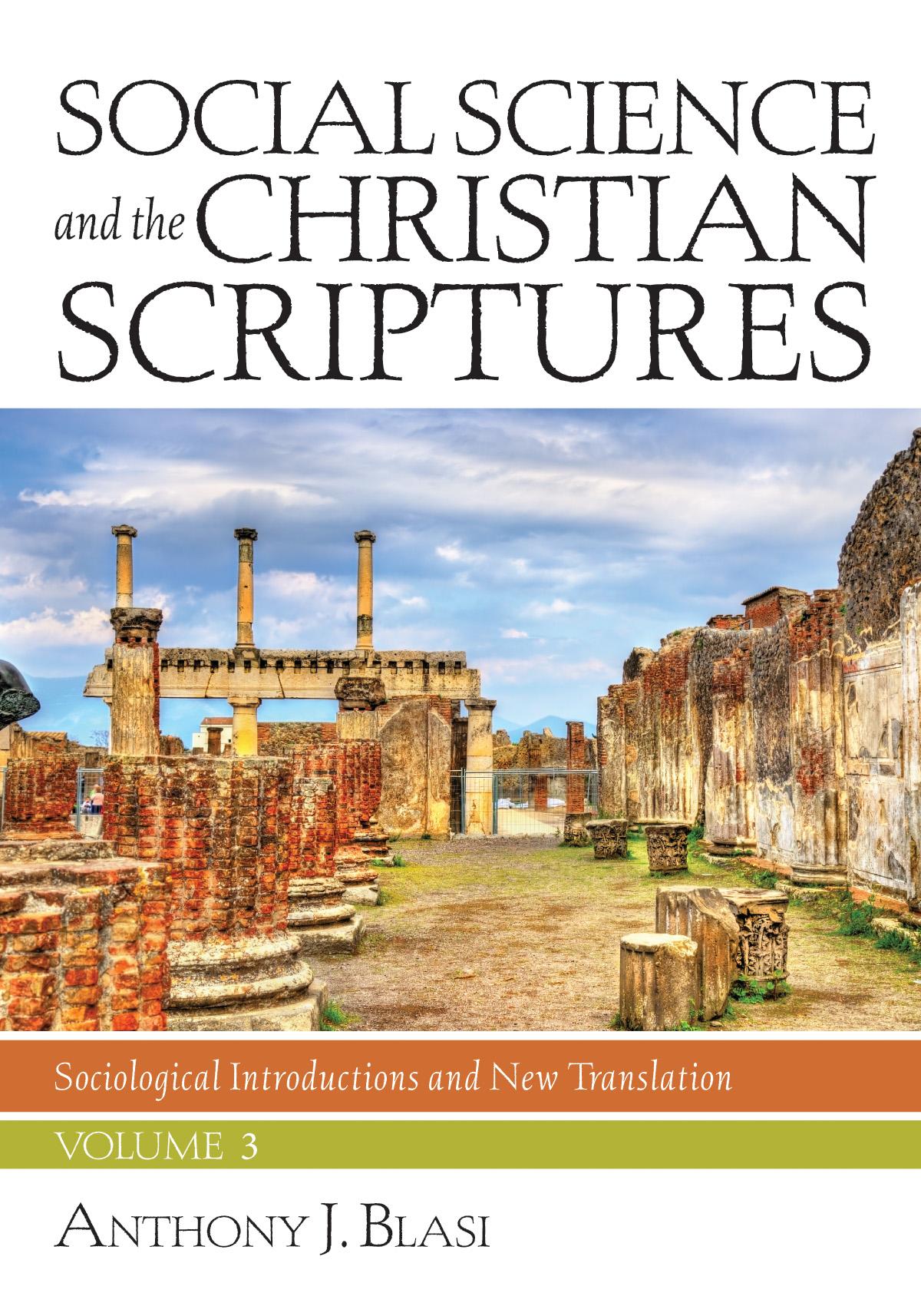
Sociologist Anthony Blasi analyzes early Christianity using multiple social scientific theories, including those of Max Weber, Georg Simmel, Karl Marx, Antonio Gramsci, Max Scheler, Alfred Schutz, and contemporary theorists. He investigates the canonical New Testament books as representative of early Christianity, a sample based on usage, and he takes the books in the chronological order in which they were written. The result is a series of "stills" that depict the movement at different stages in its development. His approaches, often neglected in New Testament studies, include such sociological subfields as sect theory, the routinization of charisma, conflict, stratification theory, stigma, the sociology of knowledge, new religions, the sociology of secrecy, marginality, liminality, syncretism, the social role of intellectuals, the poor person as a type, the sick role, degradation ceremonies, populism, the sociology of migration, the sociology of time, mergers, the sociology of law, and the sociology of written communication. Needing to treat the New Testament text as social data, Blasi uses his background in biblical studies and a review of a vast literature to establish the chronology of the compositions of the New Testament books and to present the "data" in a new translation that is accessible to non-specialists.
Betaal eenvoudig met kaart, Klarna, Apple Pay of Google Pay. Niet tevreden? Je hebt altijd 14 dagen bedenktijd. Lees meer in onze voorwaarden. Heb je vragen, mail ons dan via hello@memmo.org.
Memmo maakt studeren makkelijker – waar je ook bent ter wereld. Wij brengen je cursusboeken en slimme studietools samen op één plek: samenvattingen, quizzen, podcasts en flashcards. En Ted, je studievriend die antwoord geeft op alles wat je je afvraagt. Meer dan 50.000 studenten studeren hier al – gebouwd om je sneller te laten leren en minder stress te geven.
Misschien vind je dit ook leuk
Koop het boek0