
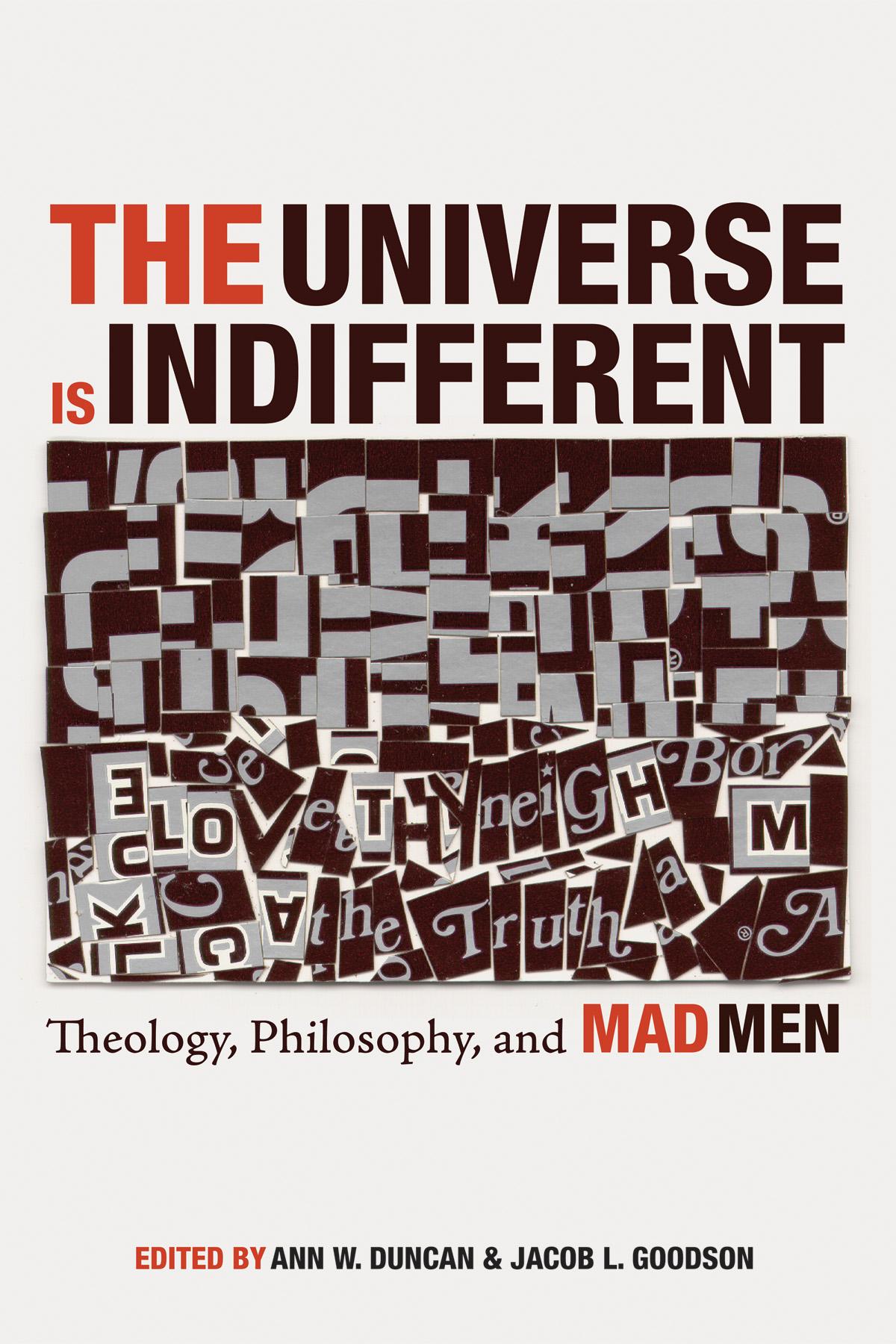
Centered upon the lives of employees at a Manhattan advertising firm, the AMC television series Mad Men touches on the advertising world's unique interests in consumerist culture, materialistic desire, and the role of deception in Western capitalism.
While the subject matters of the chapters in this collection have a decidedly socio-historical focus, the authors use basic topics as starting points for philosophical, religious, and theological reflections. The authors show how Mad Men reveals deep truths concerning the social trends of the 1960s and early 1970s in American life and deserves a significant amount of reflection from philosophical, religious, and theological perspectives. Some of the chapters go beyond mere reflection and make deeper inquiries into what these trends say about American cultural habits, the business world within Western capitalism, and the rapid social changes (gender, race, and sexuality) that occur during this period. Chapters examine paradigms of masculinity and femininity as well as the presentation of motherhood, fatherhood, sexuality, and childhood.
This collection shows how social change represents the undercurrent of the interpersonal dramas of the characters on Mad Men, from the staid and conventional early seasons to the war, assassinations, riots, and counterculture of later seasons.
Betaal eenvoudig met kaart, Klarna, Apple Pay of Google Pay. Niet tevreden? Je hebt altijd 14 dagen bedenktijd. Lees meer in onze voorwaarden. Heb je vragen, mail ons dan via hello@memmo.org.
Memmo maakt studeren makkelijker – waar je ook bent ter wereld. Wij brengen je cursusboeken en slimme studietools samen op één plek: samenvattingen, quizzen, podcasts en flashcards. En Ted, je studievriend die antwoord geeft op alles wat je je afvraagt. Meer dan 50.000 studenten studeren hier al – gebouwd om je sneller te laten leren en minder stress te geven.
Misschien vind je dit ook leuk
Koop het boek0