
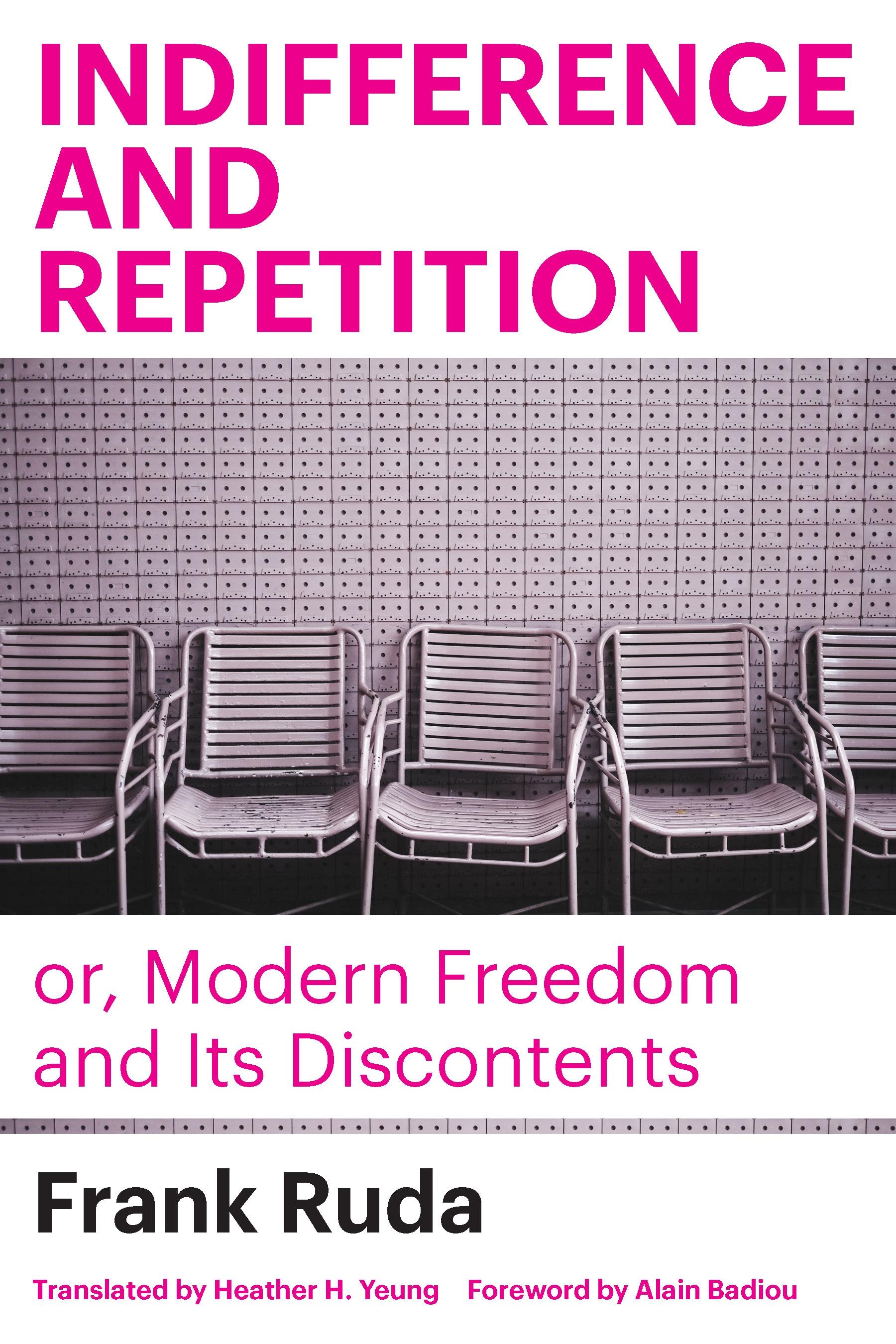
In capitalism human beings act as if they are mere animals. So we hear repeatedly in the history of modern philosophy. Indifference and Repetition examines how modern philosophy, largely coextensive with a particular boost in capitalism’s development, registers the reductive and regressive tendencies produced by capitalism’s effect on individuals and society.
Ruda examines a problem that has invisibly been shaping the history of modern, especially rationalist philosophical thought, a problem of misunderstanding freedom. Thinkers like Descartes, Kant, Hegel, and Marx claim that there are conceptions and interpretations of freedom that lead the subjects of these interpretations to no longer act and think freely. They are often unwillingly led into unfreedom. It is thus possible that even “freedom” enslaves. Modern philosophical rationalism, whose conceptual genealogy the books traces and unfolds, assigns a name to this peculiar form of domination by means of freedom: indifference. Indifference is a name for the assumption that freedom is something that human beings have: a given, a natural possession. When we think freedom is natural or a possession we lose freedom. Modern philosophy, Ruda shows, takes its shape through repeated attacks on freedom as indifference; it is the owl that begins its flight, so that the days of unfreedom will turn to dusk.
Betaal eenvoudig met kaart, Klarna, Apple Pay of Google Pay. Niet tevreden? Je hebt altijd 14 dagen bedenktijd. Lees meer in onze voorwaarden. Heb je vragen, mail ons dan via hello@memmo.org.
Memmo maakt studeren makkelijker – waar je ook bent ter wereld. Wij brengen je cursusboeken en slimme studietools samen op één plek: samenvattingen, quizzen, podcasts en flashcards. En Ted, je studievriend die antwoord geeft op alles wat je je afvraagt. Meer dan 50.000 studenten studeren hier al – gebouwd om je sneller te laten leren en minder stress te geven.