
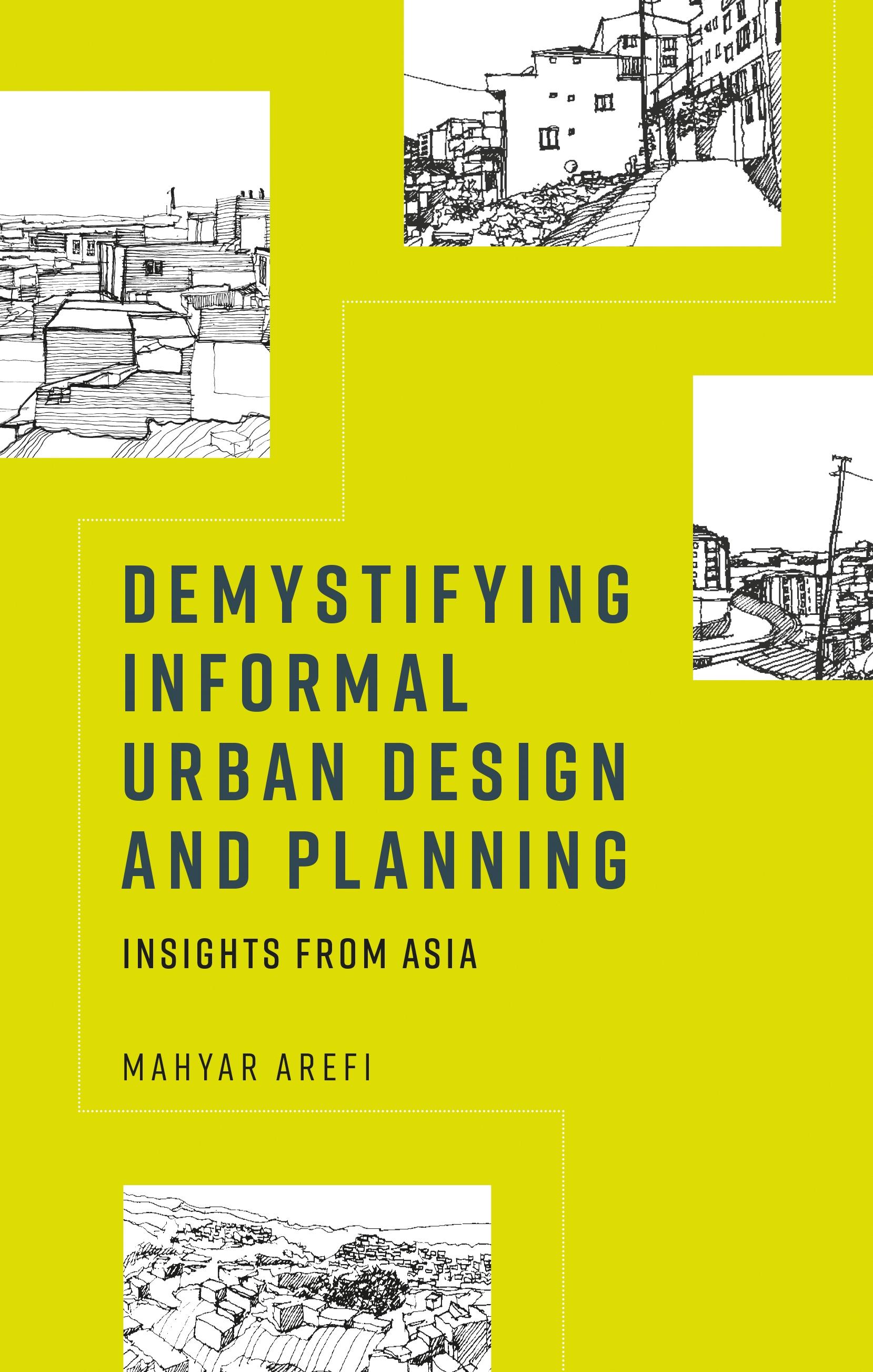
With more than half of the world’s population living in cities, informal settlements, or slums, continue to expand. This book explores the informality-urban design nexus, and asks why formal urban designers and planners have remained largely reluctant to address these challenges facing our cities.
What distinguishes the formal vs. informal urban design paradigm? While urban designers are able to identify and address specific problems like walkability, gentrification, or sense of place, informal settlement problems prove inexorably complex, and harder to fathom to begin with.
Therefore, seeking to demystify these epistemological ambiguities – while difficult – makes sense. The use of abductive reasoning, regulations, aesthetics, and design epitomise the formal, while informal urban planning and design is characterized by information, assets and adaptation. In support of these thematic differentiations, this book uses case studies to better contextualize and unpack the metaphorical distinctions of the two theoretical entities.
Conceptualizing these two schools of thought this way, the book engages urban designers with these debates, and explores how informal settlement residents see themselves, act collectively, care about their settlements, and leverage opportunities.
Betaal eenvoudig met kaart, Klarna, Apple Pay of Google Pay. Niet tevreden? Je hebt altijd 14 dagen bedenktijd. Lees meer in onze voorwaarden. Heb je vragen, mail ons dan via hello@memmo.org.
Memmo maakt studeren makkelijker – waar je ook bent ter wereld. Wij brengen je cursusboeken en slimme studietools samen op één plek: samenvattingen, quizzen, podcasts en flashcards. En Ted, je studievriend die antwoord geeft op alles wat je je afvraagt. Meer dan 50.000 studenten studeren hier al – gebouwd om je sneller te laten leren en minder stress te geven.